


I love the information on The Bard house it's awesome I live in Florida and I have barred owls all around me and they watch me and they follow me they're fascinating
Nature / Natural Resources
The Wonders of Owls

Winter is a great time for spotting owls on the bare branches of leafless trees. Just this winter, a barred owl visited us a few times during afternoon animal chores. (Barred owls hunt at dawn and dusk when there is still plenty of light for us to see them.)
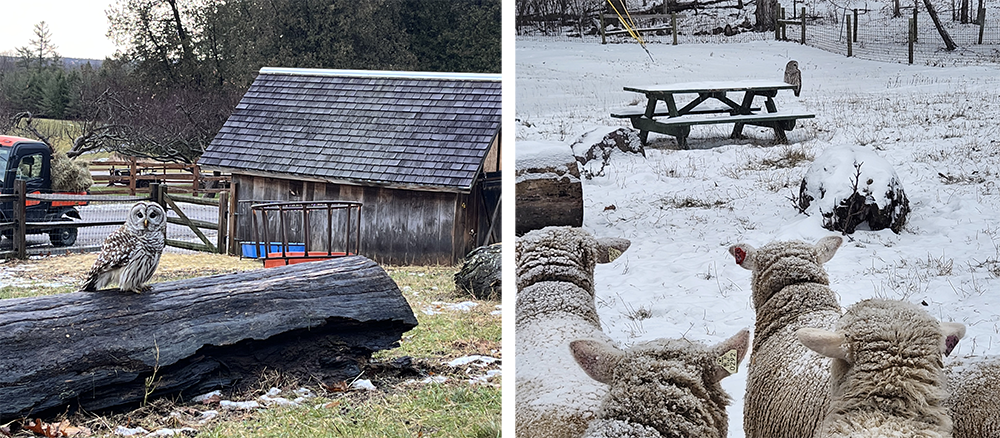
The goat yard must be superb hunting grounds because I watched this owl catch and eat two voles within a span of 15 minutes. Check out the video:
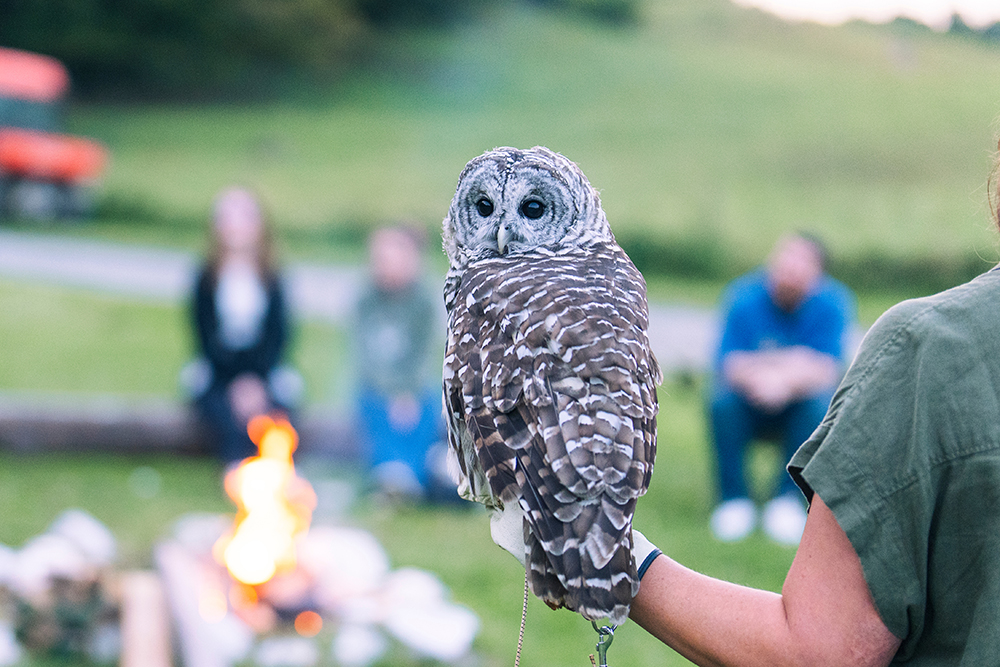
I love owls. I volunteer weekly with Outreach for Earth Stewardship—a nonprofit that uses rehabilitated raptors for education—and together with its director Craig Newman, we host a variety of programs on the farm. (See upcoming ones below!) Here are answers to some of the most common questions we get about owls.
What are the most common owls in Vermont and what do they sound like?
Below are four owls common to Vermont, and their calls are one of my favorite things to talk about! Learning lots of bird calls can get overwhelming, but each owl call is unique and easy to identify. Check out the audio links! Introducing...
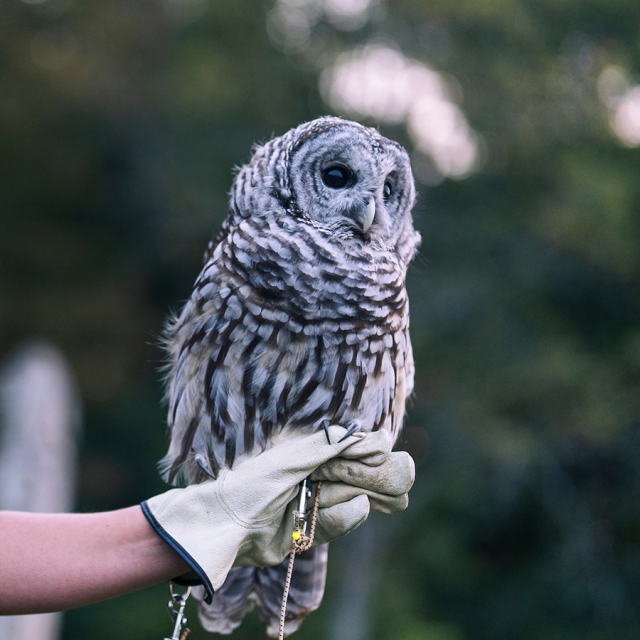
Barred Owl
They're the most common owl found in Vermont. They are always watching you! Their call sounds like, "Who cooks for you? Who cooks for you all?"
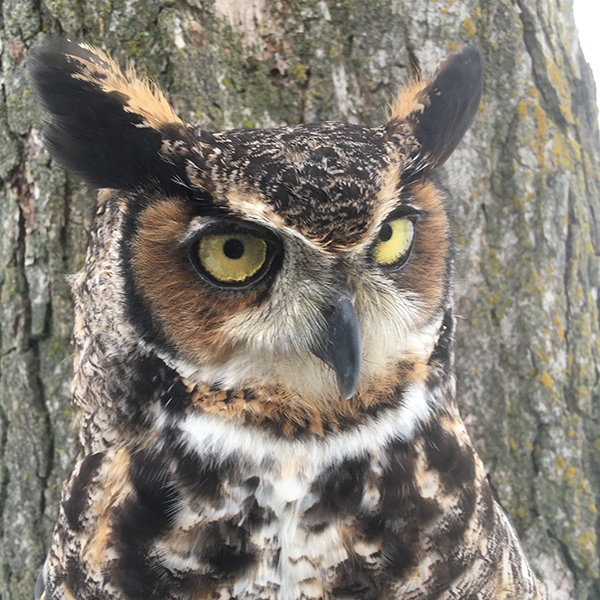
Great Horned Owl
Did you know that their ear tufts, also known as plumicorns, aren’t actually their ears? Their ears are located behind their eyes. Their call sounds like, "Who’s awake? Me, too!"
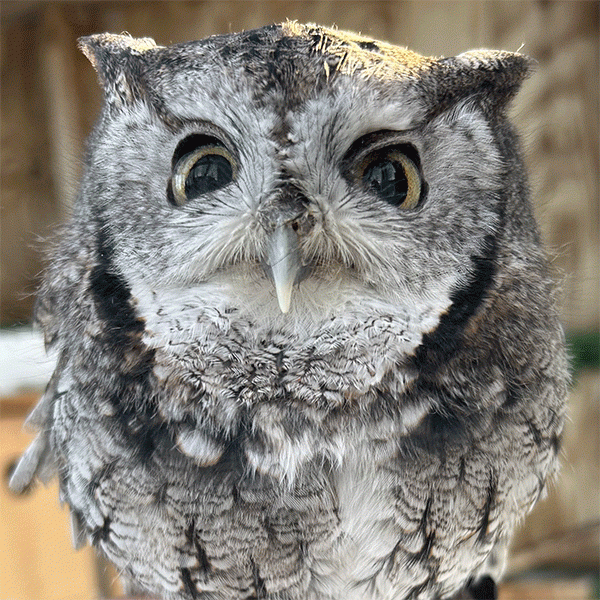
Eastern Screech Owl
These small owls can be gray or a reddish brown color and they don’t even screech! Their call sounds like a whinny (like a horse!) and a trill.
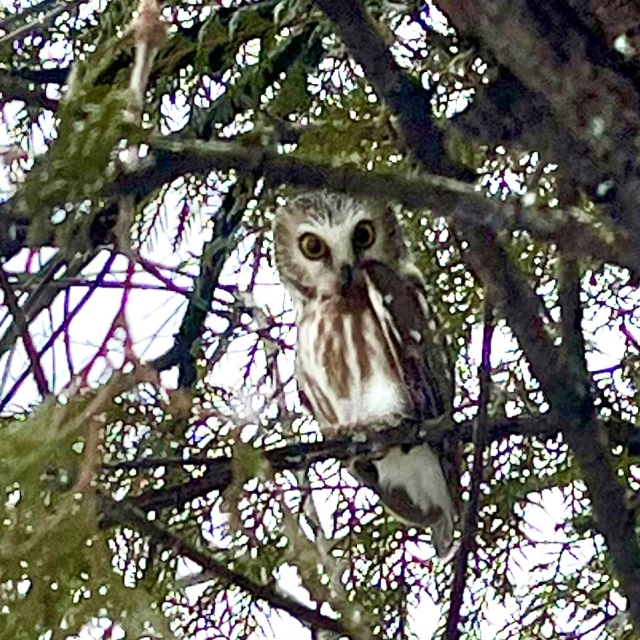
Northern Saw Whet Owl
These even smaller owls migrate south from Vermont each winter. Each weighs around 100 grams, the weight of four AA batteries. Their call sounds like a garbage truck backing up.
What about snowy owls in Vermont?
It’s so exciting to spot a huge white owl sitting on a fence post in a wintry farm field. The snowy owls we occasionally find in Vermont are typically young owls venturing out to establish their own territories, because adult owls get first dibs back home in the arctic tundra of Canada. Every few years, however, we see a lot of them! Here’s why: Snowy owls eat lots of small tundra rodents called lemmings, and every few seasons lemmings have a massive baby boom. This means a lot more healthy owl chicks, which in turn leads to more snowy owls venturing south come winter in search of snacks and temporary territories. This larger migration is called an irruption.
Do owls fly without making any noise?
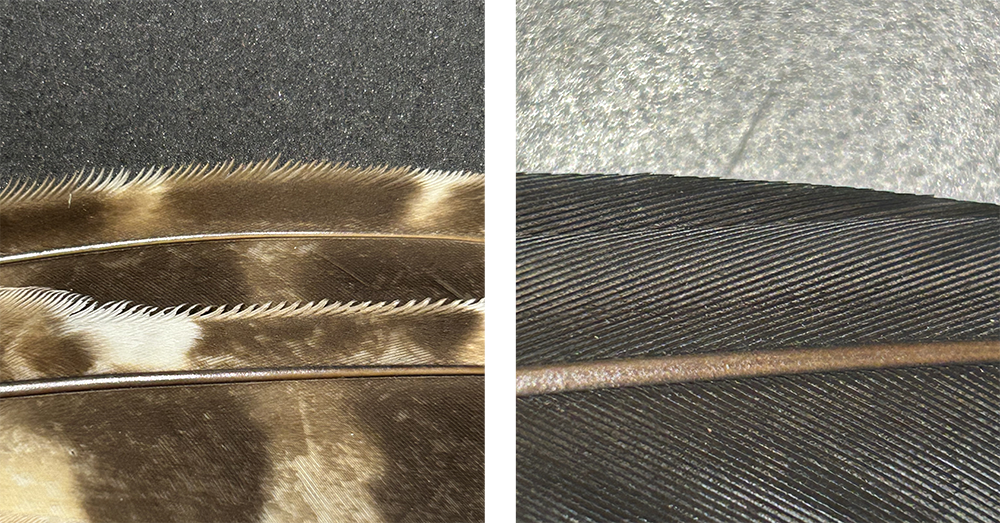
Basically, yes. Owls have the special “owl”daptation of silent flight. Comb-like serrated edges on an owl's outermost flight feathers break down the air turbulence rushing over the surface of the wing, which dampens the whooshing sound other birds make when taking off or flying.
Can owls turn their heads all the way around?
Not quite. But nearly! Owls, like most birds of prey, have 14 neck bones that help them rotate their heads 270° in both directions. Most mammals, including humans and giraffes, have only 7 neck bones. (Giraffe vertebrae are just very large!) An owl’s neck rotation lets it search for prey in silence, without moving its entire body. Owls also have a special blood vessel system throughout their necks so blood can still flow to their brains when they rotate their heads.
Do owls have any predators?
We get this question often and the answer for most owls is…Larger owls! The large great horned owl is considered an apex predator, meaning it is at the top of its food chain, but it must still remain vigilant. A young owl can fall prey to eagles and a variety of mammals.
Owls! We love them! Being at the top of the food chain, they are a good indicator of ecosystem health: a healthy prey population, suitable habitat, and less pollution in the area. And whether it’s because of their enormous eyes, their mysterious nocturnal nature, their adorable shapes, or any other of their incredible adaptations, owls are the coolest! They invite you to consider how we all can coexist in the world we share.
So, remember, next time you’re out on our trails, scan the trees, because there’s a good chance a barred owl is taking notice of you as they hunt, quietly from above!
Outreach for Earth Stewardship
For nearly thirty years, Shelburne Farms has been fortunate to partner with Craig Newman and Outreach for Earth Stewardship (OFES), a non-profit wildlife organization whose mission is to strengthen respect and understanding for wildlife through education. They bring wildlife education to life through bird-on-hand programming with their wild raptor ambassadors in a variety of settings including schools, libraries, senior centers, and, of course, right here on the farm.