
Experience the Climate Creative Art Show

Teachers explore climate change — and climate imagination — through art, bringing ideas back to their classrooms
According to a 2025 nationwide survey by the Climate Mental Health Network, nearly all middle school teachers report seeing emotional reactions from students when the subject of climate change comes up, but many lack the resources to respond. Our Climate Creative program aims to help address this gap by supporting educators and their students in teaching and learning about climate change through art.
"Art is such an important tool for coping with the climate crisis. It can serve as a medium for expressing your emotions and connecting with others," says Shelburne Farms educator and Climate Creative co-facilitator Emily Schaller. Over the past school year, 11 educators gathered seasonally at the farm to get hands-on with a variety of media and develop lesson plans for their classrooms. Through art, students process their learning and imagine possibilities. One teacher described the hope she felt after the program. "We have the answers. We just need to compel a critical mass to do the work."
An art exhibition at the Coach Barn in April celebrated student and teacher creativity, ranging from pieces interpreting climate data to a collective paper quilt honoring native birds.
Experience the show by scrolling through the gallery and slideshows below.
Corrine Gagnon, Teacher at Shapleigh School, Kittery, ME
Climate Data Art
Grade 7 students spent time learning about the Mauna Loa Observatory in Hawaii and graphed carbon dioxide emissions from 1959 to the present day. We spent time evaluating climate art before students created their own. Students created climate data art with their graphs to show connections to climate connections. They wrote artists' statements to connect to their artwork.
Want to know more about this project? Contact Corrine.
-
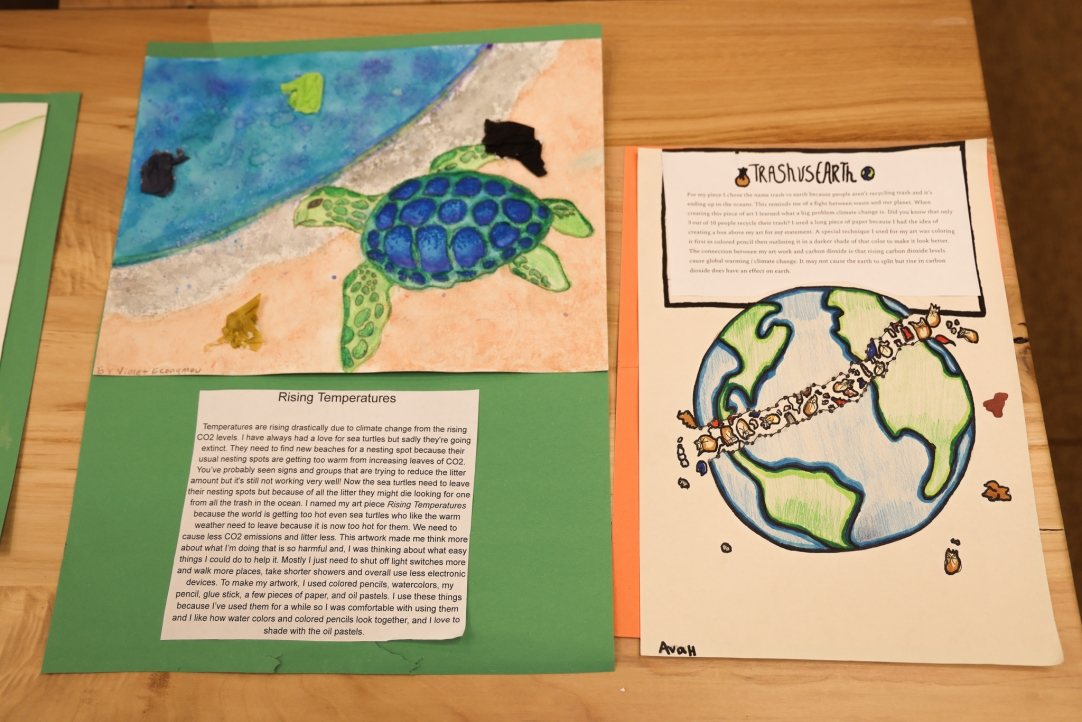
Rising Temperatures by Violet E. (left) and Trash vs. Earth by Ava H. (right)
-
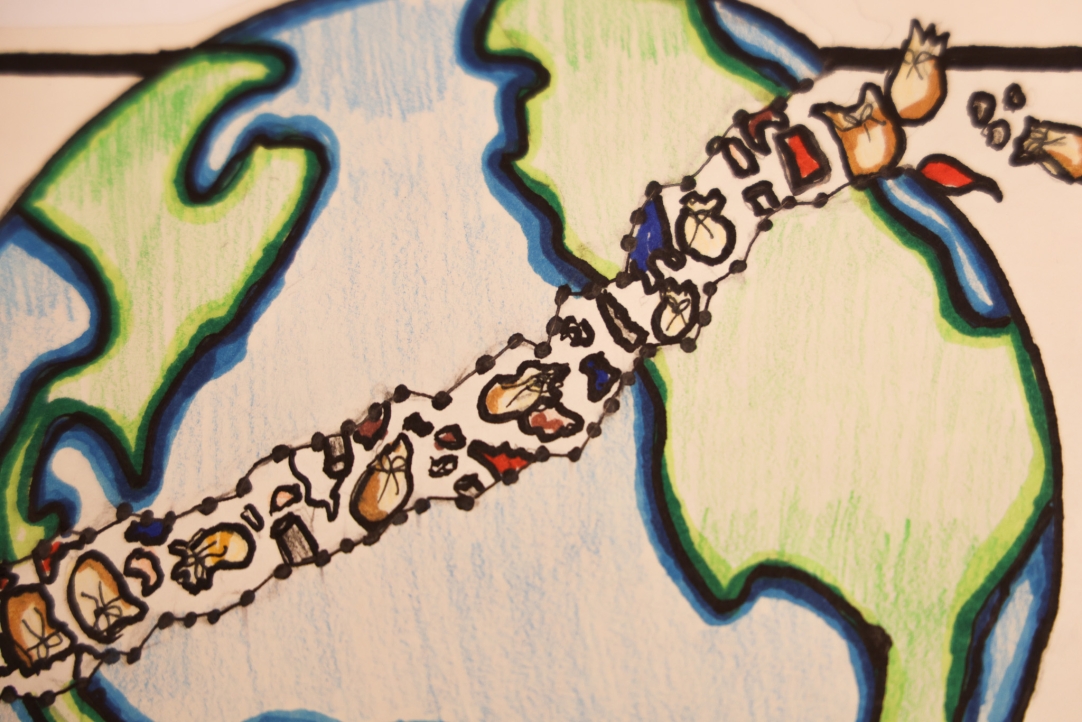
Details on Trash vs. Earth.
-
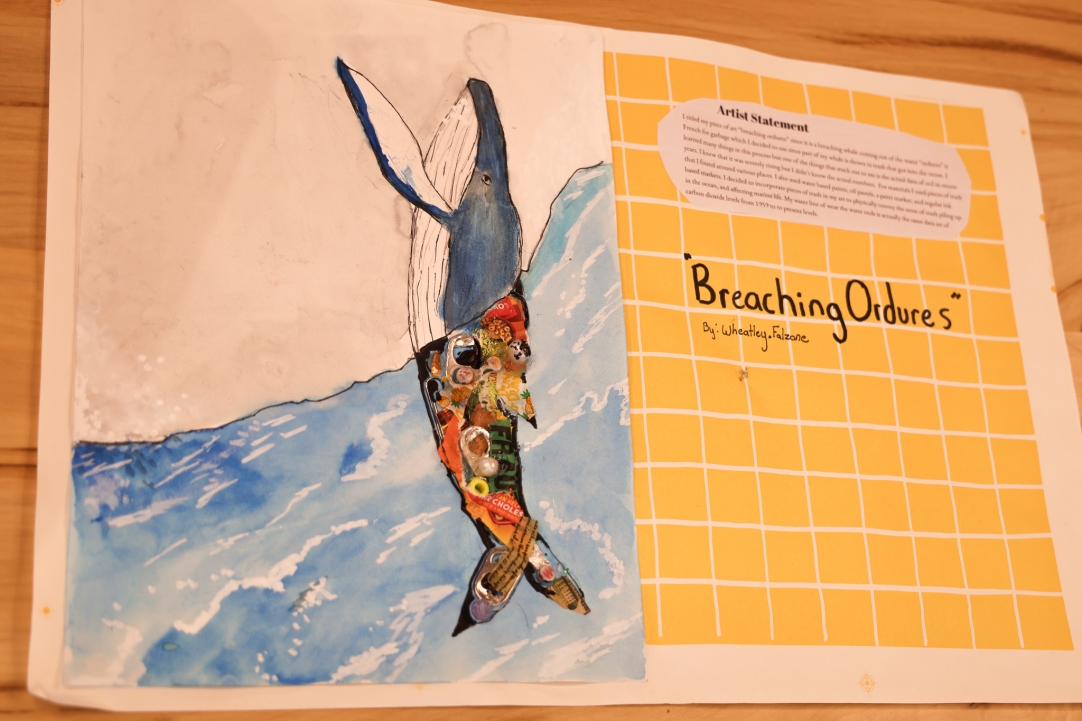
Breaching Ordures by Wheatley F. "Ordures" is French for garbage.
-
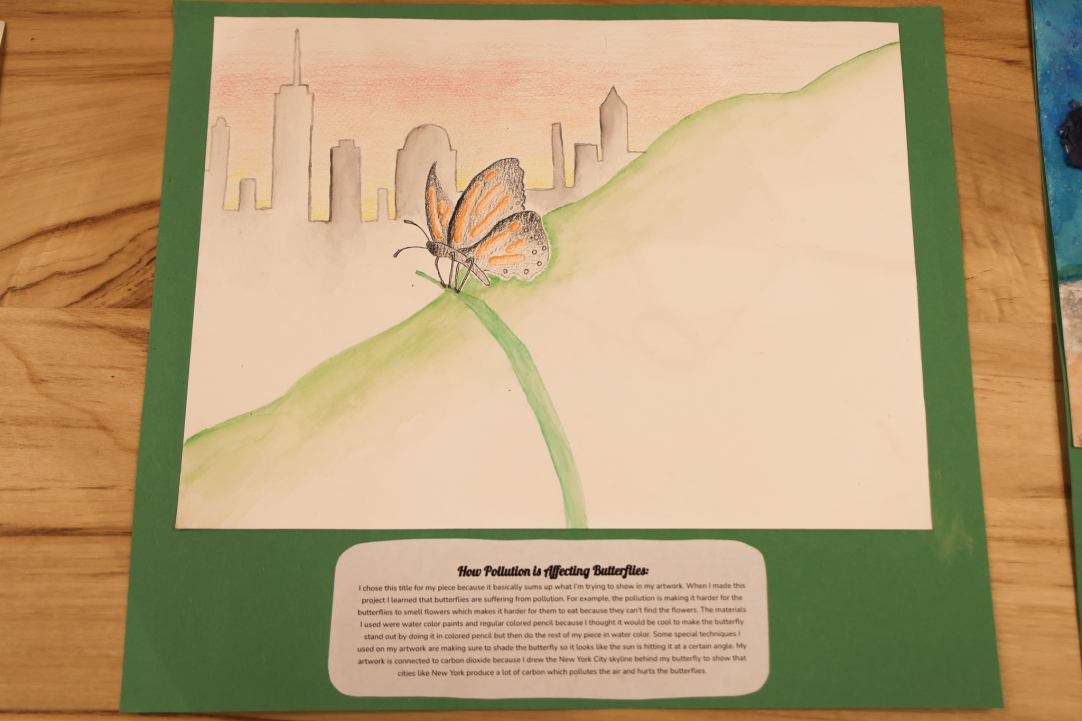
How Pollution is Affecting Butterflies by a student


Climate Drabbles
A "drabble" is a term for a 100-word short story. Grist magazine has been publishing inspiring climate-fiction drabbles written by readers that "envision the type of future we'd like to build." The Climate Creative cohort crafted these drabbles and illustrated them during their January retreat.
Kestrel Plump, Teacher at the Sustainability Academy, Burlington, VT
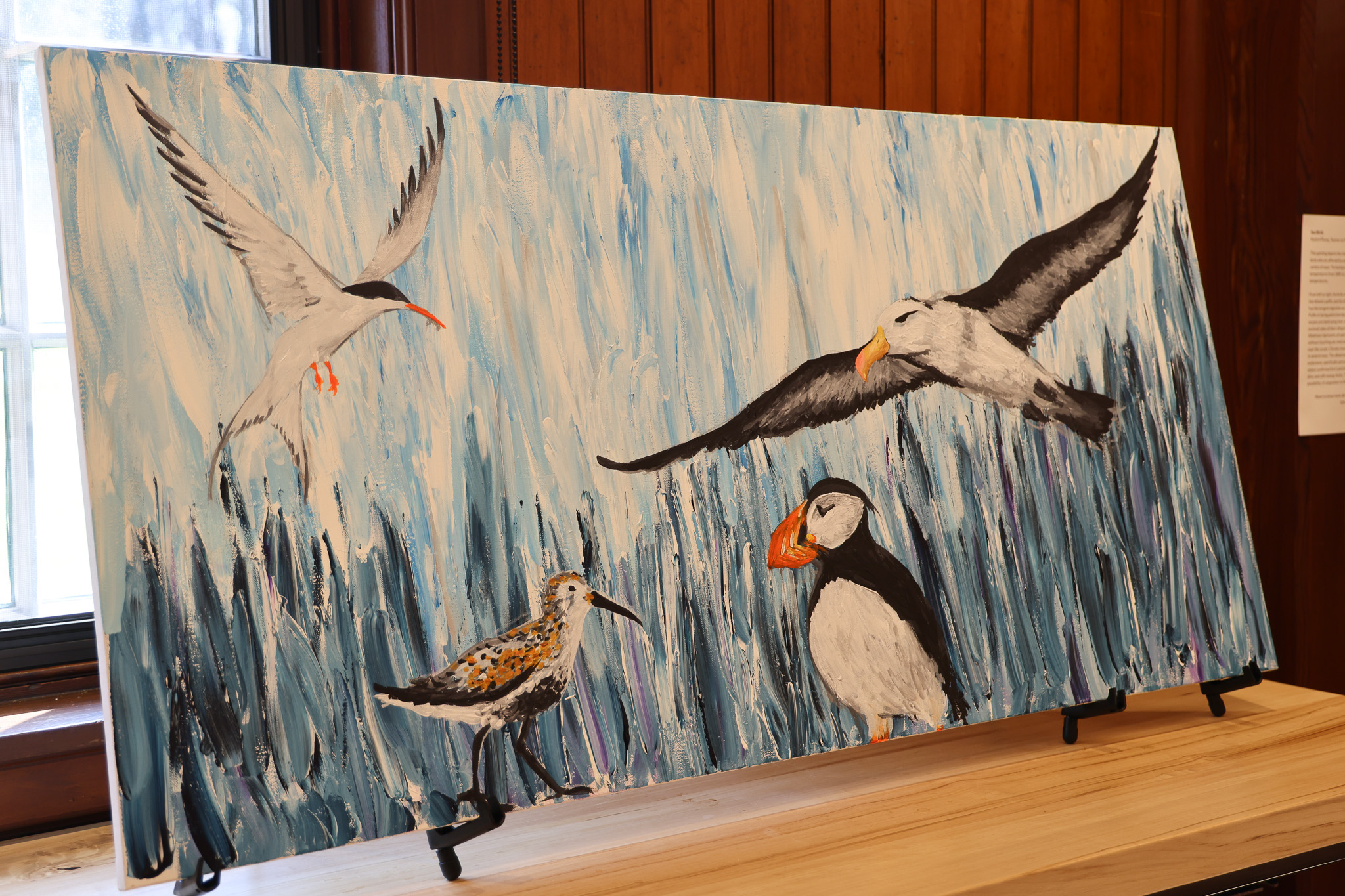
Sea Birds
This painting depicts the rising ocean temperatures and four of the birds who are affected by and responding to climate change in a variety of ways. The background is a graph of the oceans temperatures from 1880 to 2020, with the dark representing the temperatures.
Want to know more about this project? Contact Kestrel.
Muriel Stallworth, Special Collaborator & Teacher at International School of Brooklyn, NY
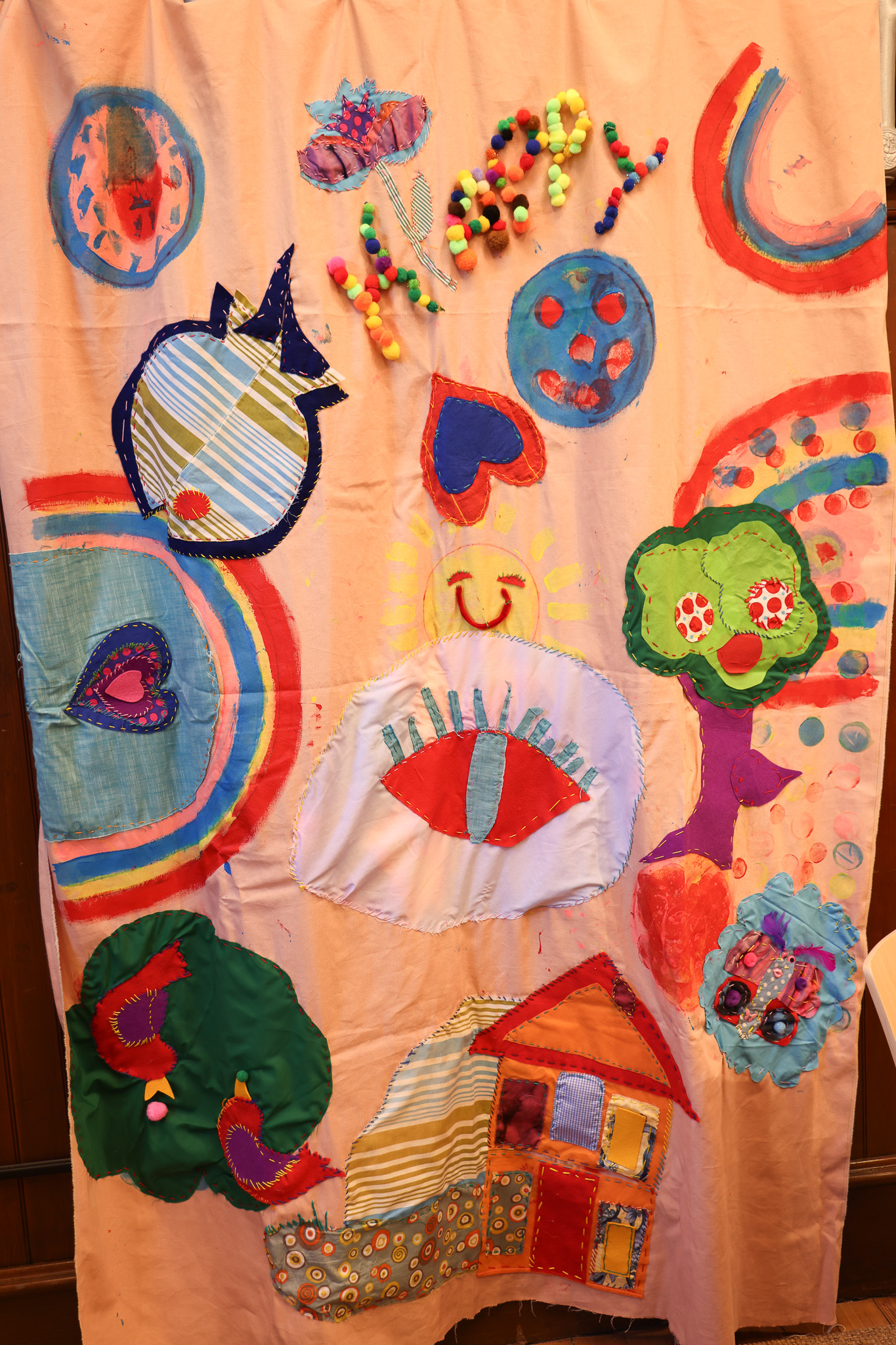
Banner # 1: HAPPY!
This banner is one of four created by second grade students from the French and Spanish classes for a cantastoria performance produced at the International School of Brooklyn: The Pursuit of Happiness. The inspiration for this special production, brought to life by a dynamic troupe of actors, singers, musicians, and puppeteers, comes directly from the ISB community, whose imaginative and heartfelt answers to "What is Happiness? Felicidad? Le Bonheur? Where do we find it, and how do we keep it alive?" shaped the very script. The students’ colorful and expressive drawings of their responses, framed around notions of giving, home, play, love and togetherness, were transferred onto donated fabric and embroidered by the students (with some grown-up help) to create a backdrop for the play.
In the current environment prone to inspire anxiety rather than hope, this joyful reflection on happiness reminded everyone of how values of community, sharing, caring and noticing the good in society lead to a happier and healthier planet.
Want to know more about this project? Contact Muriel.
Lauren Kelly, Education Coordinator at Smokey House Center, Danby, VT
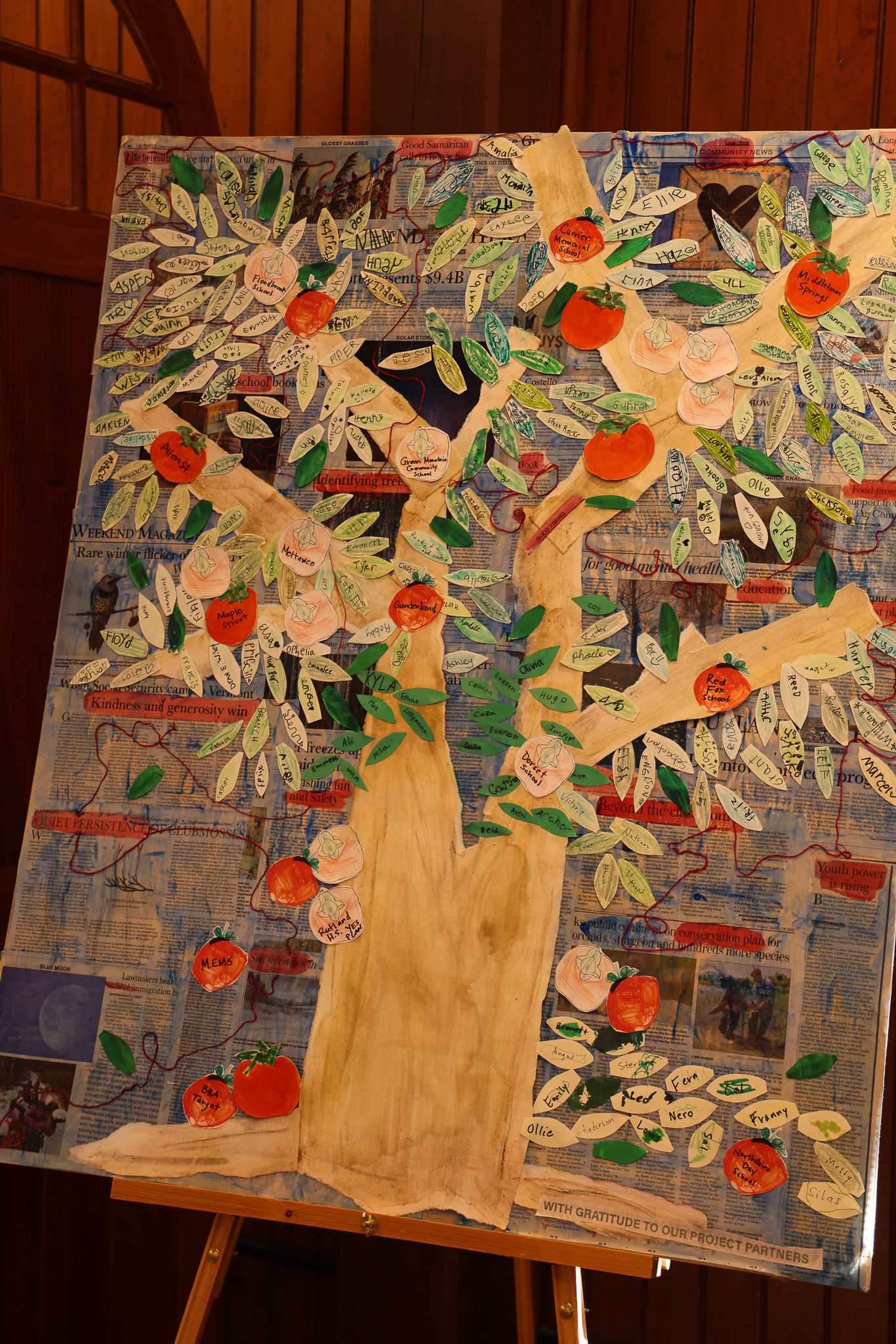
Quiet Persistence - American Persimmon
In the fall of 2025, staff, community volunteers, and nearly 400 students from local schools helped plant a U-Pick Community Orchard of climate-resilient species at the Smokey House Center in Danby, VT. This piece—an American Persimmon tree—records that season. Each student signed a leaf, and two student participants created the adorable, bright orange fruits on which each school’s name is written. The work is an archive of the many hands that dug, planted, and connected to the trees as they were lovingly placed in their new homes.
The background is collaged newspaper with selected words in red: youth empowerment, identifying trees, quiet persistence...the words trace the project’s mission. The red ignites a bit of unexpected, yet appropriate political rage that rose as I was working. Each of these is tied together with a single red thread, signifying the ways our organization supports local youth, communities, and the land. Art, words, and children planting hope for the future, despite the news of the day. This piece is gratitude and hope in one. An image rooted in care, community labor, and the quiet persistence needed to grow both trees and future stewards.
Materials: recycled wood panel, local newspapers, red thread, handmade paints, oak tag, recycled paper
Want to know more about these projects? Contact Lauren.
-
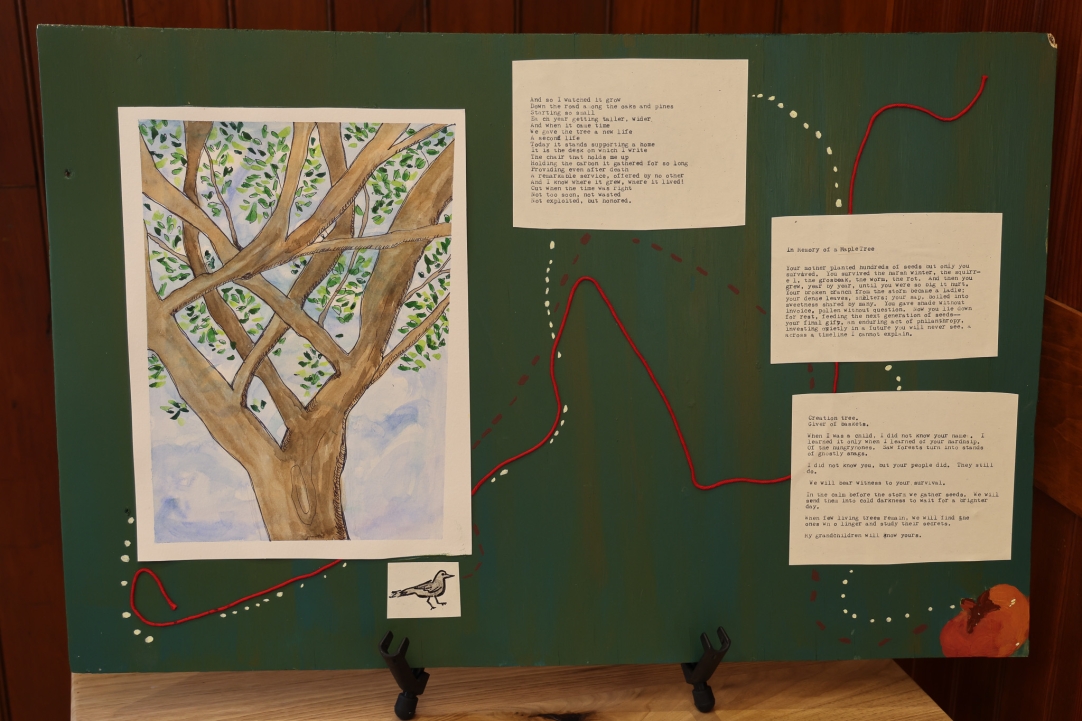
Thread of Futurewood by Smokey House Center Staff. Each piece "is associated with the climate-forward work happening at Smokey House Center: climate-adaptive maple production, green building with local wood, and Ash Stewardship. Each about a tree."
-
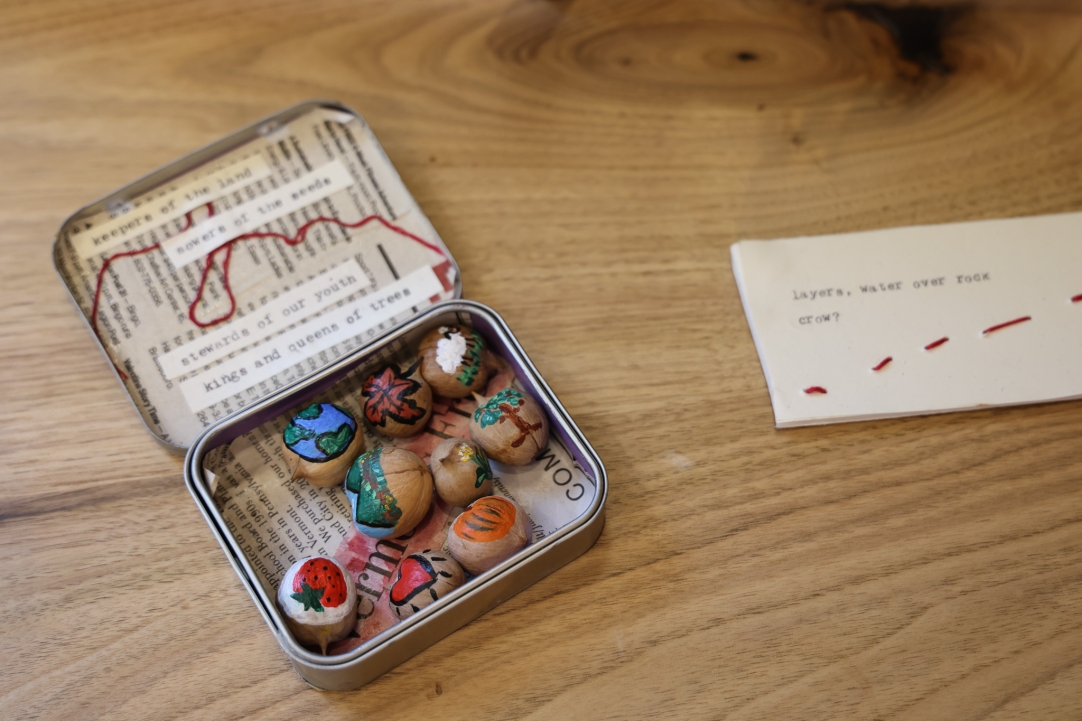
Ode to Smokey House by Lauren Kelly. "Hickory nuts gathered from Smokey House’s forests become small vessels of hope and promise. Each nut is hand-painted with an emblem of our work and partnerships."


Nature’s Voices: A Sensory Journey
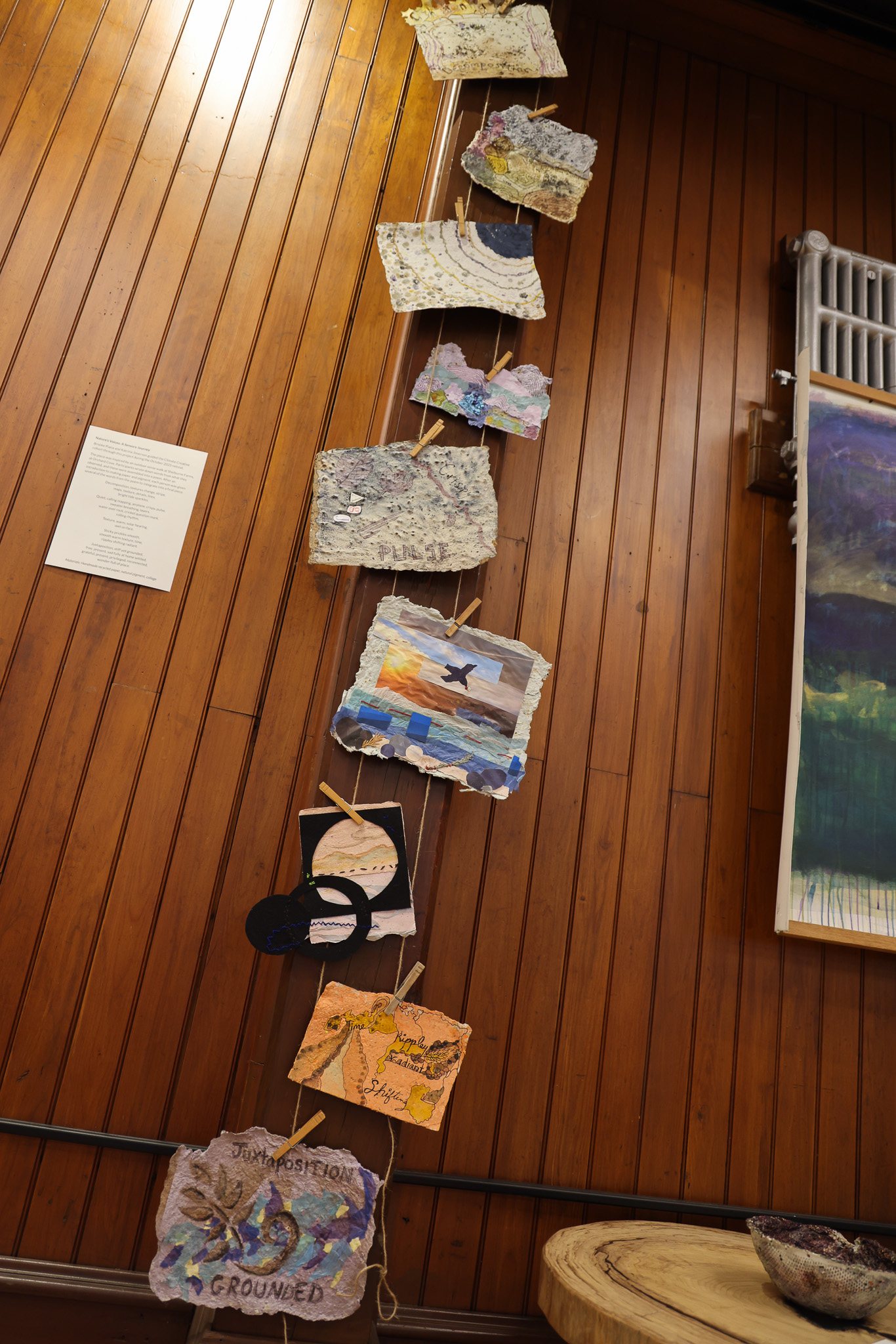
Teaching artists Brooke Piana and Katrina Jimerson guided the Climate Creative cohort through this project during the October 2025 retreat.
The piece was inspired by an outdoor sense walk at Shelburne Farms. Participants wrote down words from what they observed, and these were assembled into a poem. After an introduction to making paper and pigment, each person was given several of the words from the poem to integrate into a final piece.
Decomposition, textures change, stripe,
maps, texture, details, lines,
bright tide sparkles.
Quiet, calling mapping, airplane, crispy, pulse,
sweater breathing, layers,
water over rock, cricket question mark,
rolling rhythm.
Texture, warm, solar hearing,
wet on face.
Sticky prickles smooth,
smooth warm texture, time,
rippley shifting radiant.
Juxtaposition, stiff yet grounded,
free, present, sad fully at home settled,
grateful, present, privileged, reconnected,
wonder-full of place.
Materials: Handmade recycled paper, natural pigment, collage
Julie Carino, Teacher at Northfield Elementary School, VT
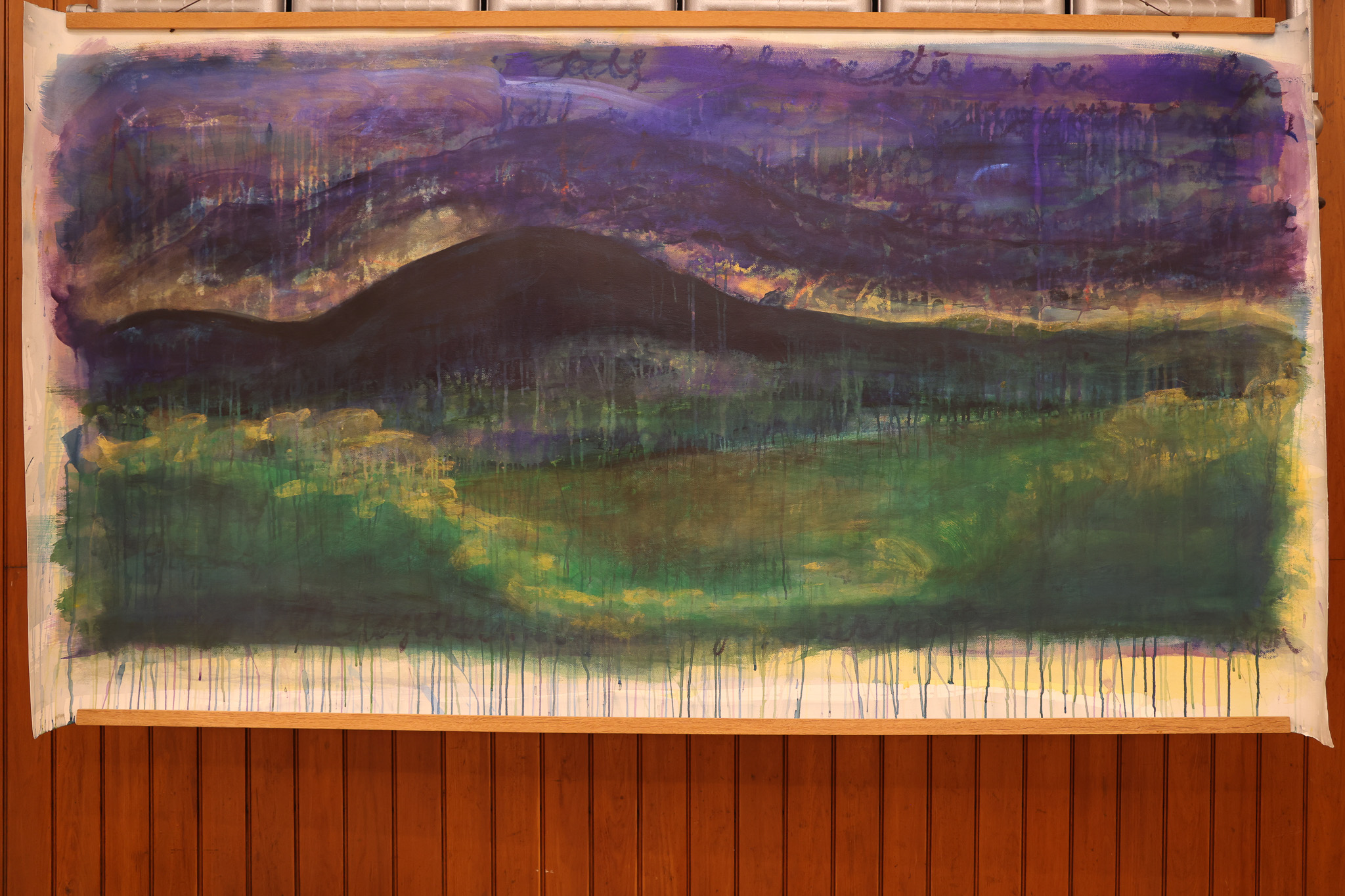
Critical Ritual
The layers speak to the complexity of our time, the political and ecological choices stacking up, and the ways that we can maintain our own personal critical rituals to survive and perhaps thrive. Red words began the painting: "No word for time" and "CRITICAL RITUAL." My mind is often occupied by the tyranny of the day and I found myself creating a golden and purple US flag—first in an outpouring of words, and then in painted stripes. It was soon buried under layers of paint that grew into mountains. They are memory keepers. And despite the cruel realities of human history, the mountains remind us of beauty, scale, and relative stability. The mountains hold history, of our magnificent planet, of our human actions. The sky was heavily influenced by recent experiences of the Northern Lights and the total solar eclipse in 2024. These phenomena were both unexpected delights and ominous feeling gifts. Looking back at this work, and the layers, I have a tremendous sense of gratitude toward the earth and the ancient landforms, especially mountains. I find them endlessly beautiful and powerful. I still gasp a little when I'm traveling my daily route to work and the ridgetops and mountains come into view. Their grounded presence is a comfort.
Materials: Acrylic and oil pastel on archival watercolor paper
Want to know more about these projects? Contact Julie.
-
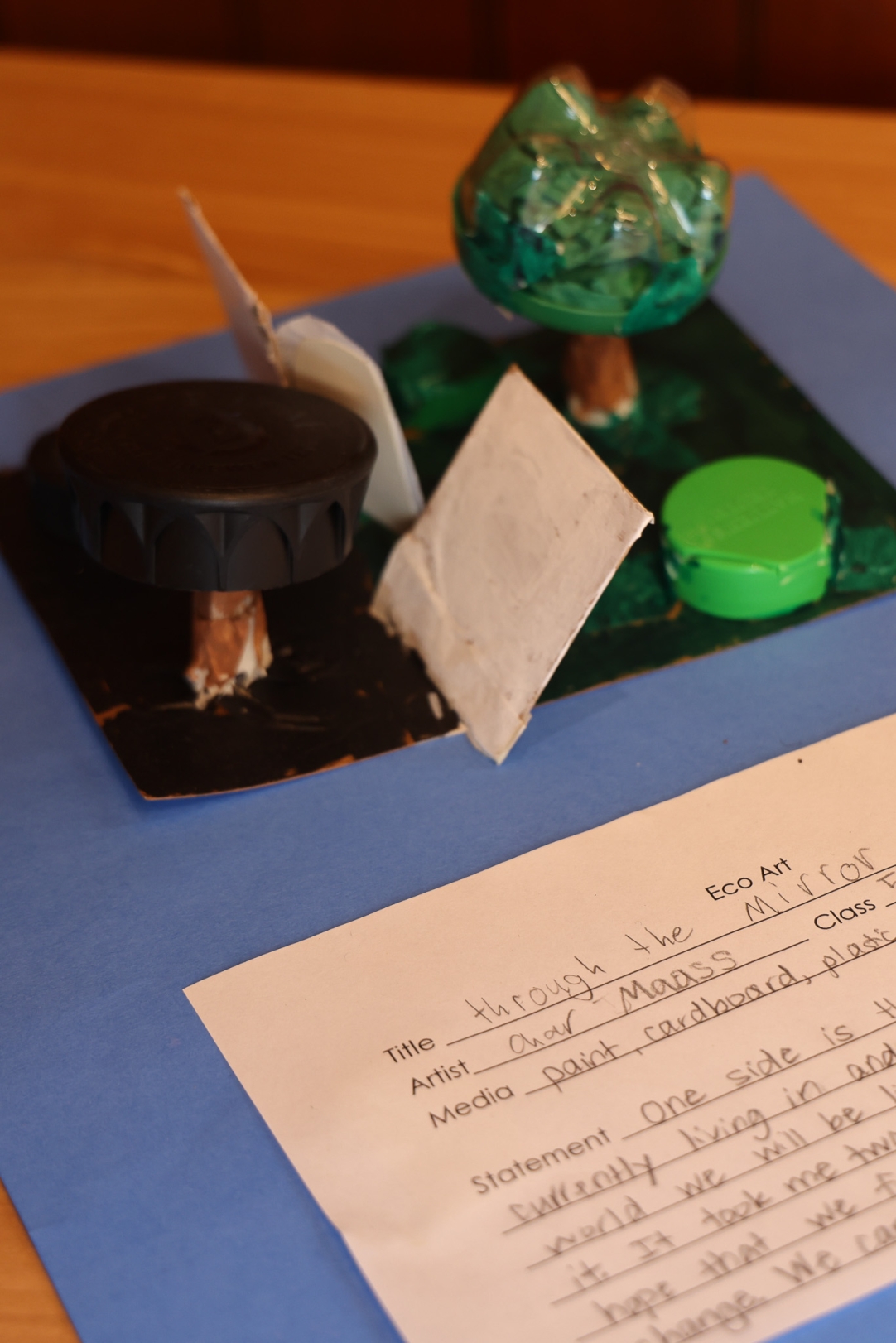
Works by Julie's Eco Art class. Through the Mirror is the Future by Char M. "One side is the world we are currently living in and the other is the world we will be living in if we don't fix it."
-
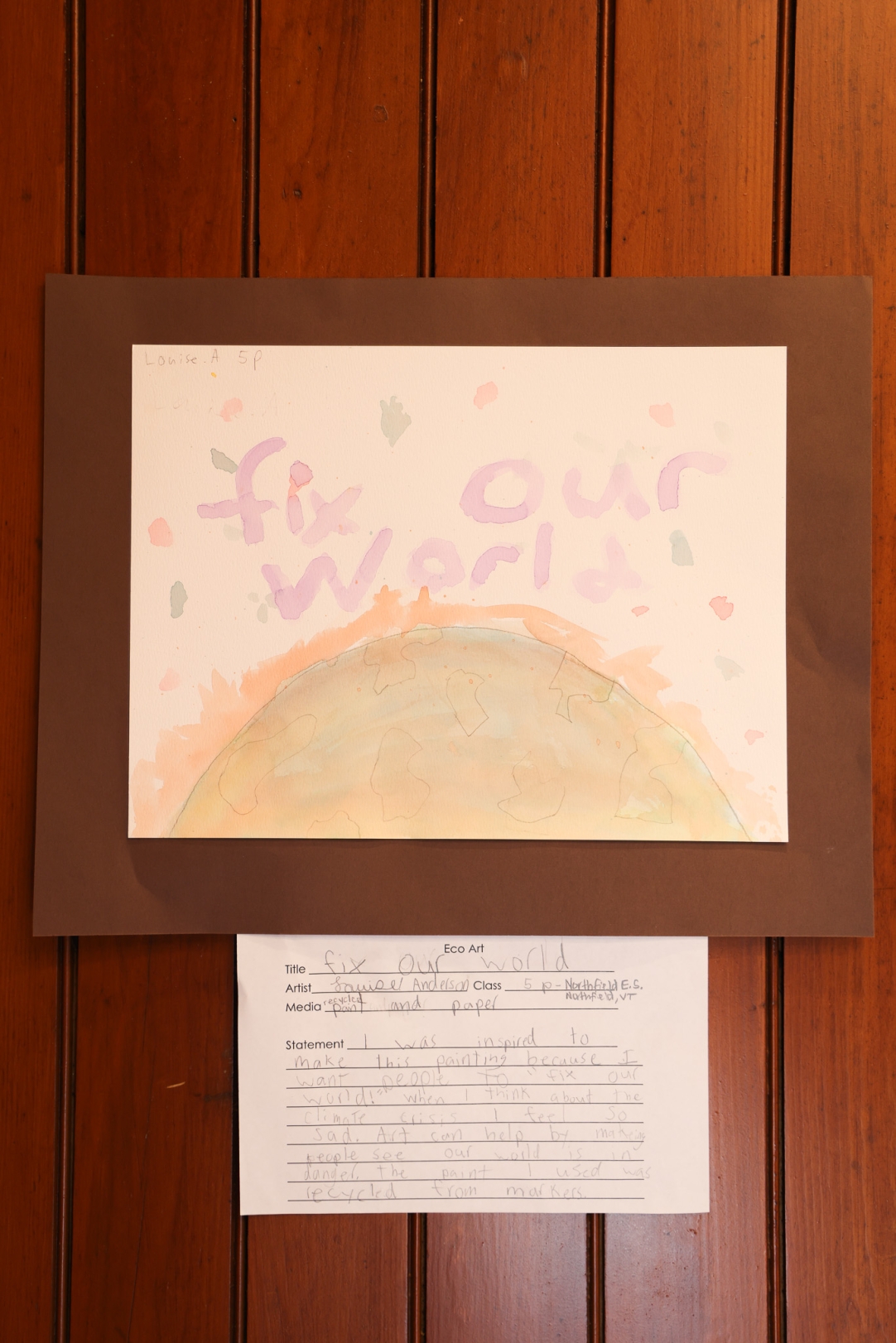
Fix Our World by Louise A. "When I think about the climate crisis I feel so sad. Art can help by making people see our world is in danger."
-
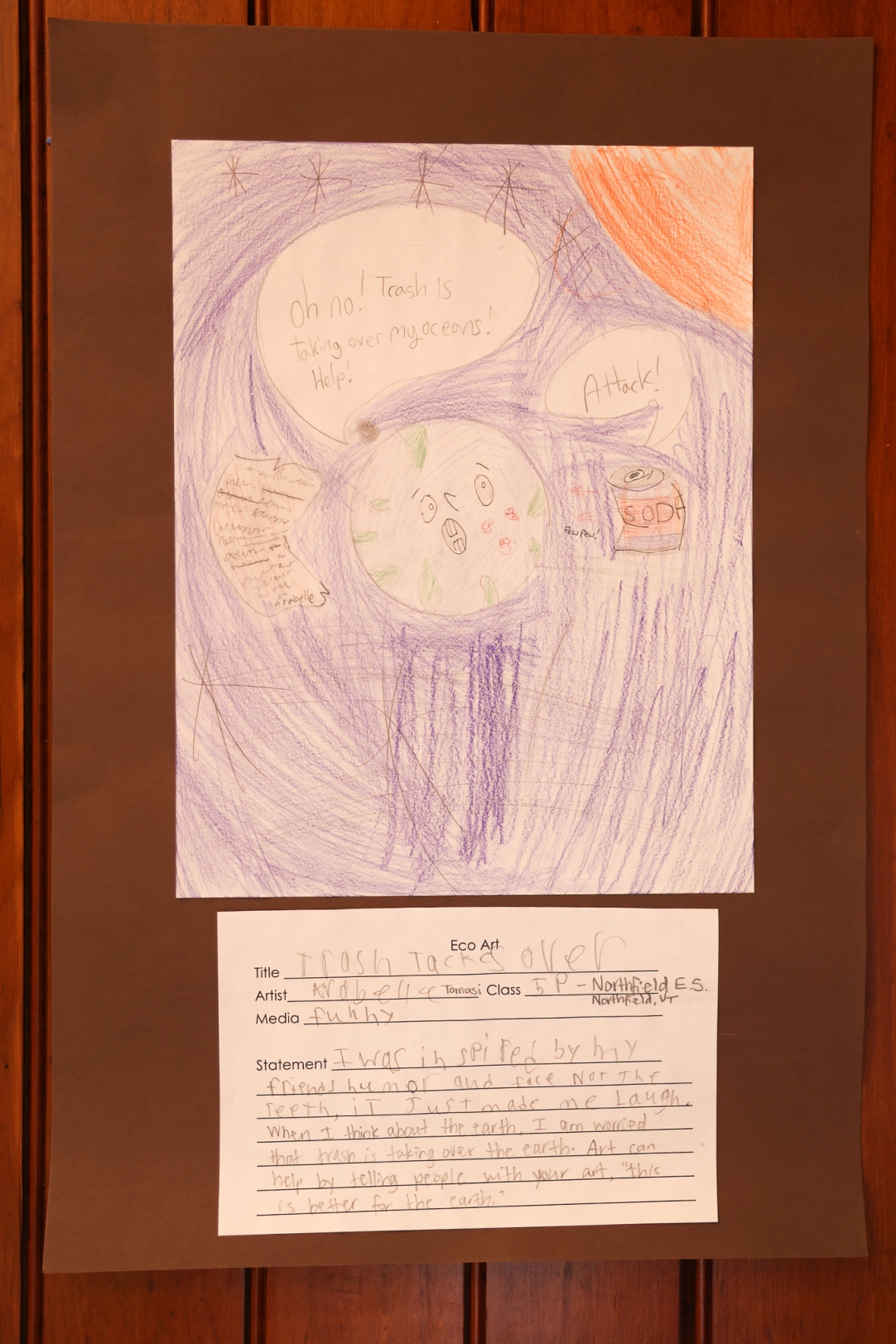
Trash Takes Over by Arabella T.
-
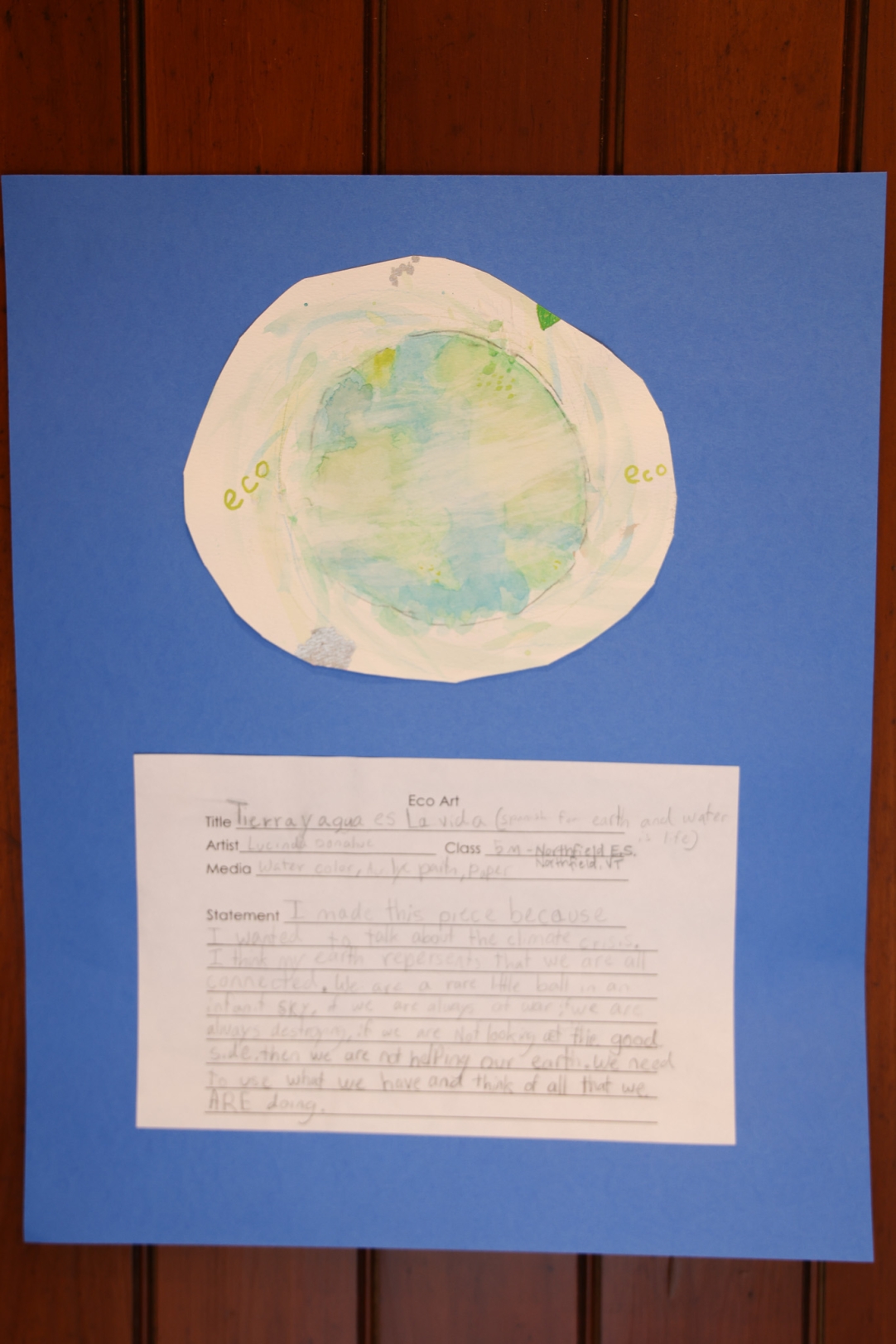
Tierra y Agua es La Vida by Lucinda D.
-
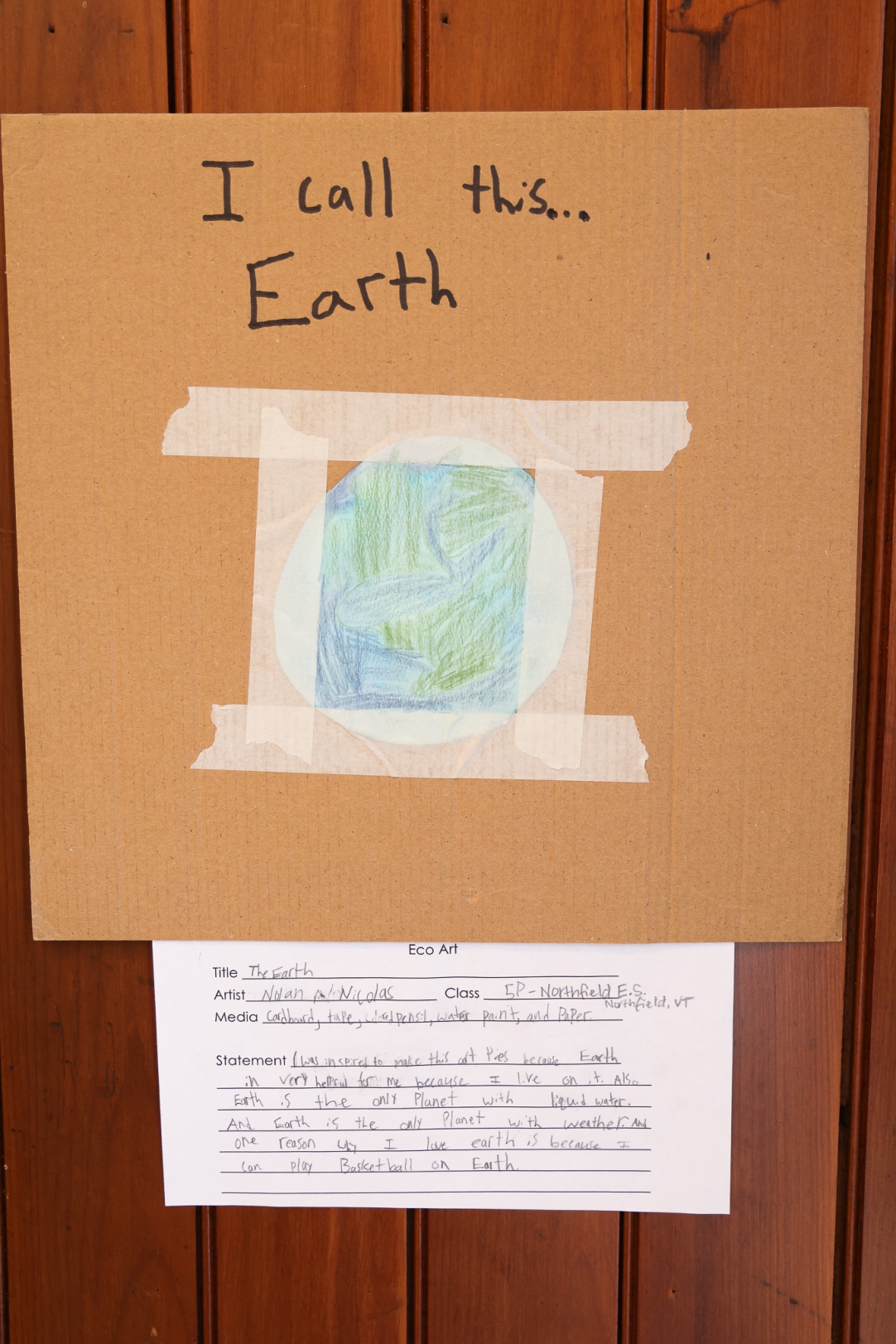
The Earth by Nolan N.


-
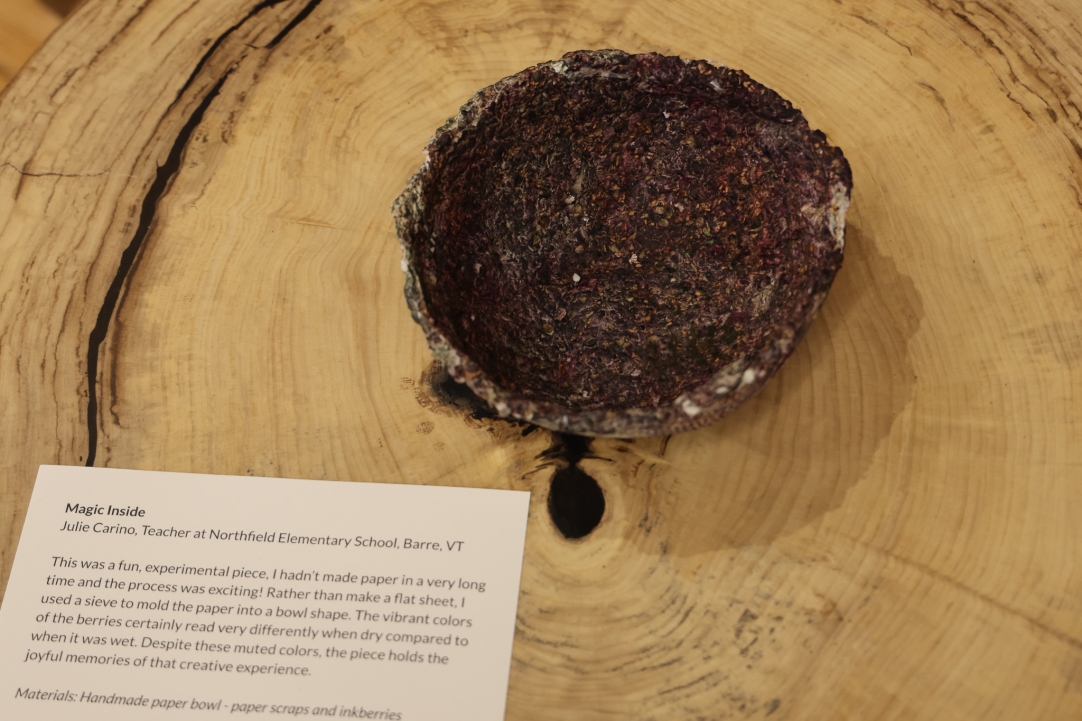
Magic Inside by Julie. "This was a fun, experimental piece, I hadn’t made paper in a very long time and the process was exciting! Rather than make a flat sheet, I used a sieve to mold the paper into a bowl shape. The vibrant colors of inkberries certainly read very differently when dry compared to when it was wet. Despite these muted colors, the piece holds the joyful memories of that creative experience."
-
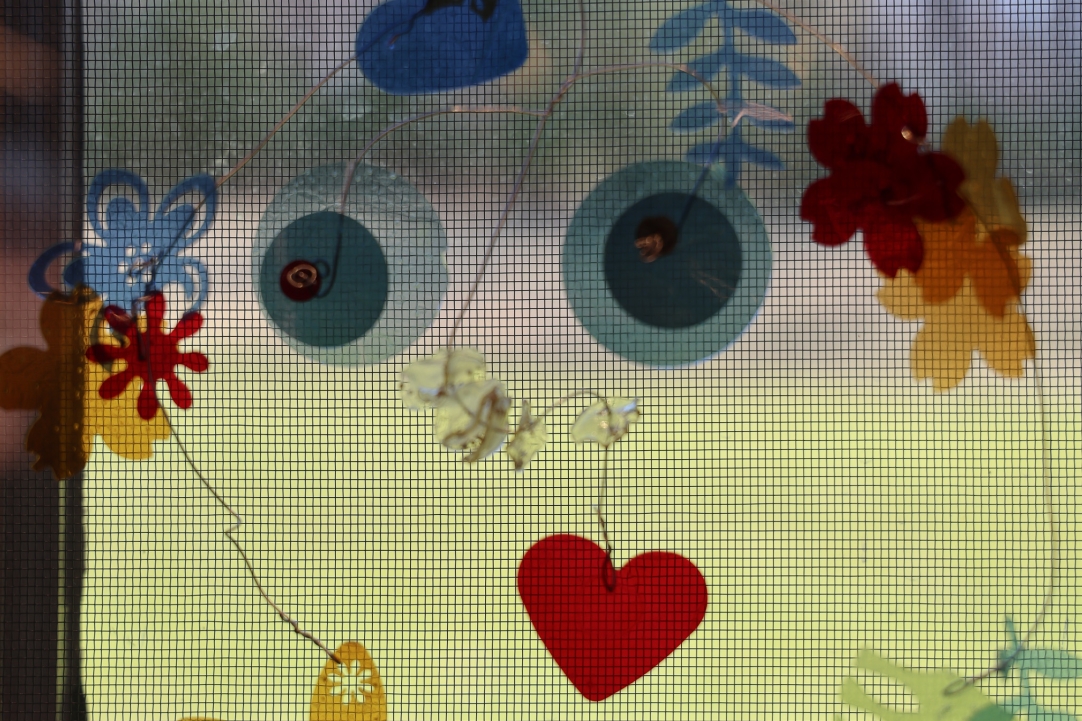
Thalassophile by Julie. "We learned to make bioplastic with the amazing Muriel Stallworth. She inspired me with her powerful, hopeful attitude and the words she used to describe herself: “I am a Possibil-ist.” When I worked with the bioplastic pieces Muriel generously supplied, I could not help but see seaweed, plastics in the ocean, beauty and mystery and grief and hope combined. The 'thalassophile' (a person who has a profound love for the ocean and sea) emerged spontaneously as I playfully moved around the materials."


Meg Lyons, Teacher at Northfield Middle High School, VT
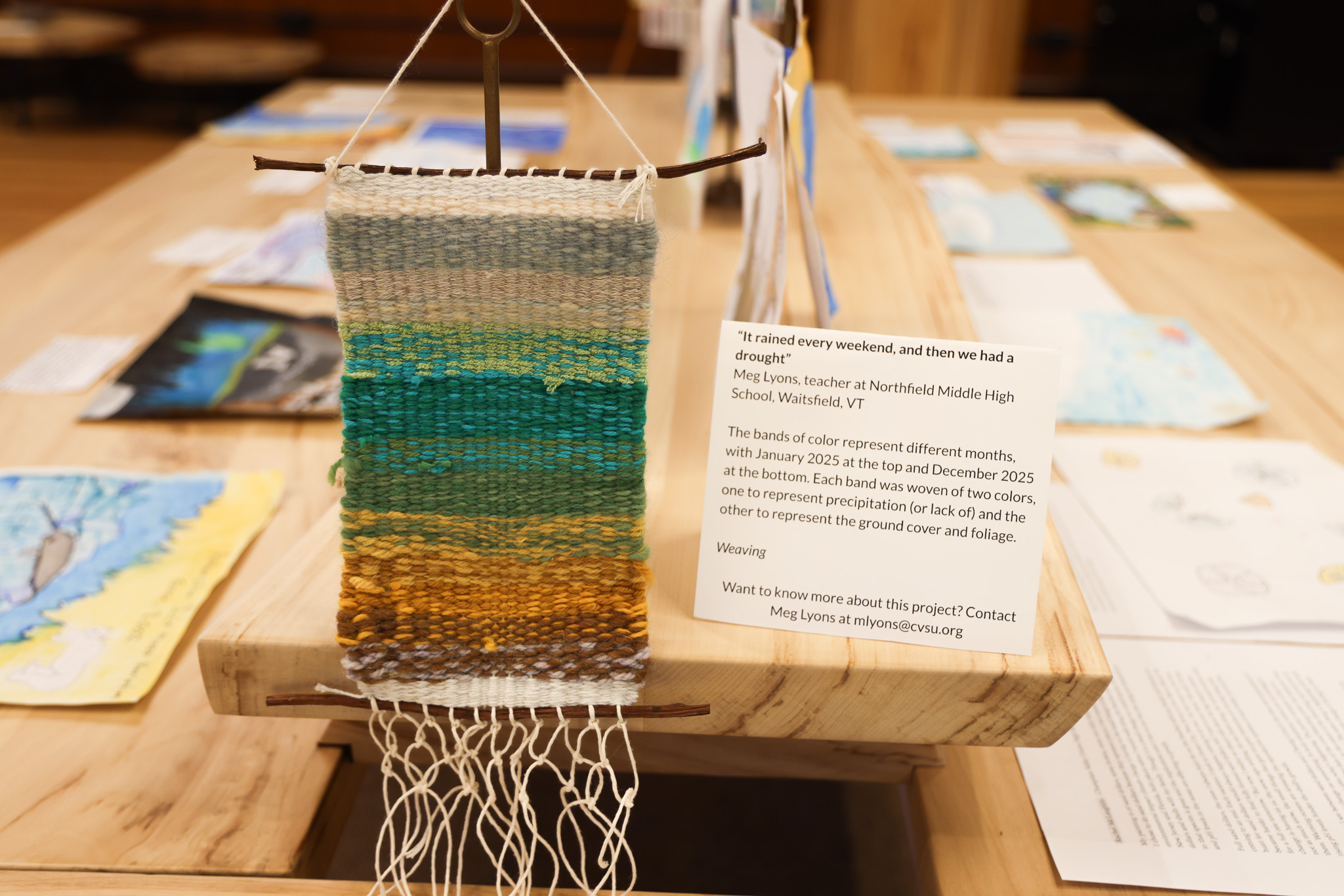
“It rained every weekend, and then we had a drought”
The bands of color represent different months, with January 2025 at the top and December 2025 at the bottom. Each band was woven of two colors, one to represent precipitation (or lack of) and the other to represent the ground cover and foliage.
Weaving
Want to know more about this project? Contact Meg Lyons.
-
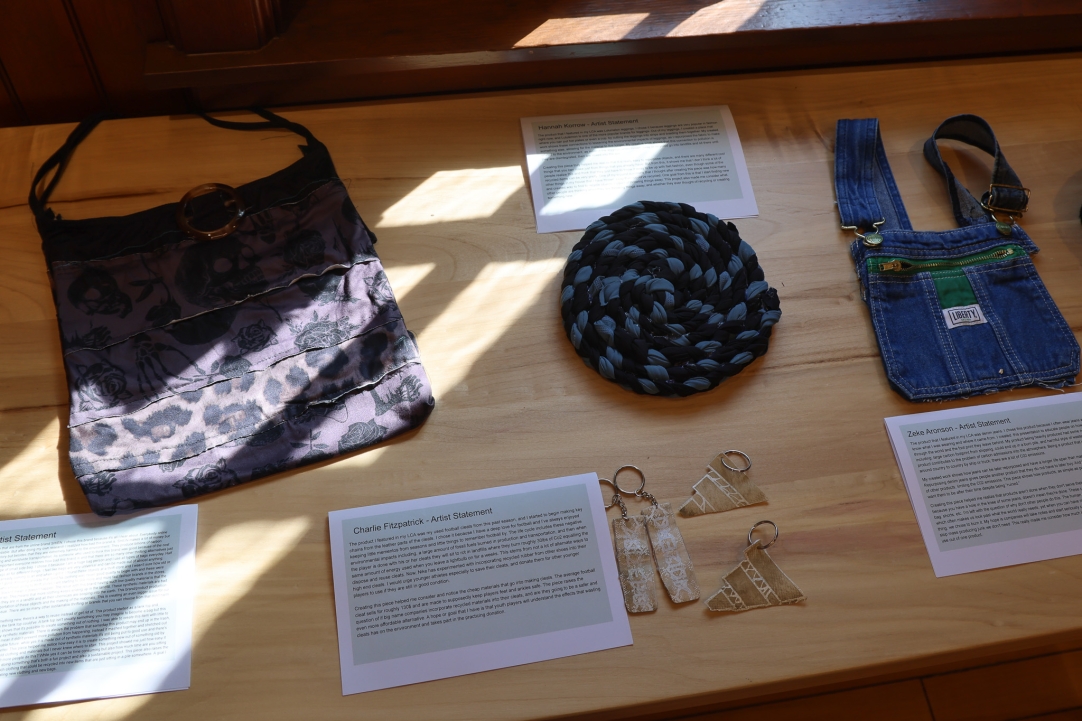
Student work from a midterm project in an Introduction to Environmental Science course taught by Meg Lyons. Each traced an everyday item from cradle to grave, then disrupted the cycle by giving the item a second or alternative life. Left to right: Sewn Handbag from Shein clothing by Luna W; Lululemon leggings trivet by Hannah K; Football Cleat keychains by Charlie F.; Small Handbag from Jeans by Zeke A.
-
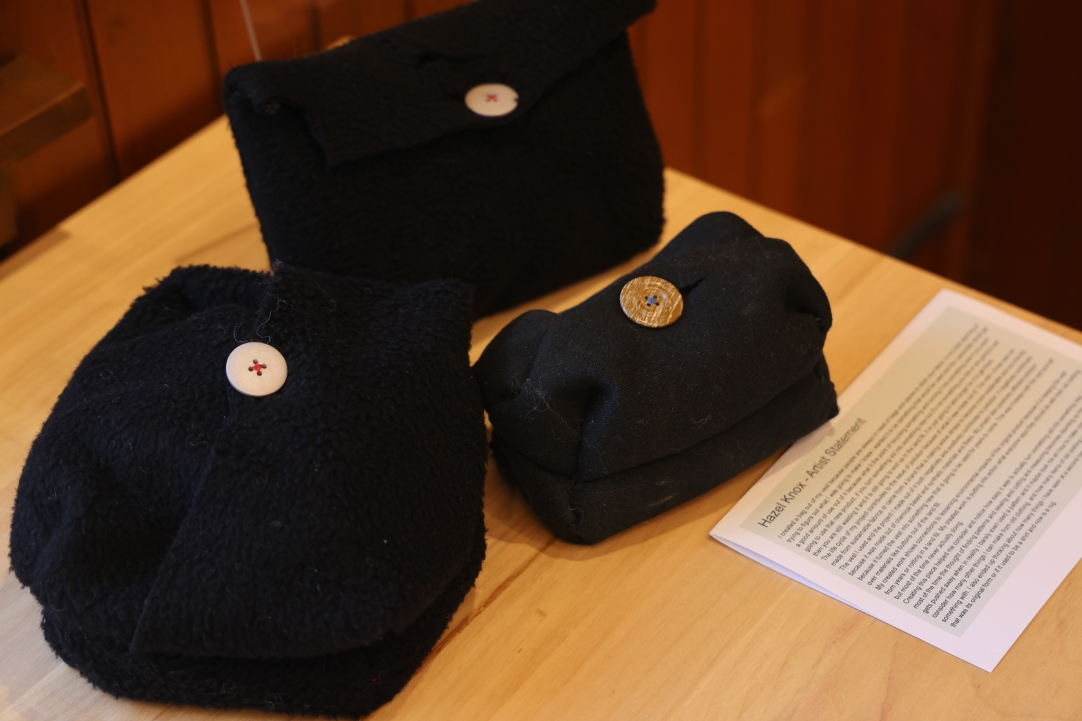
Sewn pouches from Patagonia, Cotopaxi, and Old Navy vests by Hazel K.
-
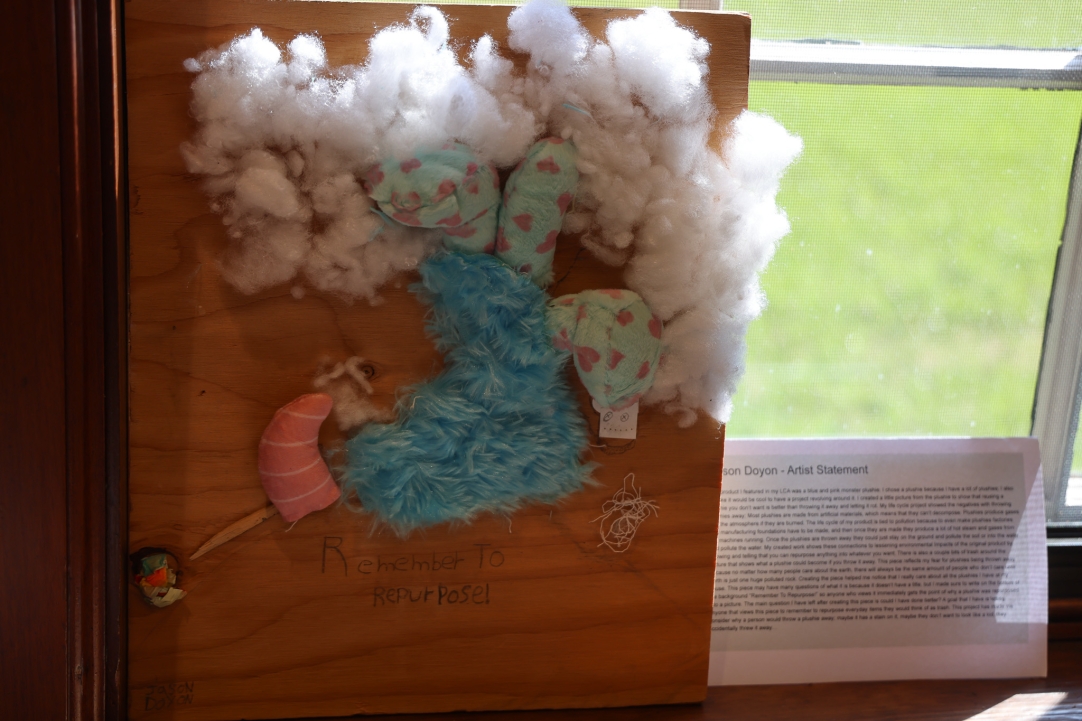
3D/relief collage tree from a stuffed plushie by Jason D.


Daisy Hutter, Special Collaborator & Teaching Artist at Shelburne Craft School, VT
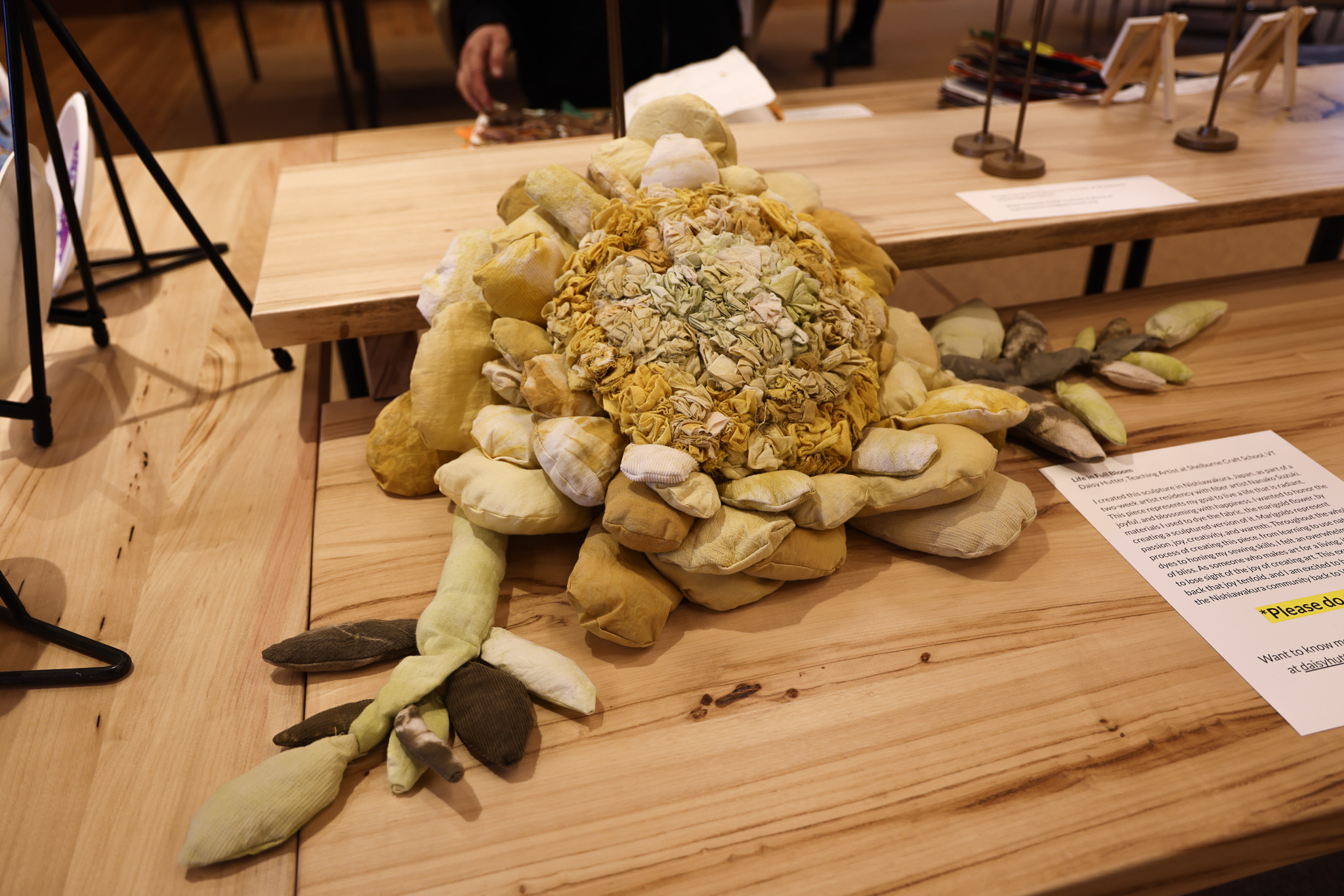
Life in Full Bloom
I created this sculpture in Nishiawakura, Japan, as part of a two-week artist residency with fiber artist Nanako Suzuki. This piece represents my goal to live a life that is radiant, joyful, and blossoming with happiness. I wanted to honor the materials I used to dye the fabric, the marigold flower, by creating a sculptured version of it. Marigolds represent passion, joy, creativity, and warmth. Throughout the whole process of creating this piece, from learning to use natural dyes to honing my sewing skills, I felt an overwhelming sense of bliss. As someone who makes art for a living, it can be easy to lose sight of the joy of creating art. This experience brought back that joy tenfold, and I am excited to bring the warmth of the Nishiawakura community back to Vermont with me.
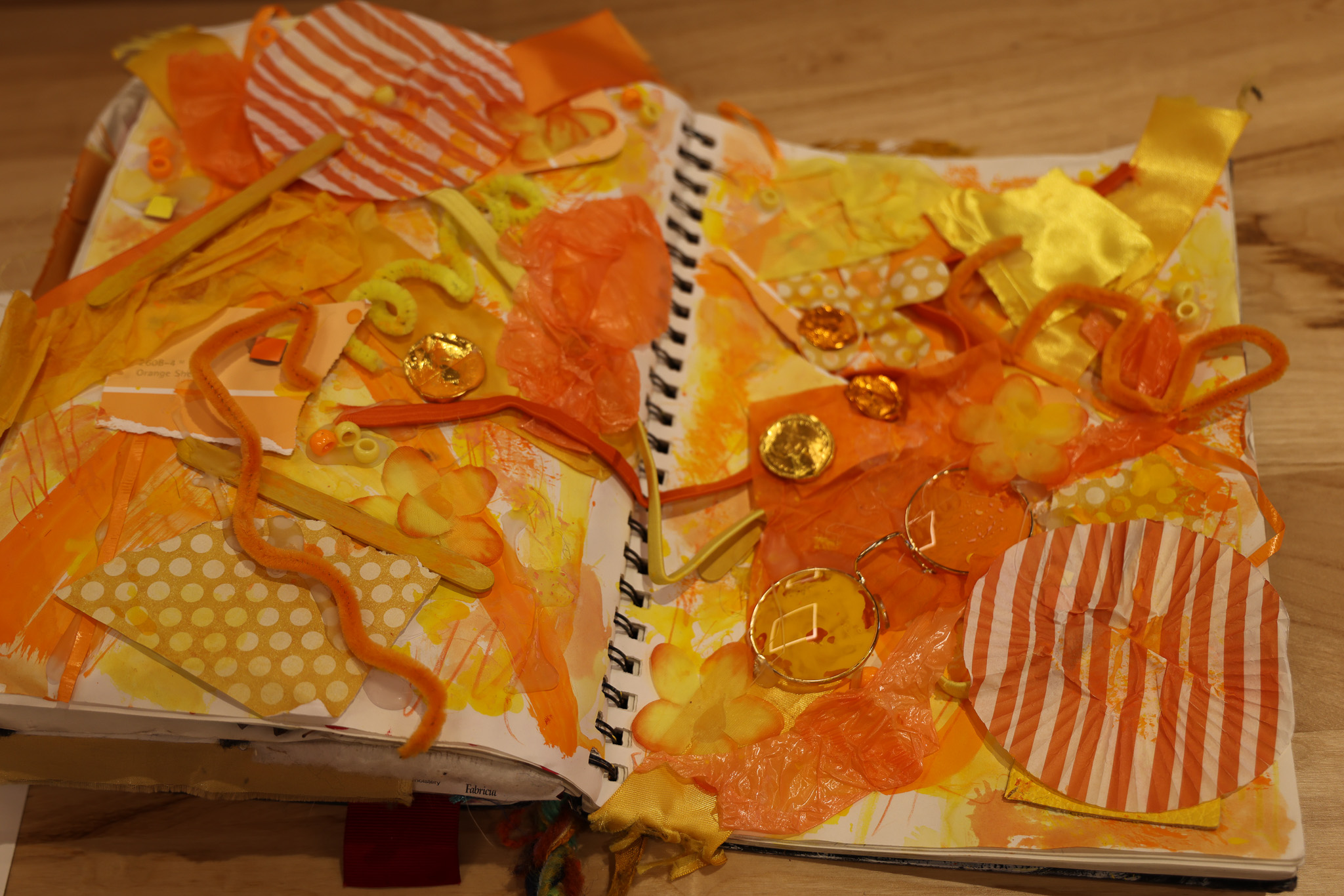
Art Journals
As an artist, I believe it is important to find ways to explore and work through creative ideas. When I was a sophomore in high school, I was given the weekly assignment to fill a page of a sketchbook for at least an hour. This activity helped shape my voice as an artist by providing me with the space to experiment with a wide range of artistic media and ideas. The three sketchbooks here are from three different stages of my life: high school, college, and teaching an after-school sketchbook class for kids at the Shelburne Craft School. Displaying these sketchbooks together is meaningful as they track my journey as an artist and art teacher. I hope these sketchbooks inspire others to start art journaling and making through the lens of freedom and exploration.
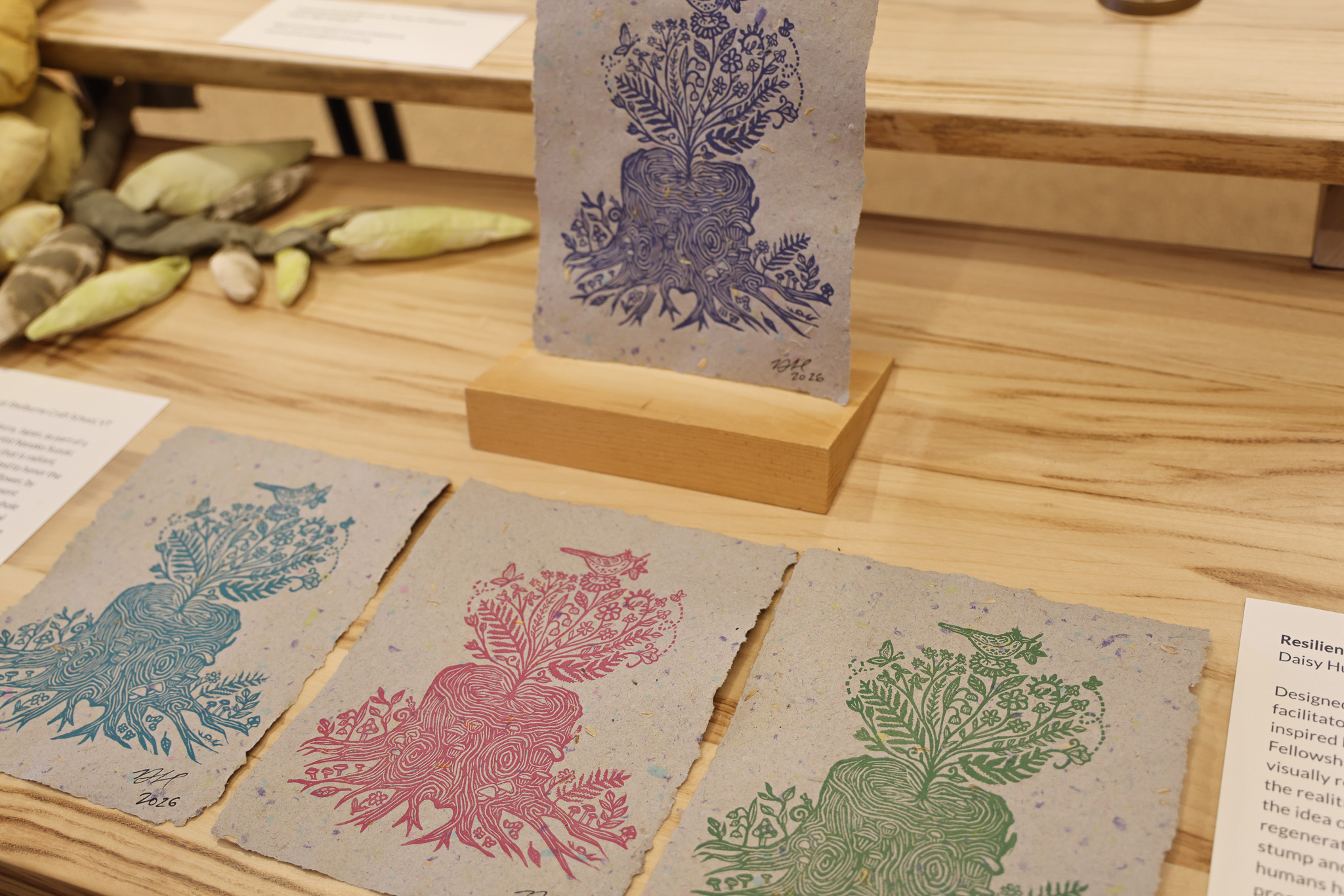
Resilience in Bloom
Designed in collaboration with professional learning facilitators at Shelburne Farms, this print is directly inspired by the themes of both the Climate Resiliency Fellowship and Climate Creative. When considering how to visually represent program participants' engagement with the realities of climate change through hope and justice, the idea of a chopped-down tree blooming and regenerating came to mind. While we can look at a tree stump and it can spark feelings of guilt and dread for what humans have done to disturb the natural world, we can process those emotions into hope for how we can support regrowth going forward. Resiliency blooms when we collaborate, engage in conversation, and think creatively.
Hand-printed on handmade wildflower seed paper
Want to know more about these projects? Find Daisy at daisydoesart.com.
Annie Bellerose, Teacher at Champlain Valley Union High School, VT
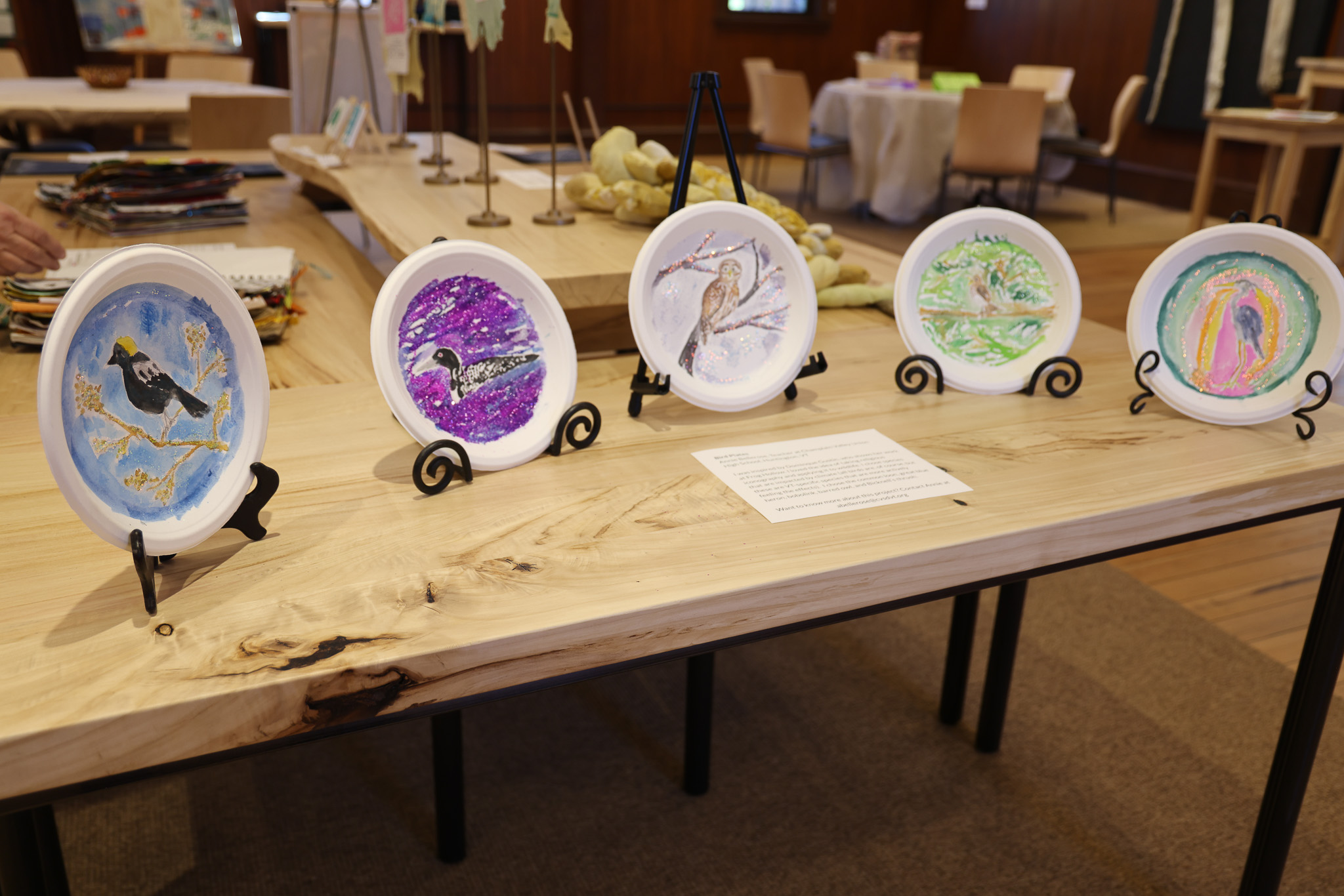
Bird Plates
I was inspired by Dominque Gustin, who shows her work at Frog Hollow. I loved the idea of taking religious iconography and applying it to wildlife. I chose species that are impacted by climate (all birds are, of course, but these are VT-specific species that are more actively feeling the effects). I chose the common loon, great blue heron, bobolink, barred owl, and Bicknell’s thrush.
Want to know more about this project? Contact Annie.
-
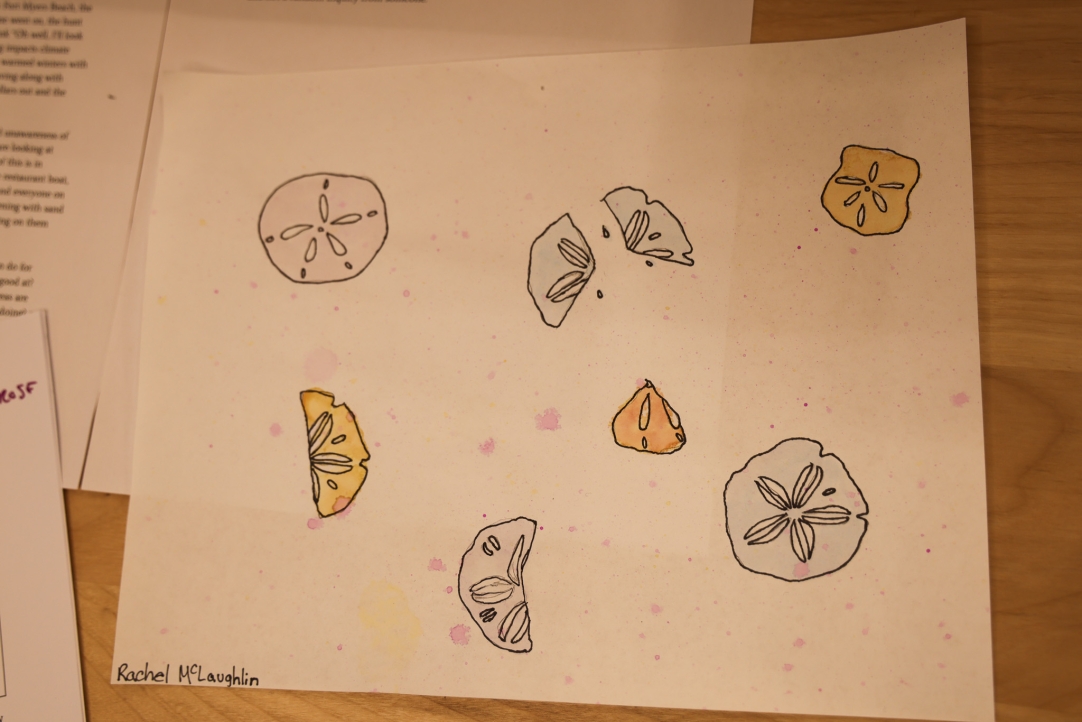
Projects by Grade 11–12 Environmental Literature students with Annie Bellerose. The prompt: create a piece of art about a place, species, or activity you care about and what it means to care for it in a changing climate. By Rachel M.
-
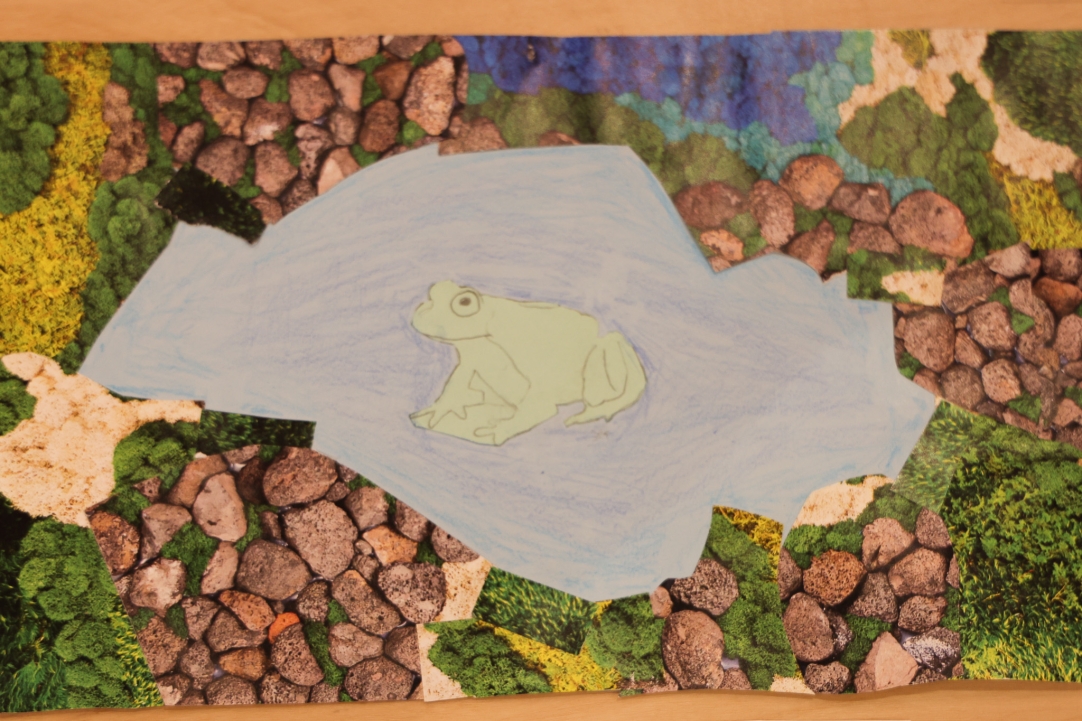
By Grady F.
-
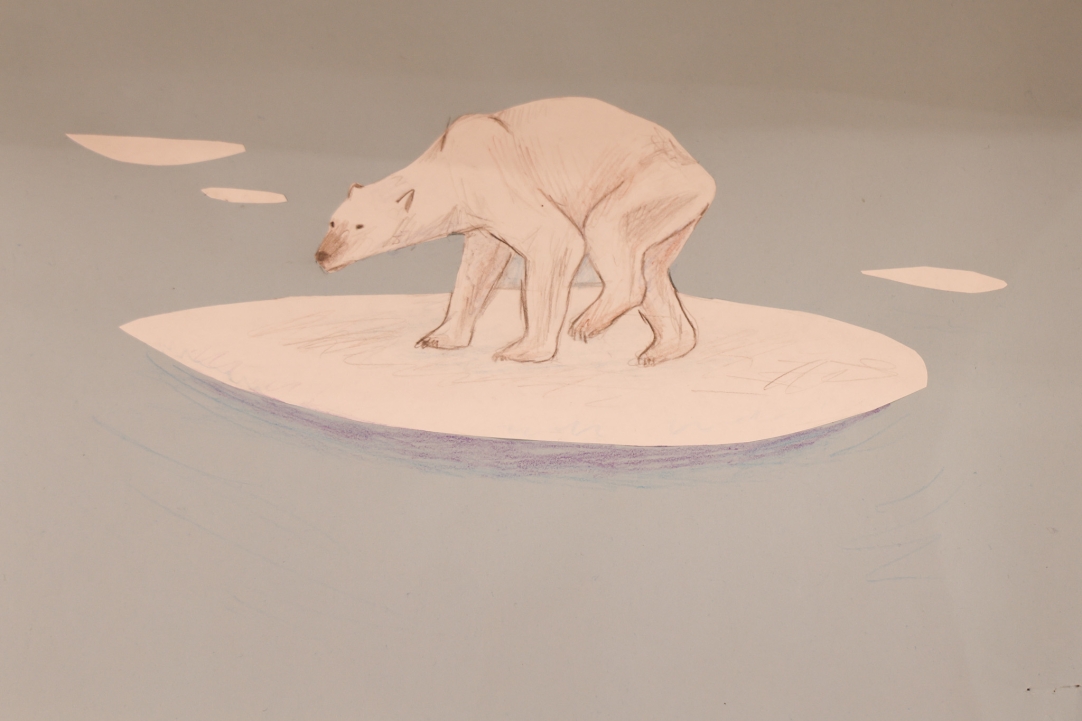
By Penelope H.
-
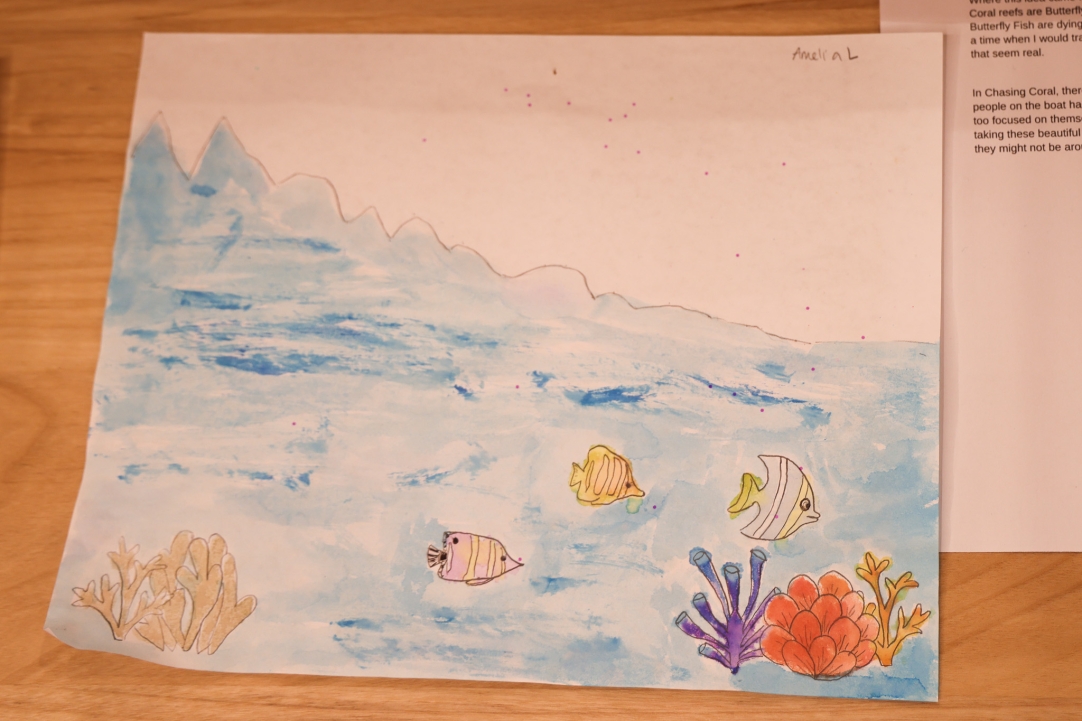
By Amelia L.


-
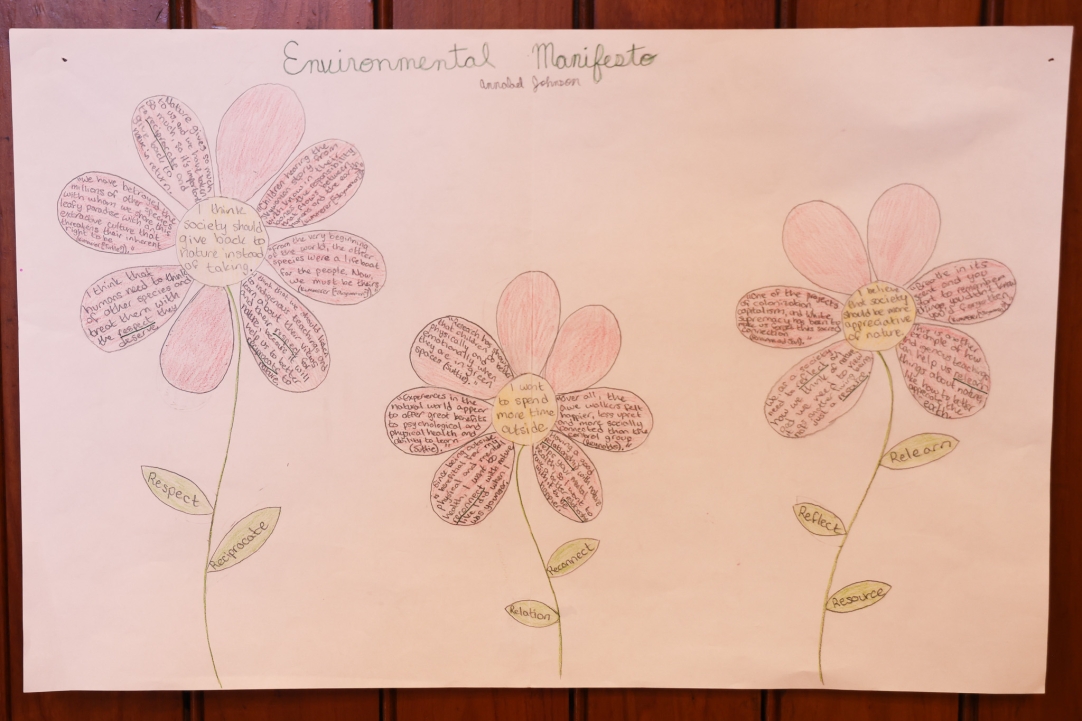
In Annie's Environmental Literature class, students were asked to create a manifesto describing what they wished their relationship, and society's relationship, to the natural world to be. By Annabel J.
-
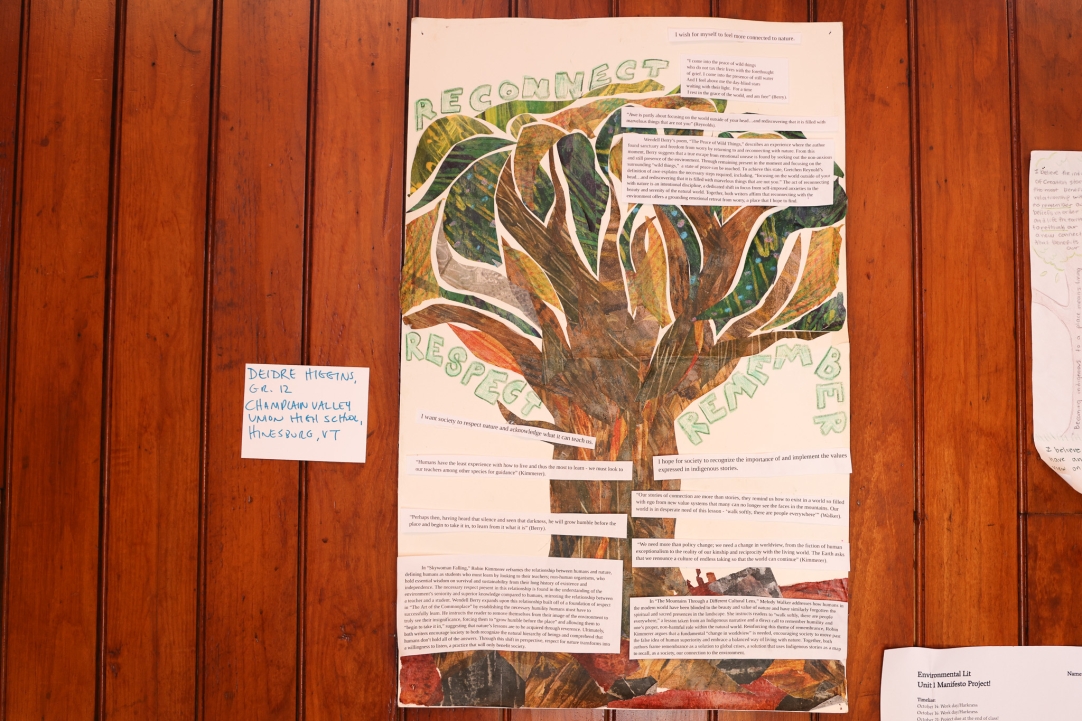
By Deidre H.
-
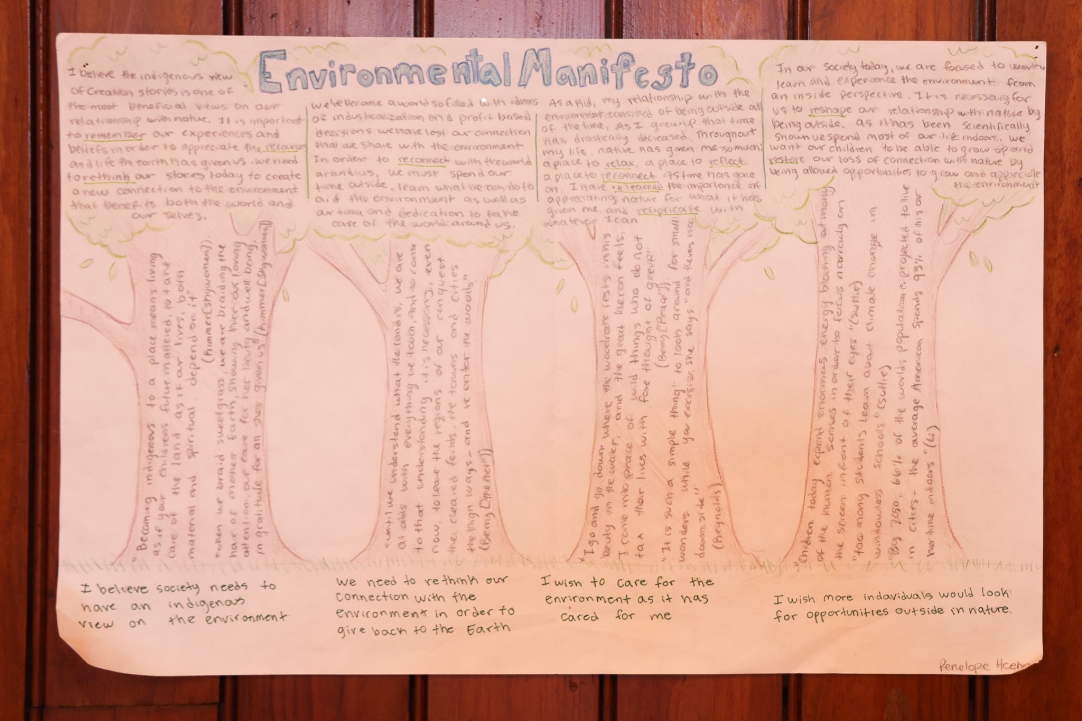
By Penelope H.


Susy Remillard, Teacher at Nauset Regional Middle School, Orleans, MA
Students engage in the data visualization project as part of the 8th grade Changemakers course. In this course, students work together to create local environmental action plans alongside local nonprofit groups as they develop the skills of environmental stewardship and build confidence through authentic engagement with the natural world and her conservators. Using art to illustrate the scientific data that underpins our understanding of global climate change provides opportunities for students to explore the causes and impacts of humanity’s choices and provides a medium to engage with a larger audience.
-
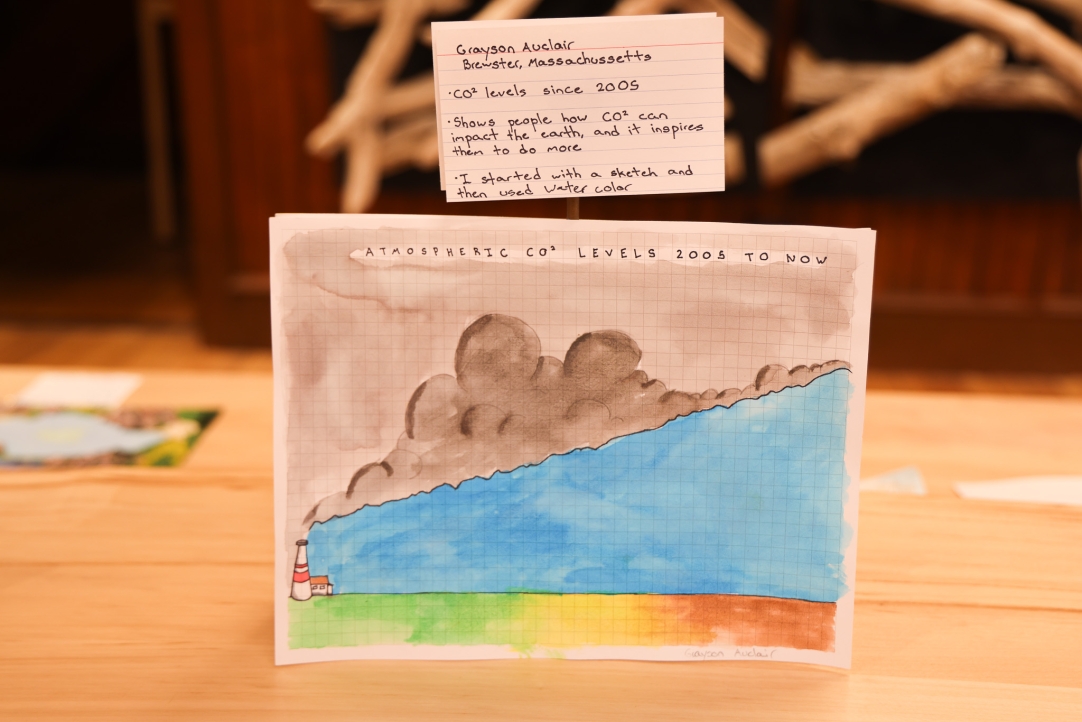
By Grayson A.
-
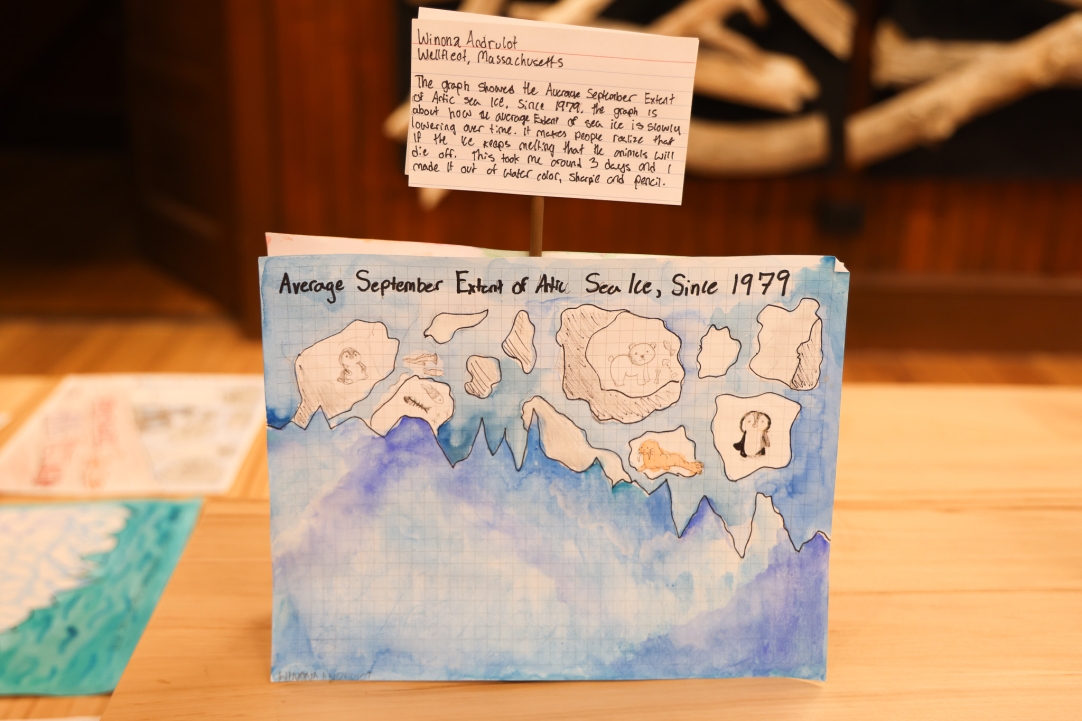
By Winona A.
-
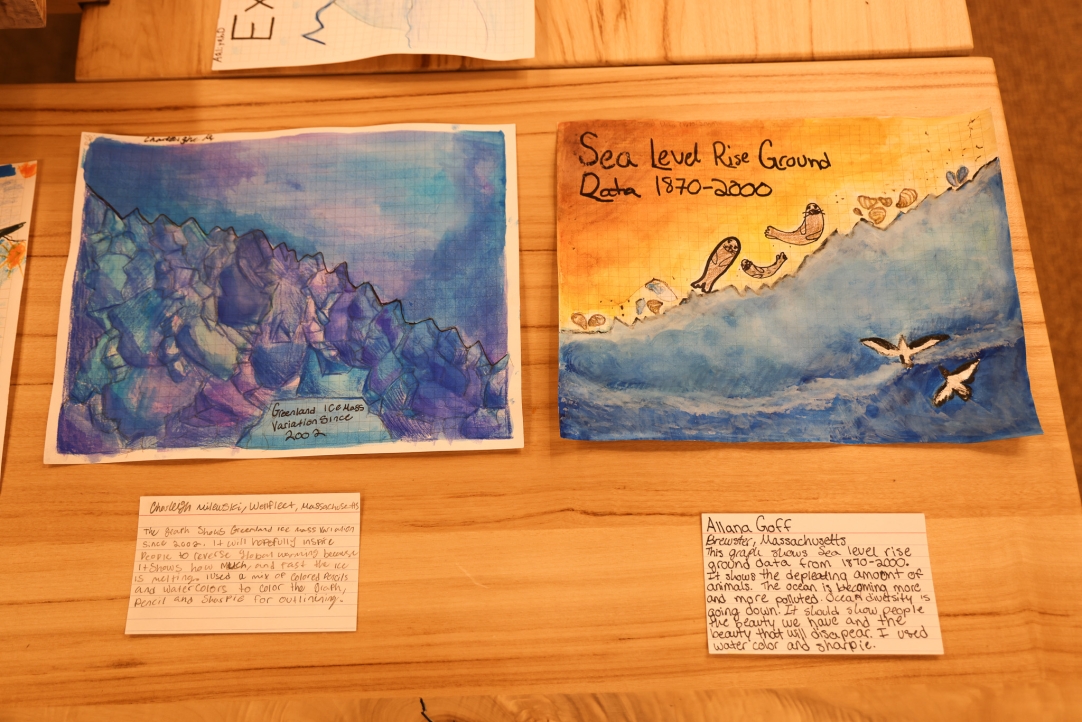
By Charleigh M. (left) and Allana G. (right)
-
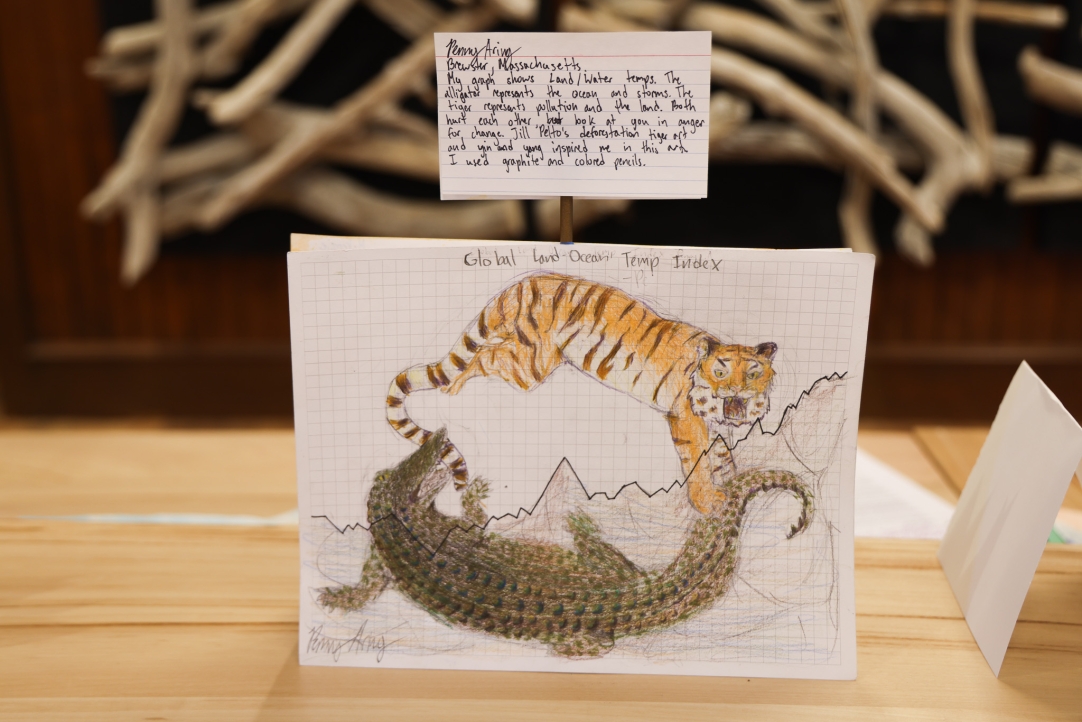
By Penny A.
-
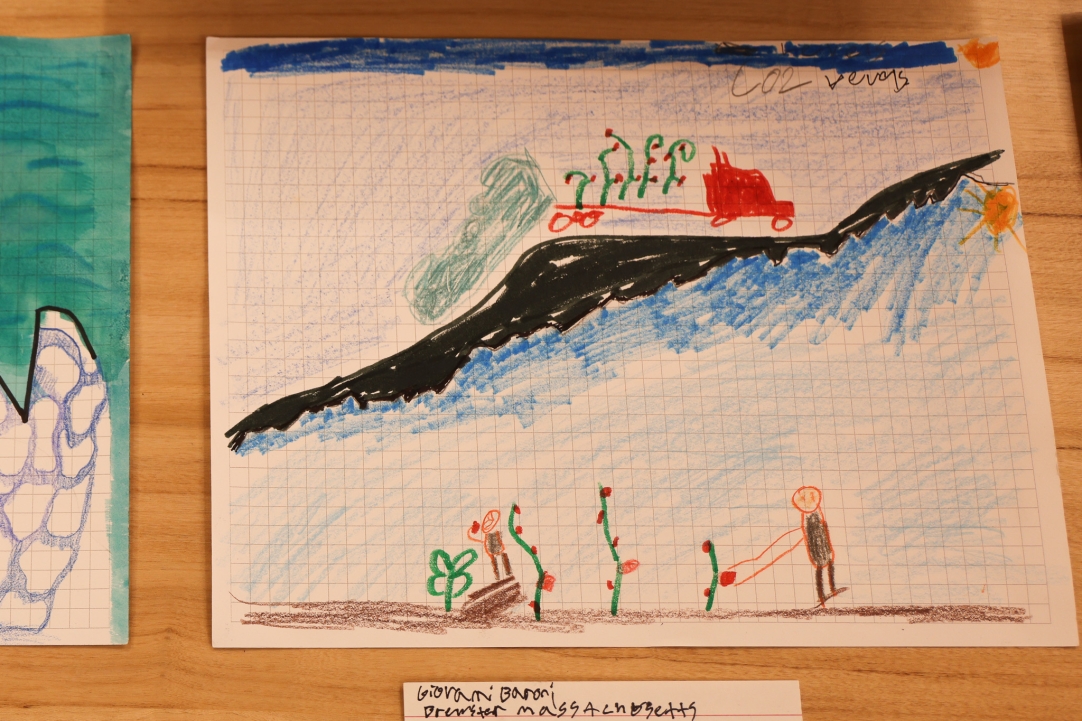
By Giovani B.
-
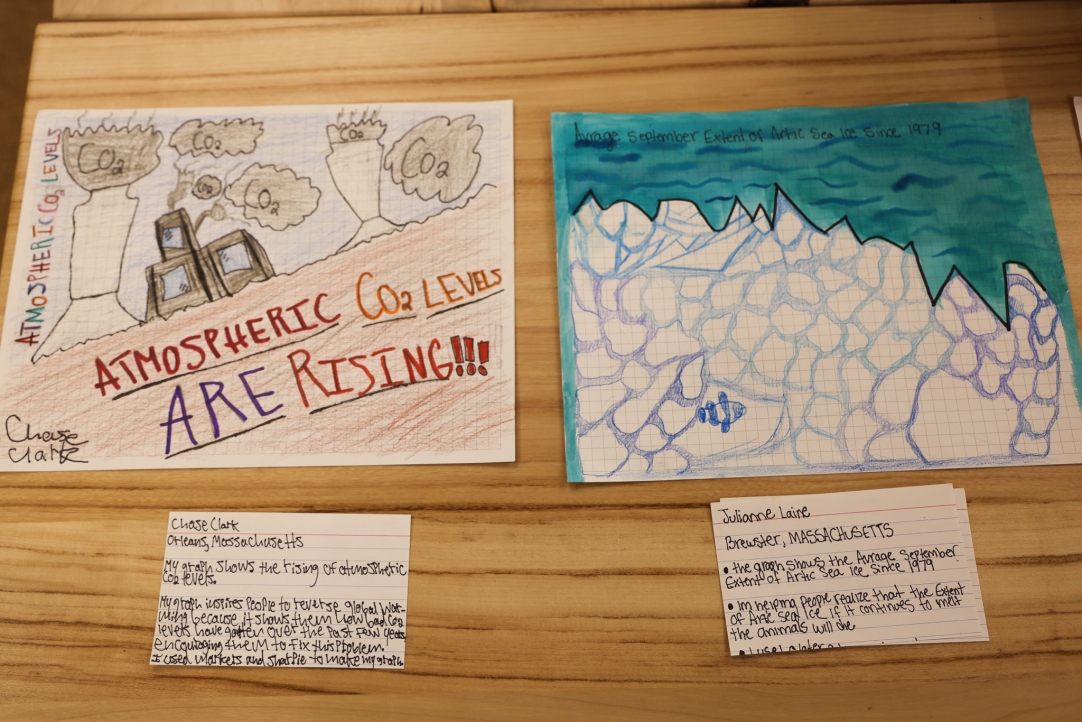
By Chase C. (left) and Julianne L. (right)
-
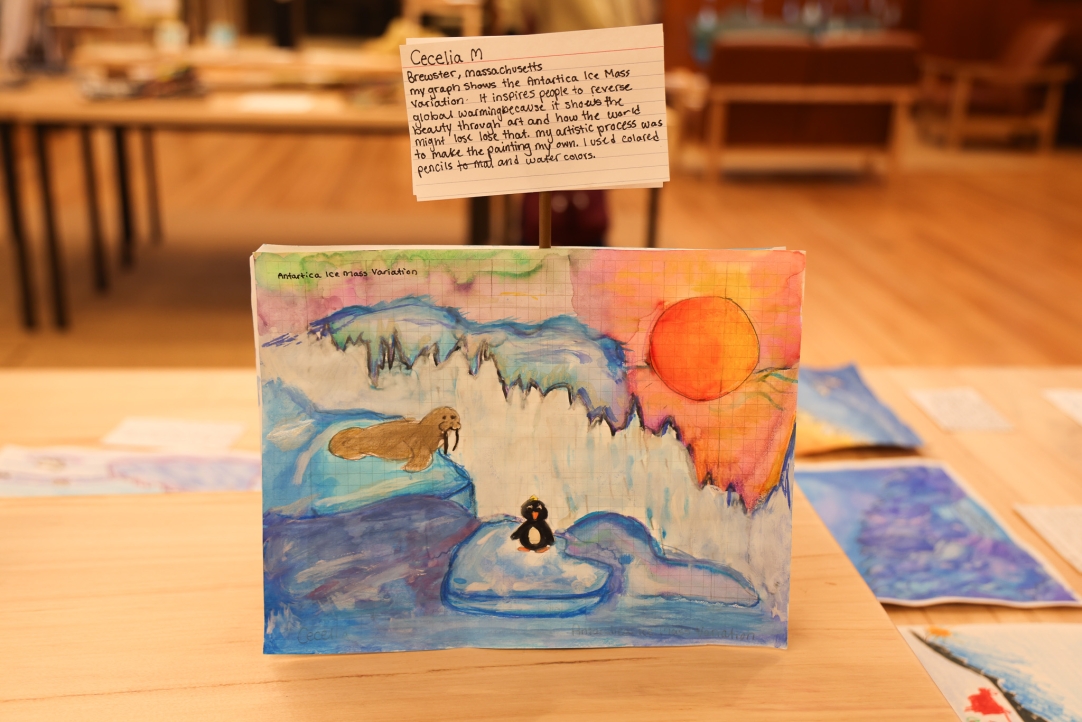
By Cecelia M.
-
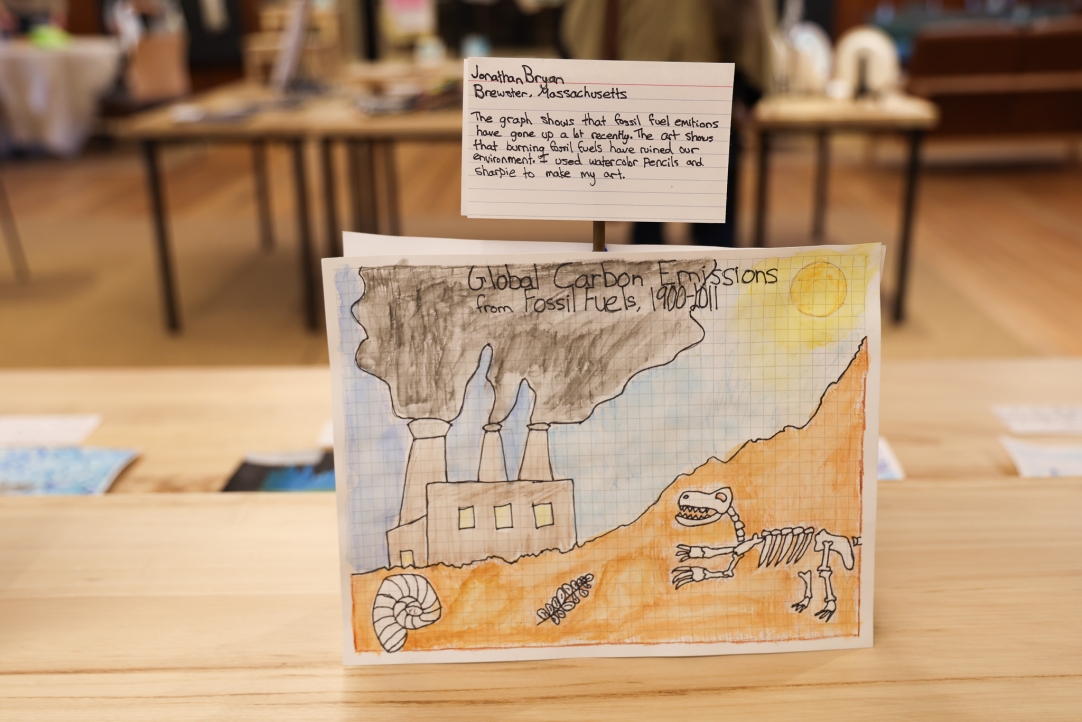
By Jonathan B.
-
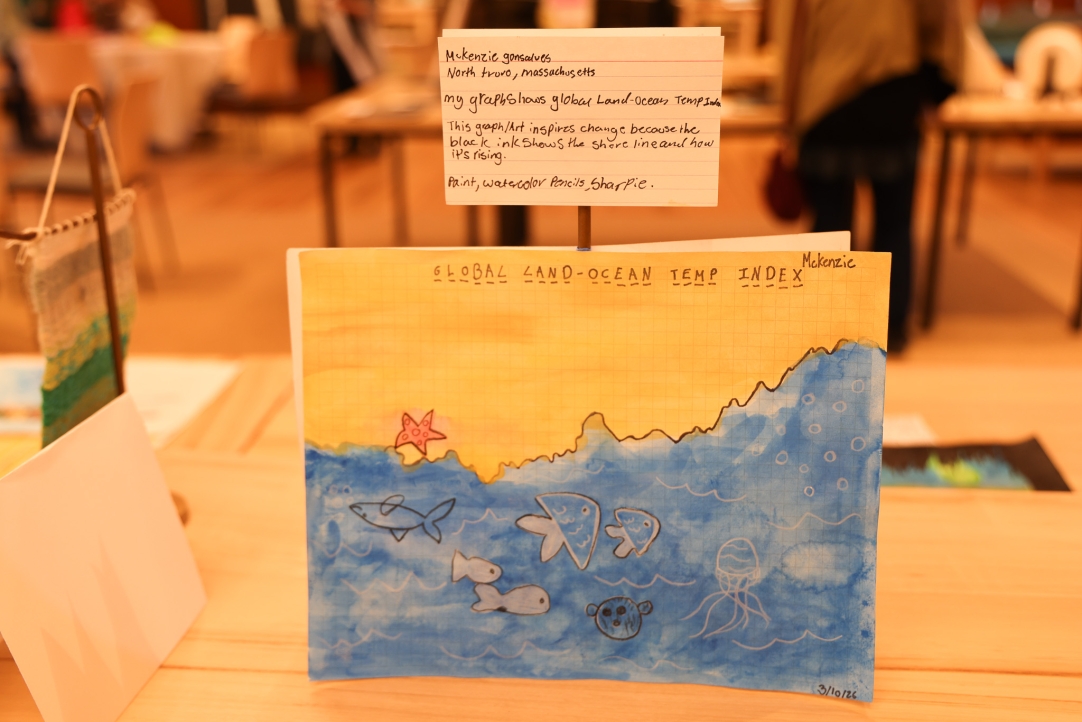
By Mckenzie G.
-
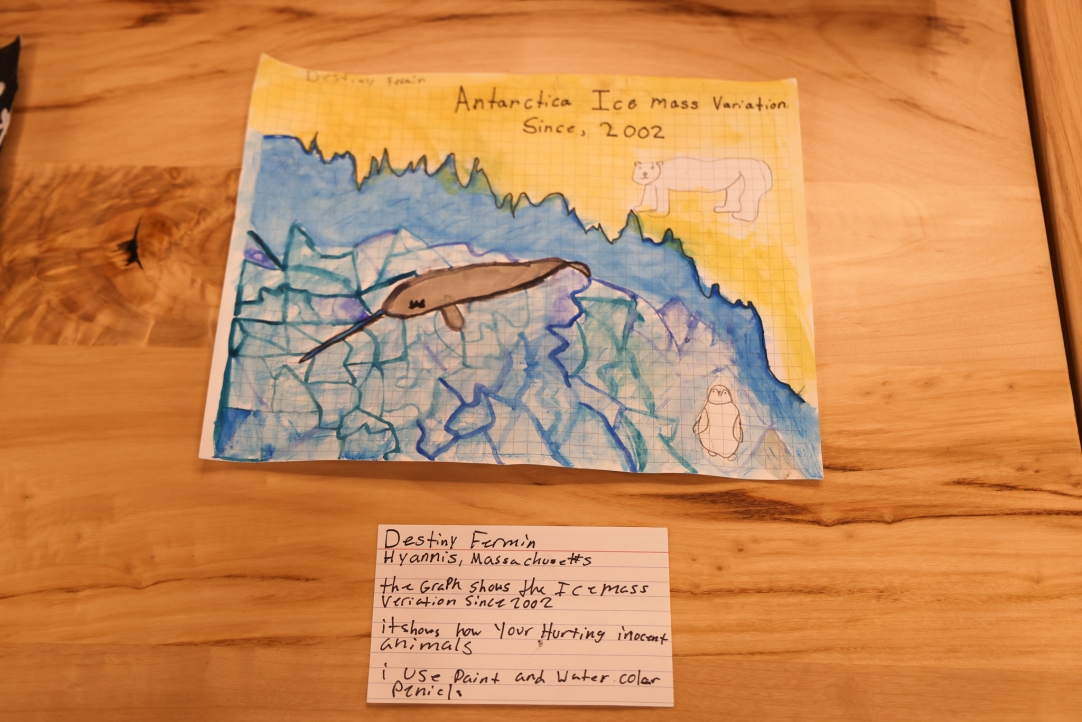
By Destiny F.
-
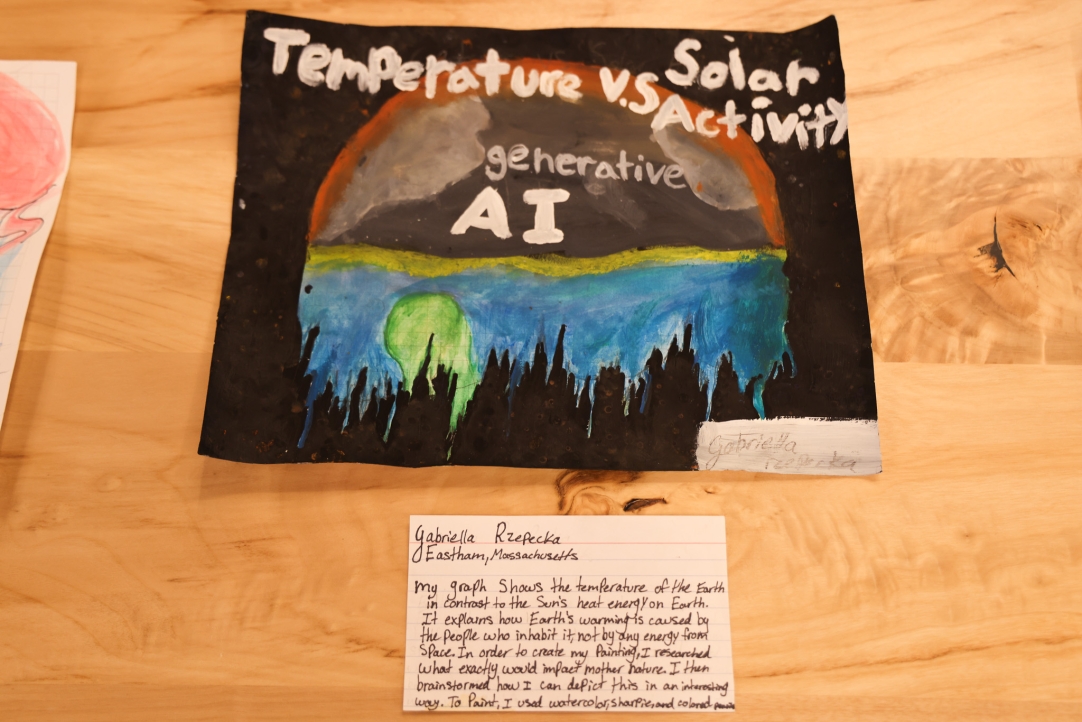
By Gabriella R.
-
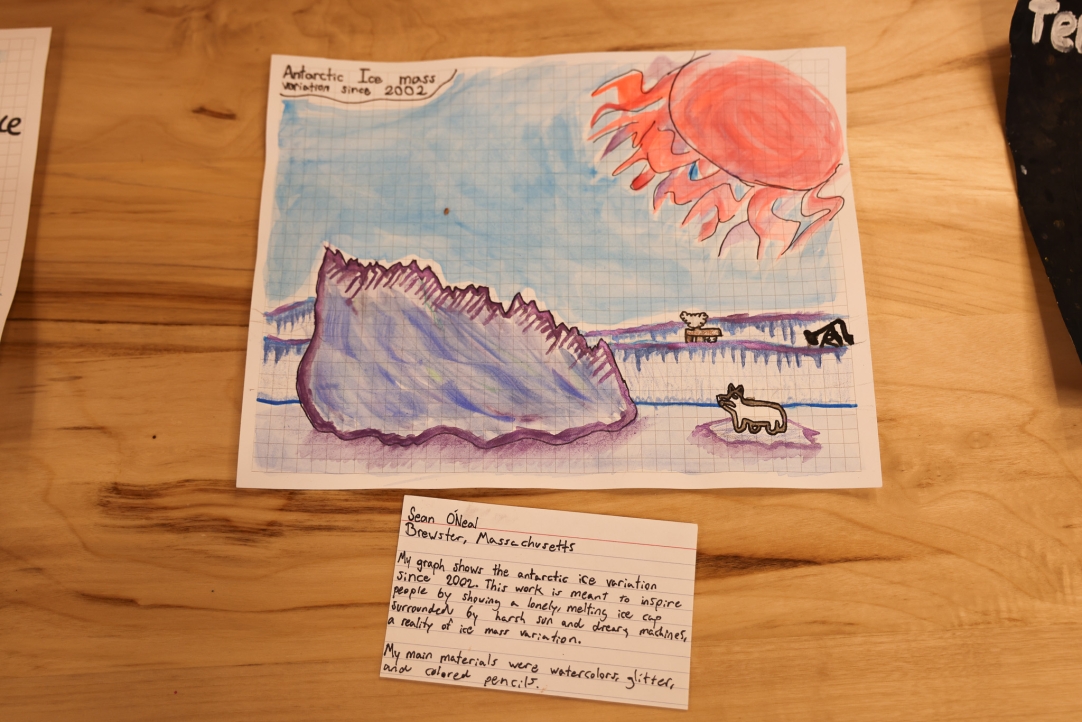
By Sean O.
-
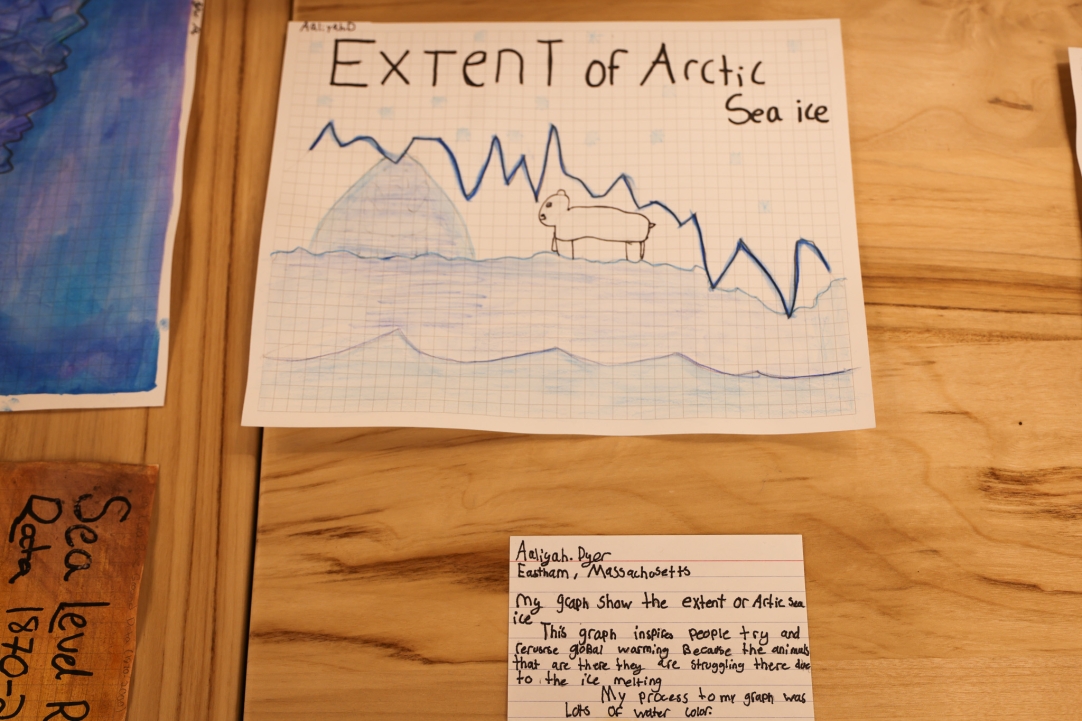
By Aaliyah D.


Katrina Jimerson, Special Collaborator & Teacher at Woodstock Union High School, VT
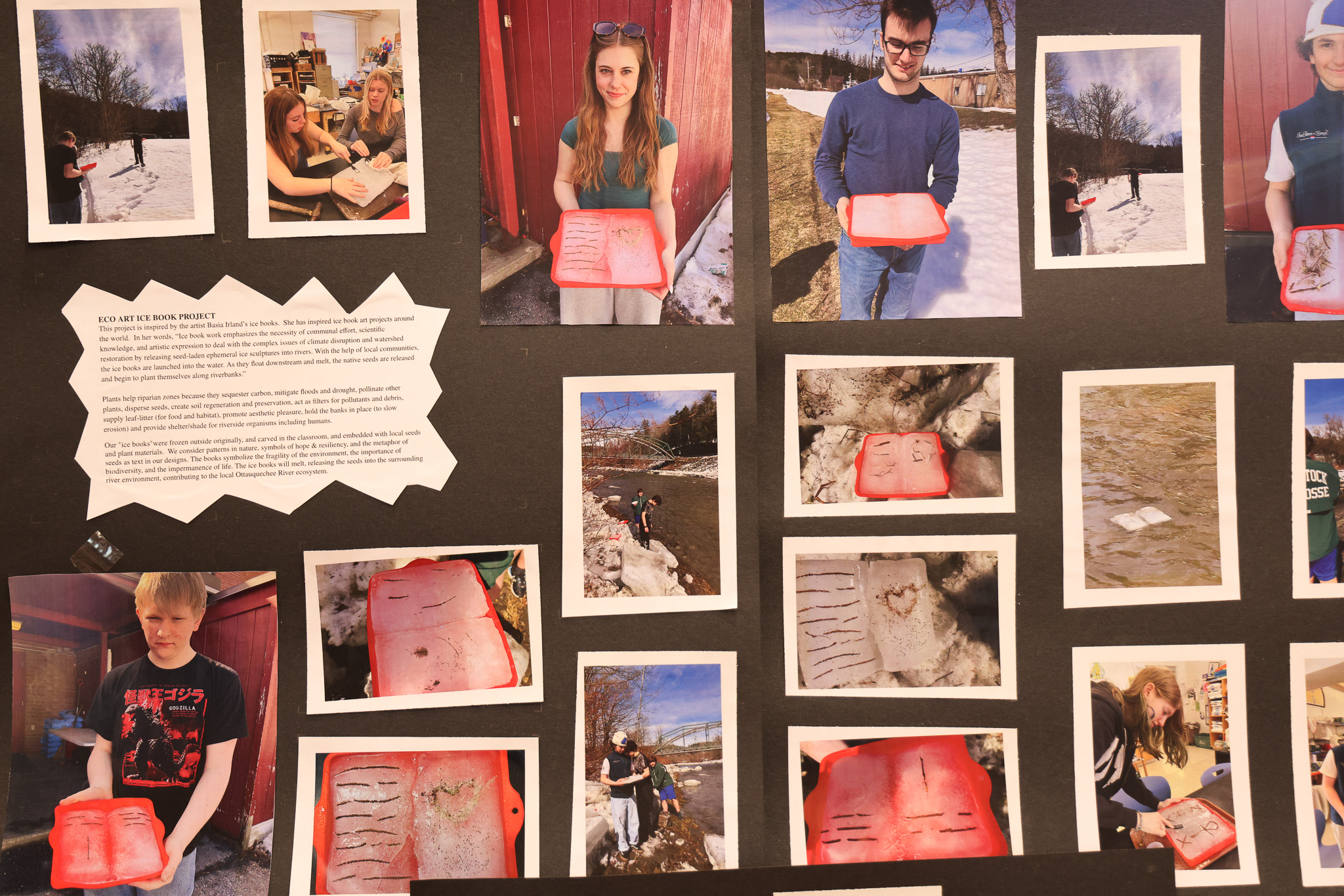
Eco Art Ice Book Project
This project is inspired by the artist Basia Irland's ice books. Our ice books were frozen outside originally, carved in the classroom, and embedded with local seeds and plant materials. We considered patterns in nature, symbols of hope and resiliency, and the metaphor of seeds as text in our designs. The books symbolize the fragility of the environment, the importance of biodiversity, and the impermanence of life. The ice books will melt, releasing the seeds into the surrounding river environment, contributing to the local Ottaquechee River ecosystem.
-
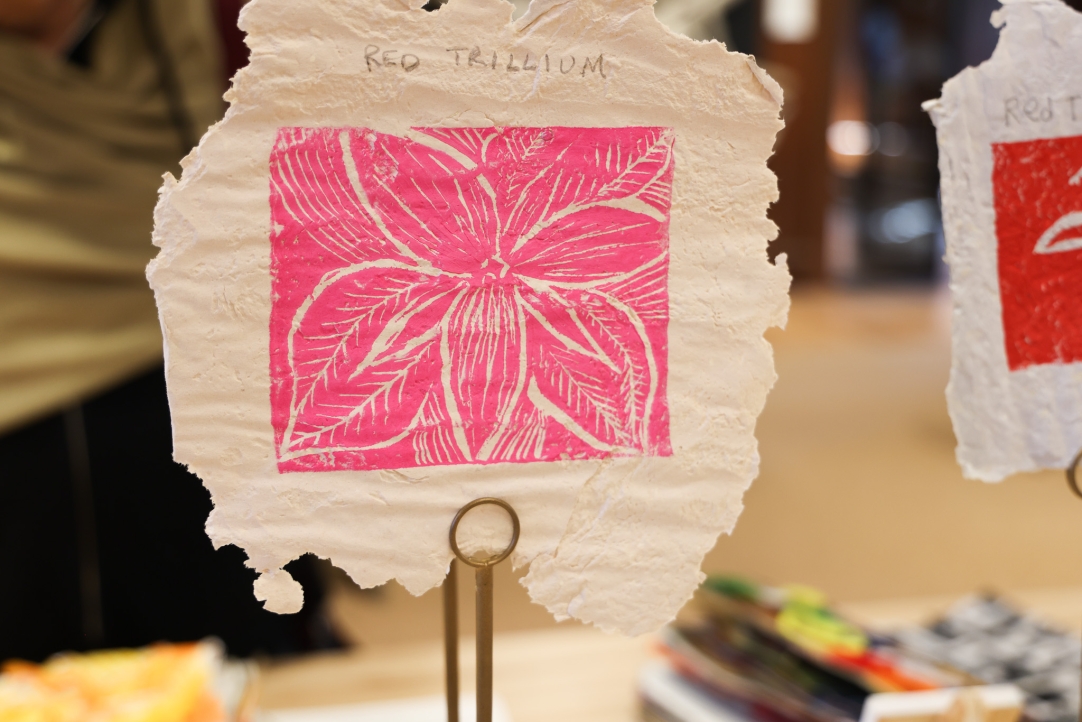
Prints of spring ephemerals on handmade paper, made by students in Katrina Jimerson's Eco Art class.
-
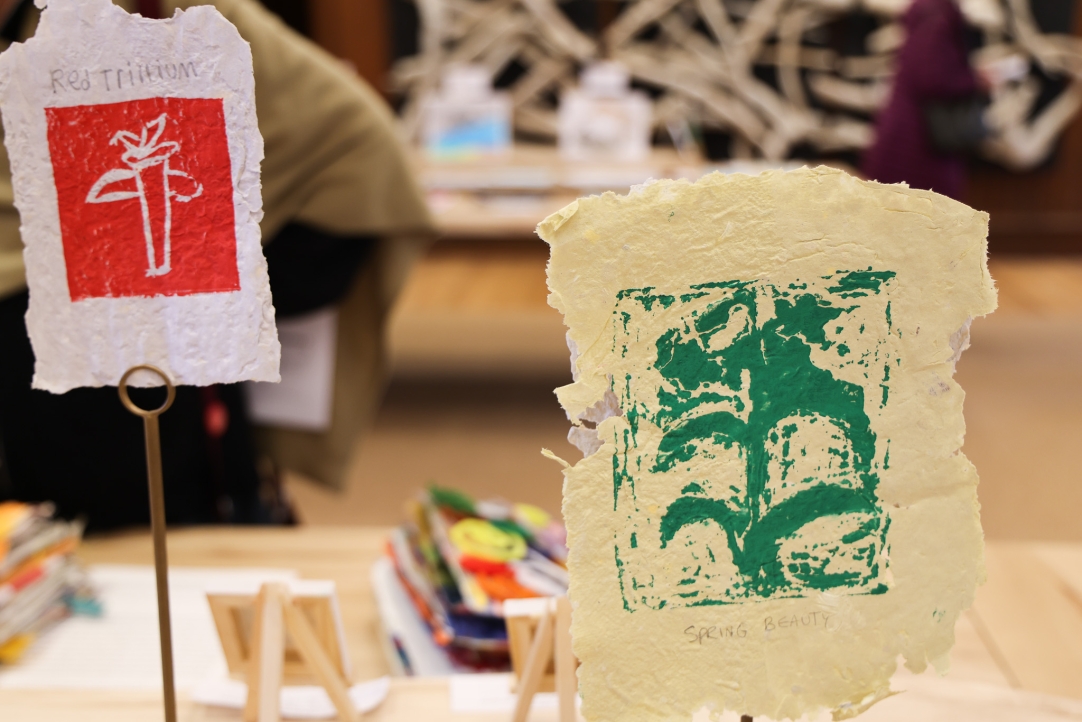
Prints of spring ephemerals on handmade paper, made by students in Katrina Jimerson's Eco Art class.
-
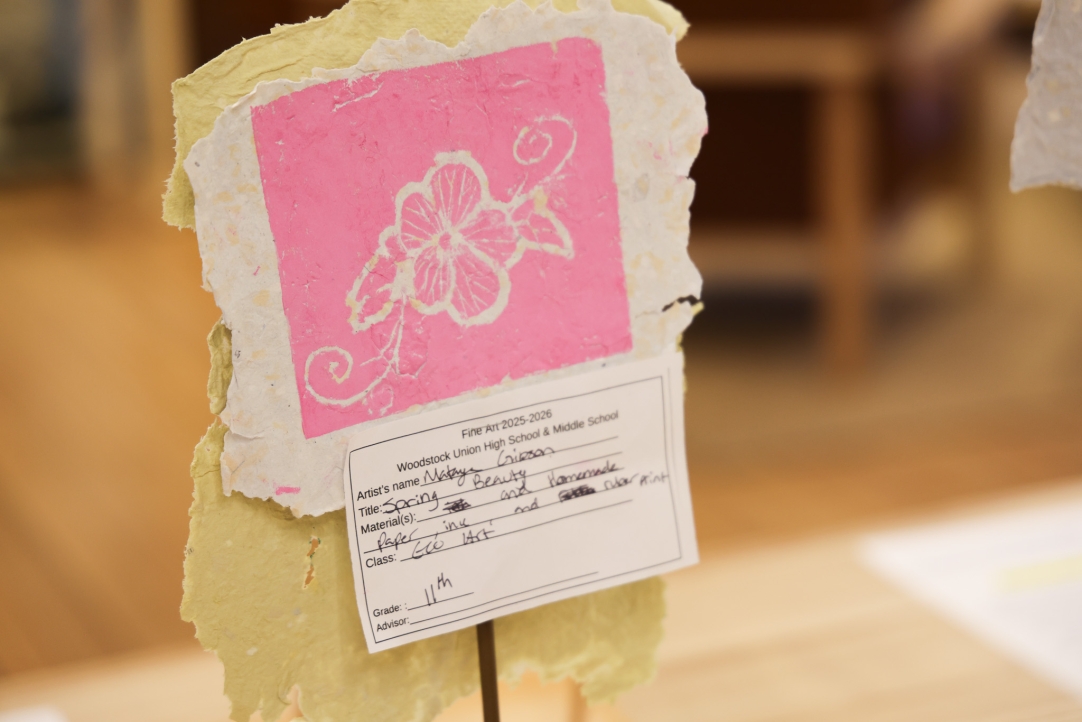
Spring Beauty by Mataya G.
-
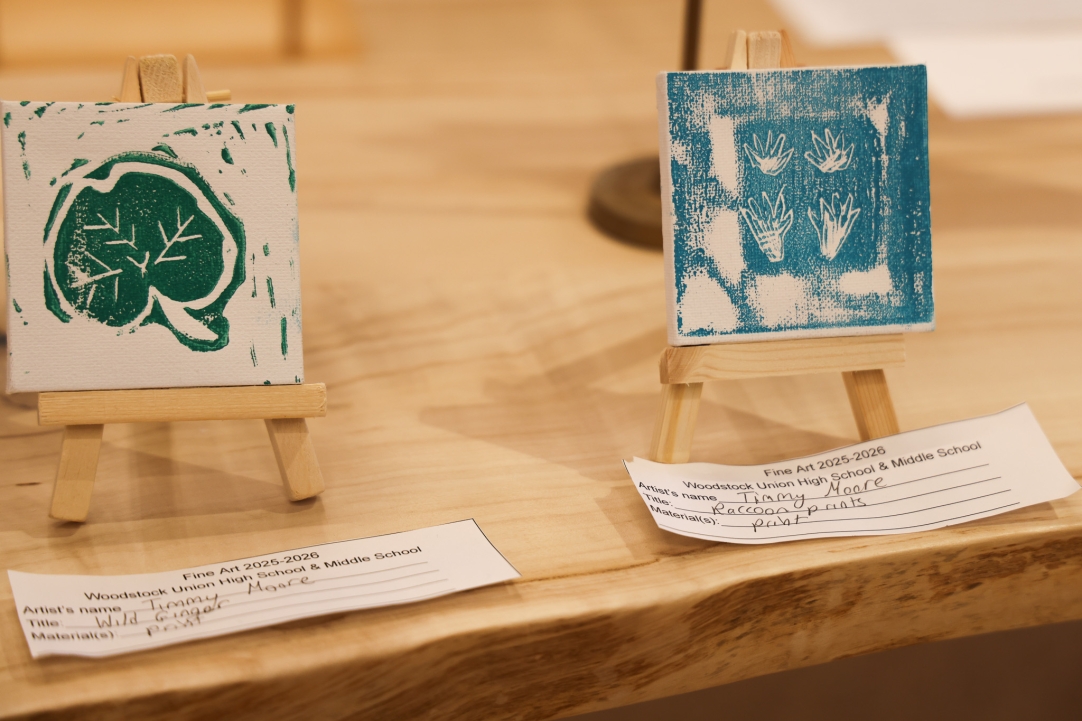
Wild Ginger on left, Raccoon Prints on right by Timmy M.
-
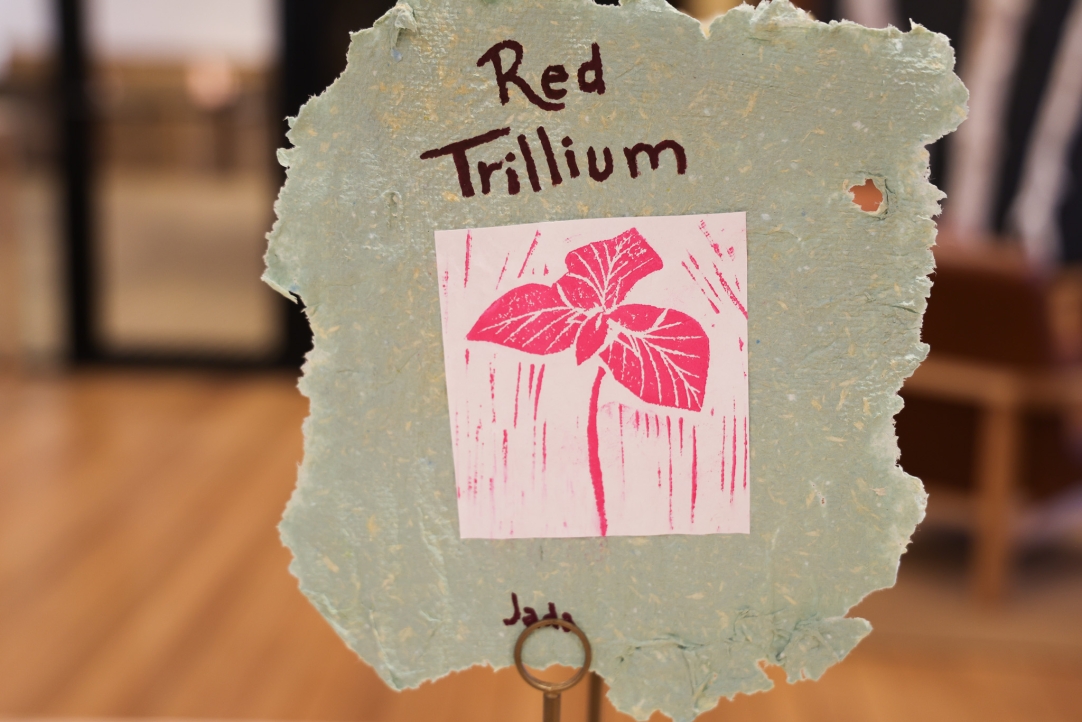
Red Trillium by a student


-
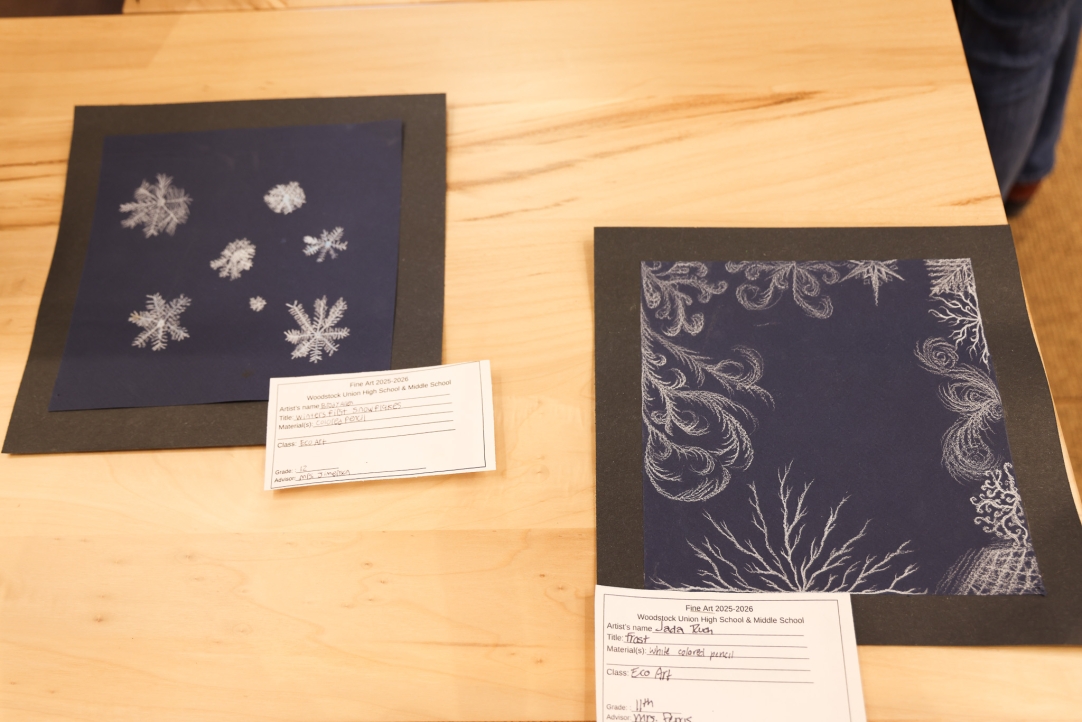
Colored pencil illustrations of snowflakes by students in the Eco Art class, taught by various instructors. Left by Brody A., right by Jada R.
-
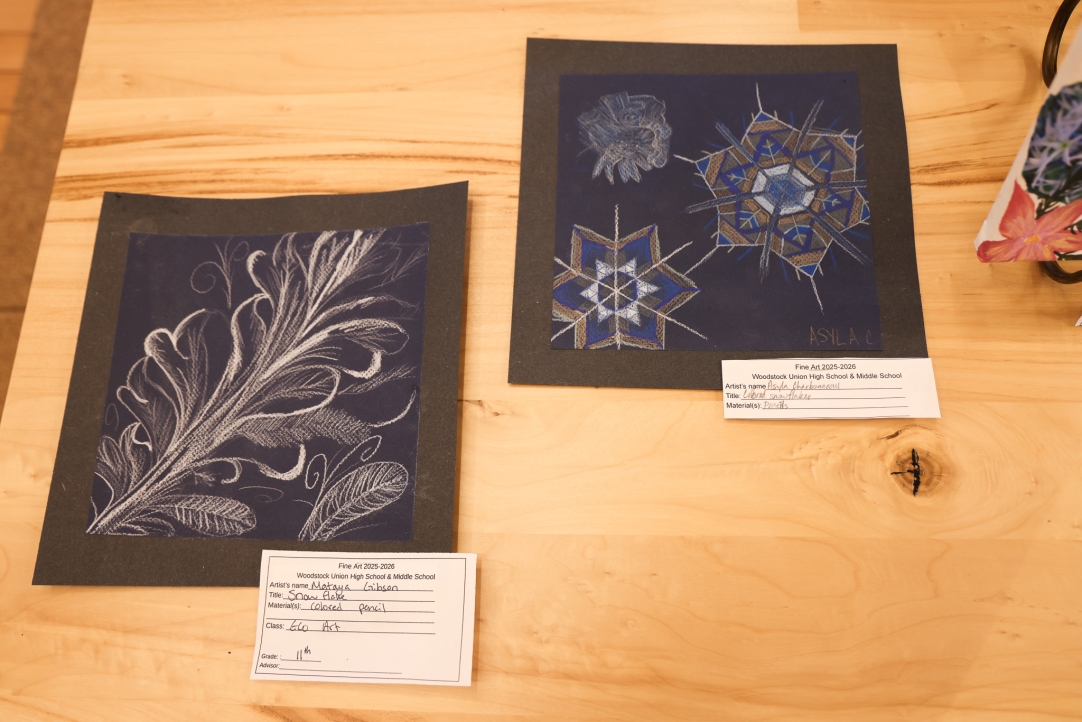
Left by Mataya G., right by Asyla C.
-
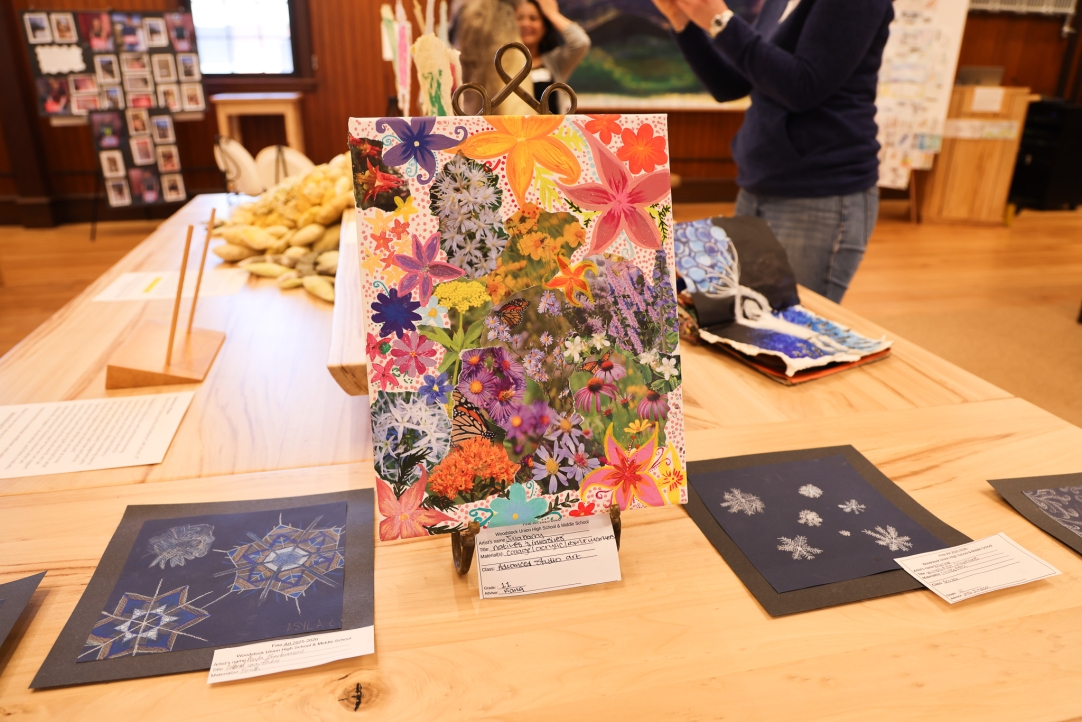
Pieces by students in the Eco Art class, taught by various instructors. At center, Natives and Invasives by Julia B.


-
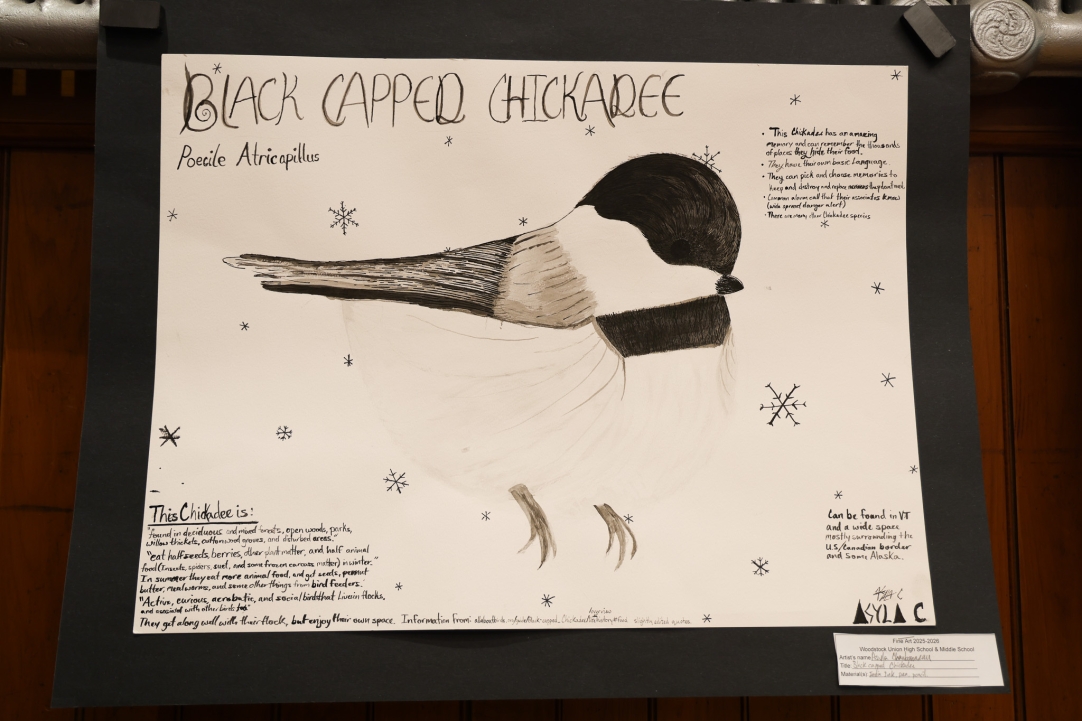
Students in Katrina Jimerson's Eco Art class created scientific illustrations of birds. Black Capped Chickadee by Asyla C.
-
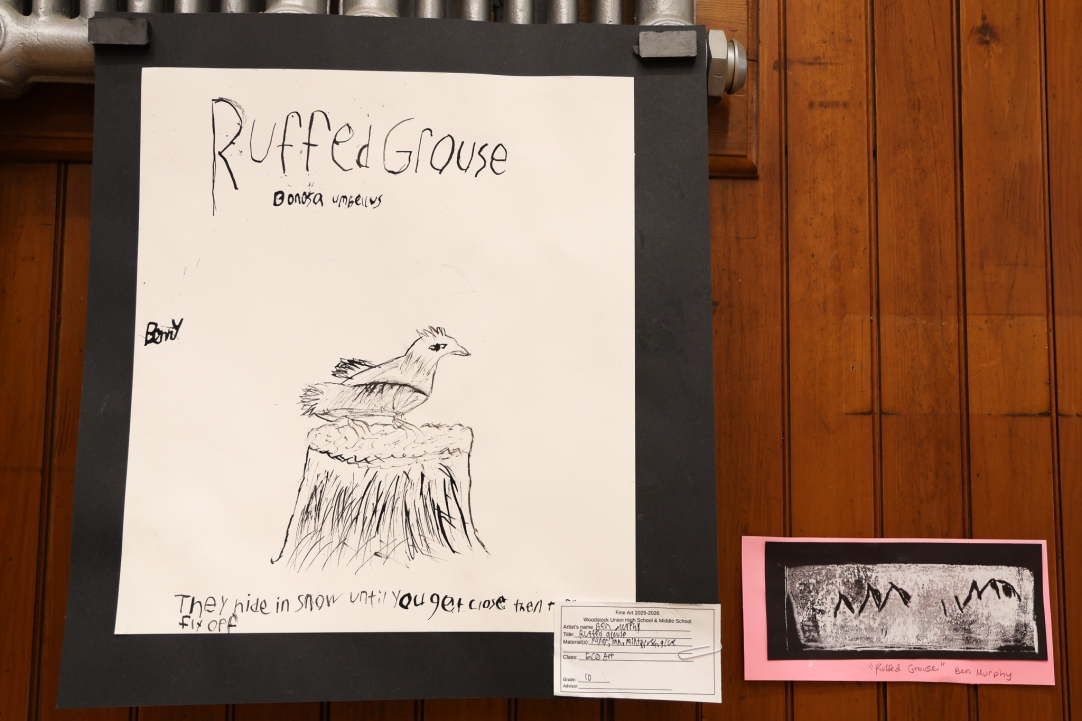
Ruffled Grouse illustration and spectogram by Ben M.
-
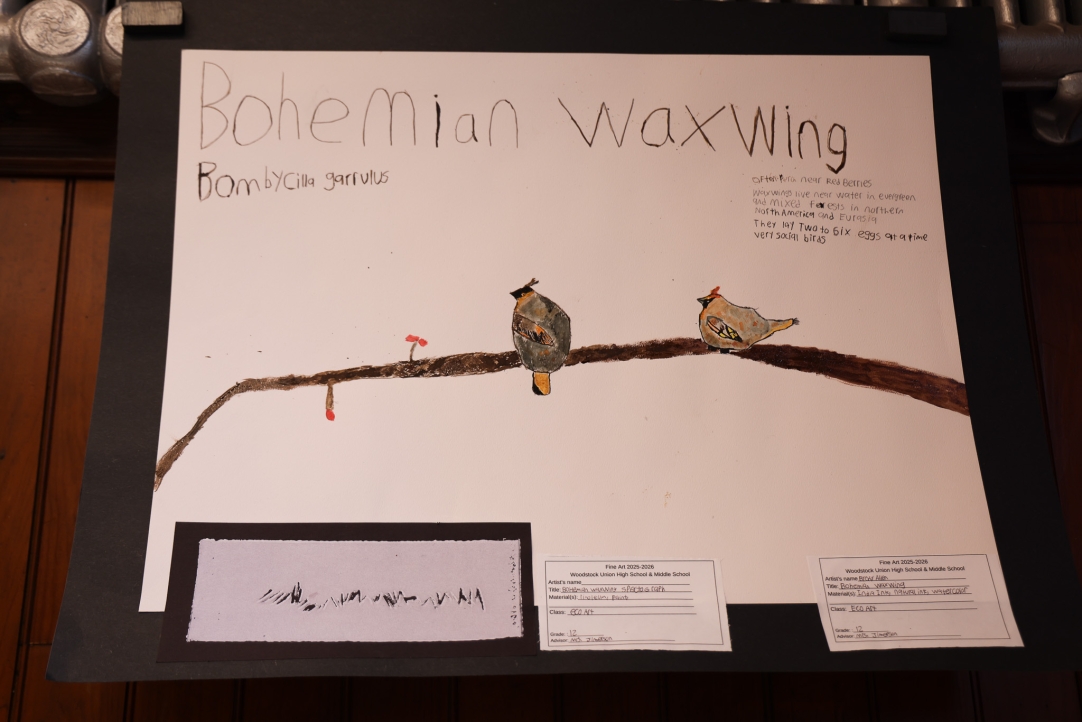
Bohemian Waxwing illustration and spectogram by Brody A.
-
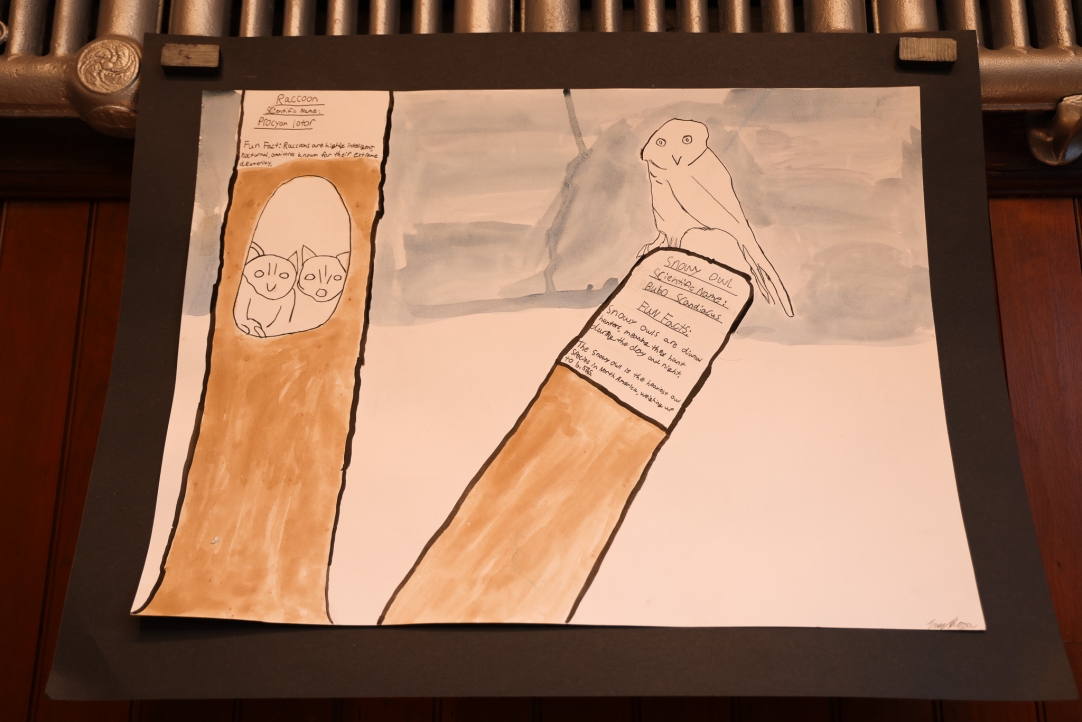
Snowy Owl by a student.
-
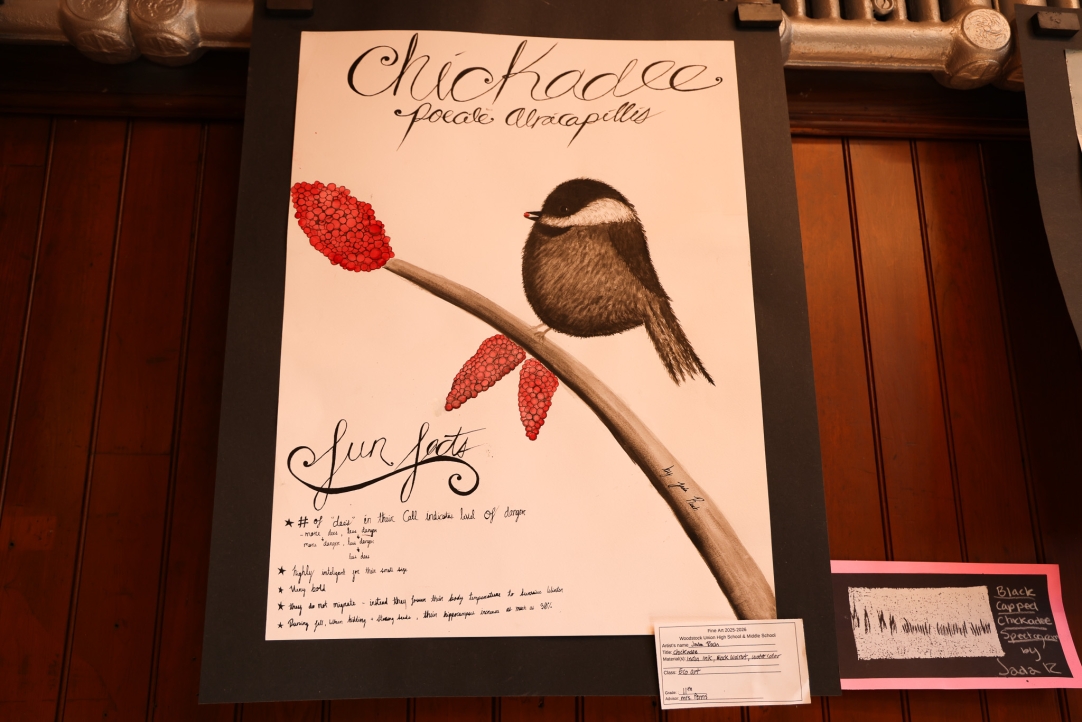
Chickadee by Jada R.
-
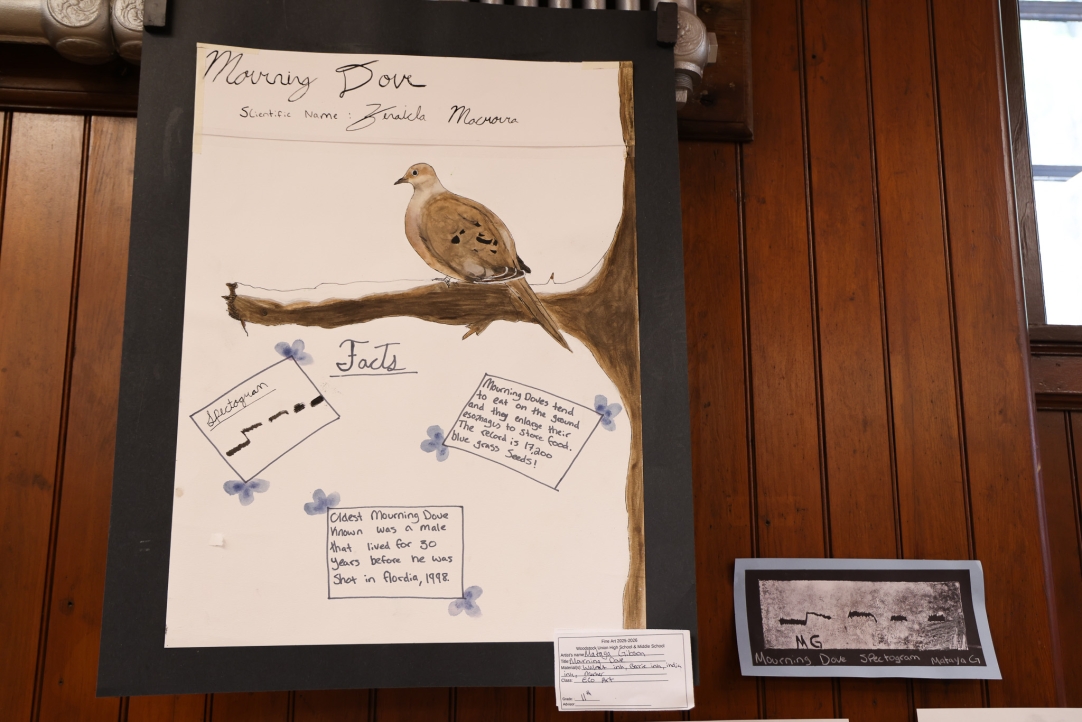
Mourning Dove illustration and spectogram by Mataya G.
-
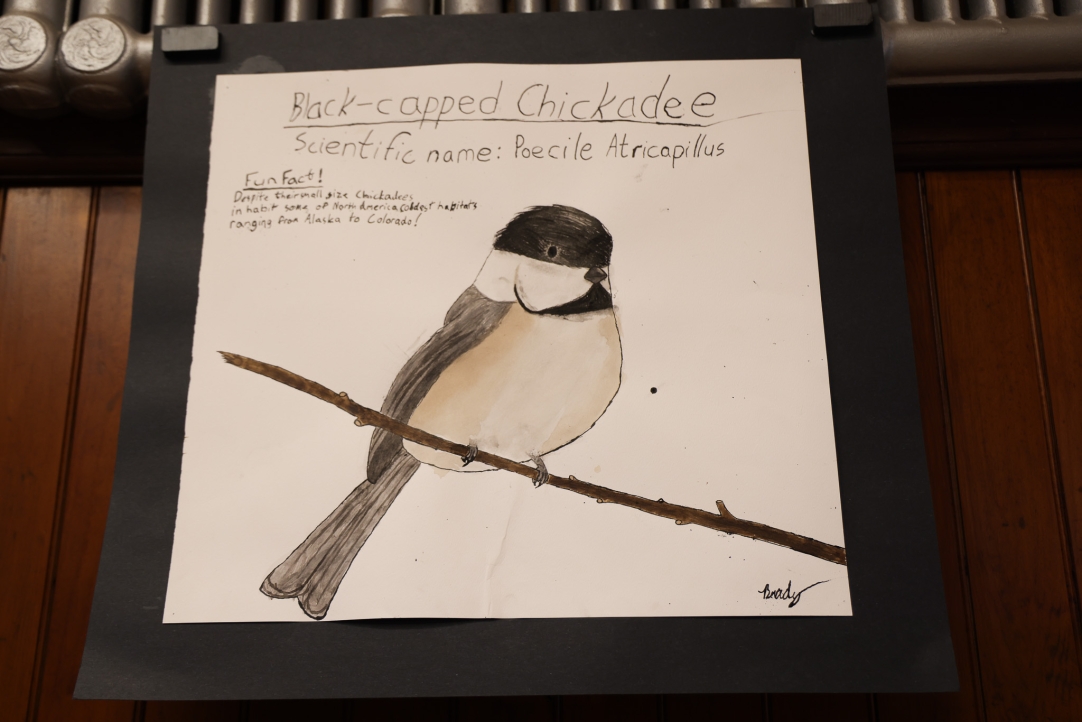
Black Capped Chickadee by a student.
-
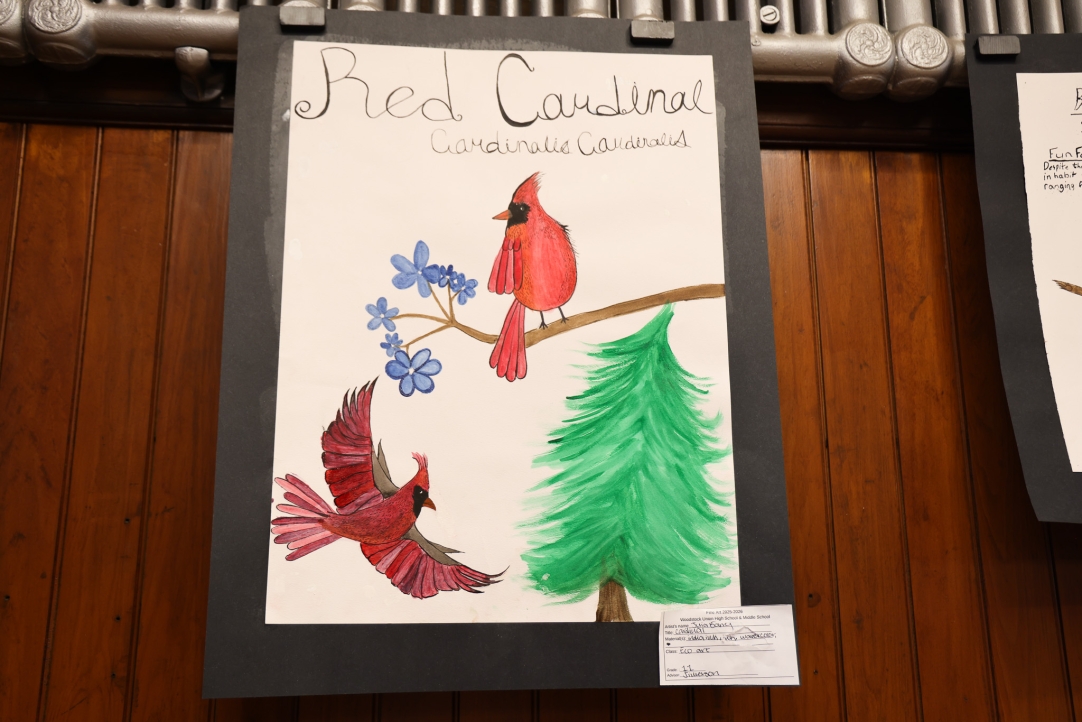
Cardinal by Julia B.


Brandy Boden, teacher at Northfield Middle High School, Stowe, VT
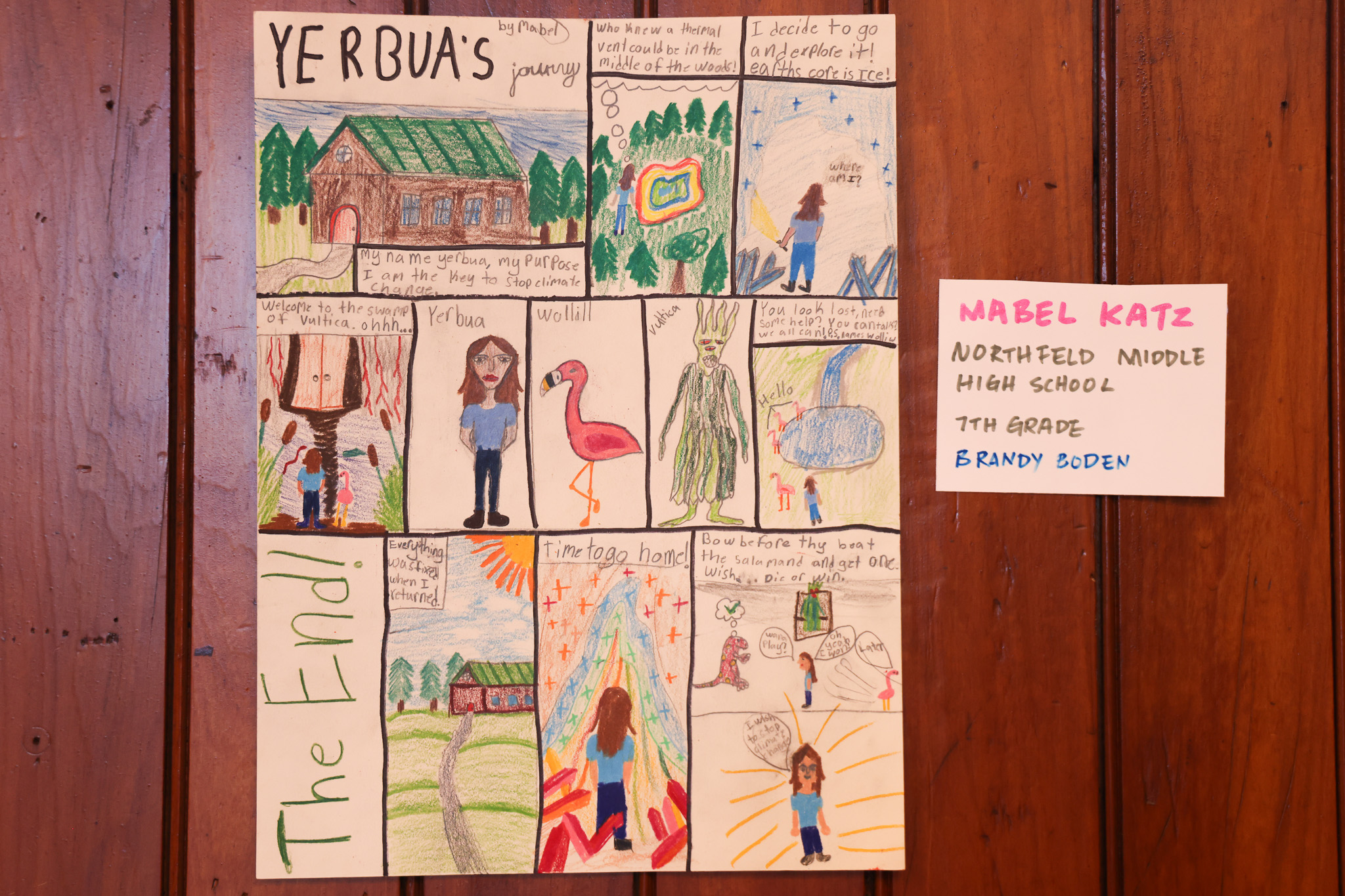
Yeruba's Journey by Mabel K.
"My name is Yeruba, my purpose: I am the key to stop climate change," the piece begins.
Capturing the Moment: Community Art Piece
Muriel Stallworth carved these linocuts and guided the Climate Creative cohort through this process during the January 2026 retreat.
This piece was inspired by winter birds and the visual representation of the calls they make, called a spectrogram. Participants printed birds and their corresponding calls on rock paper, and added their own illumination with watercolors. Several members of the group then stitched the pieces together.
Materials: Rock paper, linocut, watercolor, thread


Thanks for visiting this gallery and exploring the art made by these extraordinary educators and their students.
Our work continues: the Climate Resiliency Fellowship for teachers kicks off this fall.