
Pollinator Celebration Day
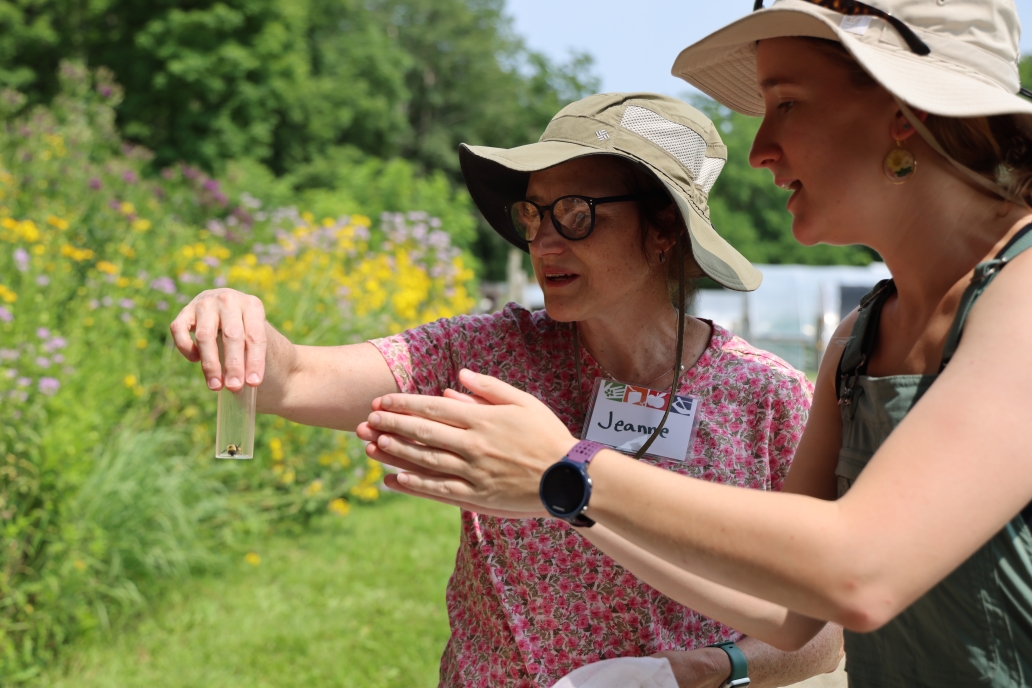
The Vermont Pollinator Working Group presents a celebration of all-things pollinators for learners of all ages! From managed honey bees to the 350 species of native bees in Vermont, we will learn from experts about their extraordinary diversity and importance!
Discover how you can support pollinators in your community and backyard. Hear from our keynote speaker and lighting presenters and join us for workshops (pre- registration required, intended for a young adult/adult audience). Meet the organizations who are working together to tackle urgent threats to bees and other pollinators in the Northeast, and visit local native plant suppliers.
Registration is required for keynote speaker, lightning talks, workshops, and lunch. Please register every person in your group attending the program, both children and adults. Please register for one workshop per time slot.
Please consider making a donation to the Vermont Pollinator Working Group.
Keynote
9:00-10:00AM
Building Coalitions of Knowledge and Trust to Improve Pollinator-friendly Agriculture
We're living in an age of unprecedented biodiversity loss, in part due to pesticides. We're also living in an age when many farms are going out of business and those that remain can be risk-averse due to thin margins. And we're living in an age of misinformation and historically low trust in science/scientists. How should this complicated landscape be navigated? This talk will discuss the role I think all of us can and should play in creating information, building trust, and shaping policies relevant to pesticides, pollinator health, and sustainable agriculture. I will use examples from my lab's involvement in government-, industry-, and farmer-led initiatives to 1) understand risks and benefits of pesticides, and 2) implement evidence-based policies that improve pollinator health without compromising agricultural production. A common theme across each example is that success depends on building interdisciplinary coalitions of knowledge and trust, often while navigating misinformation and disinformation, and stakeholder engagement is critical at every step.
Scott McArt is an assistant professor of pollinator health in the Department of Entomology at Cornell University, where he helps run the Dyce Lab for honey bee studies and the Cornell Chemical Ecology Core Facility.
Dr. McArt earned his BA from Dartmouth College, his MS from the University of Alaska-Anchorage, and his PhD from Cornell University. He spent two years as a USDA postdoctoral fellow at the University of Massachusetts-Amherst prior to starting as a non-tenure track Research Scientist at Cornell Entomology in 2014. In 2017, he started as a tenure-track assistant professor.
Make a Felted Flower & Beeswax Candle
9:00-11:00AM
Intended for youth. Children under 5 must be accompanied by an adult. Registration required.
Join Shelburne Farms educators for hands-on farm based activities! Learn how to turn wool from the sheep at Shelburne Farms into a beautiful felted flower and learn to make a beeswax taper candle.
Lighting Talks
10:10-11:00AM
350 and Counting - the Wild Bees of Vermont
Spencer Hardy, Vermont Center for EcoStudies
Pollinator-Friendly Organic Farming Practices
Emily Tompkins, NOFA-VT
Vermont Ecotype Project
Tobi Schulman, Bird and Bee Native Plants
Apitherapy: Health and Healing with Products of the Hive
Ross Conrad, Dancing Bee Gardens
Tools for Transforming the Burlington Landscape: How-To's for Community Education
Braden DeForge & Diane Hannigan, Burlington Wildways
Morning Workshops
11:15AM-12:15PM
Please register for only one workshop per time slot.
Touring a Restored Degraded Riparian Forested Buffer with Diverse Pollinator Habitat
Jess Rubin, MycoEvolve & UVM ALE
Tour a socio-ecological reconciliation project at Shelburne Farms. Investigating the role of mycorrhizae and multi-synusial polycultures in multi-functional buffers, we aim to mitigate phosphorus pollution, increase pollinator habitat, facilitate Abenaki land access, and foster local ecoliteracy.
Planting a Pollinator Garden
Tobi Schulman, Bird and Bee Native Plants
Join Tobi Schulman of Bird and Bee Native Plants for an informative workshop focused on creating an inviting habitat for pollinators. Tobi will share ten essential tips for effortlessly establishing a thriving pollinator garden, including key species and their specific interactions.
Tour Owl Gate Habitat Garden at OFES
Terry Cecchini
Visit Outreach For Earth Stewardship’s Owl Gate Habitat Garden on the southern side of Shelburne Farms. The garden is a large garden offering nectar and pollen sources as well as breeding habitat and shelter for pollinators.
Early Afternoon Workshops
1:30-2:15PM
Please register for only one workshop per time slot.
Pollination 101: How Pollinators Live, Work, and Support Our Food
Emily May, Xerces Society & Laura Johnson, UVM Extension
This interactive workshop will combine short talks with hands-on demonstration of how pollination works. Using large visual aids, we will demonstrate how different pollinators interact with flowers, and will show how pollen is released, transferred, and deposited for several familiar crops, including blueberries, apples, raspberries and blackberries, and tomatoes. We’ll highlight key crop pollinators - including some of the ones that are active at night! - and explore their different life histories to show what we can do in yards, gardens, and on farms to support their lives and important work.
Match that Seed!
Brooke Fleishman & Christine Cramer, Intervale Center
Join the Intervale Conservation Nursery to match native seeds with their young seedlings and photos of their mature plants. Learn more about these pollinator-friendly native plants at each stage in their development!
What is the Seed Saying?
Denise Ciasko
"What Is the Seed Saying?" returns to Pollinator Celebration Day with a refined and enriched experience. Building on last year’s presentation, Denise Ciastko of NativearthSeed explores the hidden intelligence of true Northeast native seeds through stunning macro photography, time-lapse video, and storytelling that reveals how seeds move, wait, protect themselves, and respond to their environment — while also offering clear, practical guidance on how to properly sow native seeds at home.
Late Afternoon Workshops
2:45-4:00PM
Please register for only one workshop per time slot.
Wild Bee ID
Spencer Hardy, Vermont Center for Ecostudies
Ever wondered how to tell a Rusty-patched Bumble Bee from a Red-belted Bumble Bee? Or a Pure Green Sweat Bee from a Golden Green Sweat Bee? Spencer will introduce the audience to the array of bees likely to be found in our neighborhoods and what we can learn by putting a name on them. Though a microscope is needed to identify a lot of species, this workshop will focus on the bees that can be recognized in the field or from photographs. All are welcome, no experience needed.
Herbal Honey Preparations, Shrubs & Oxymels
Kara Buchanan, Spoonful Herbals
Discover the art of crafting traditional herbal preparations using apple cider vinegar and honey. Participants will learn the benefits and traditional uses of oxymels and shrubs as well as simple techniques for making these herbal tonics at home.
Pollinator Partnership: Matching Game and Planting
Miette Jennings & Katie Keown, Students from Woodstock High School
Join us for an interactive activity to learn about pollinators and the plants they support. Participants will learn how different pollinators are adapted to specific flower shapes and types through a pollinator matching game where pollinators are matched with the plants they are most likely to pollinate. In addition to the matching game, participants will take part in a hands-on planting activity. Using egg cartons as planters, they will transplant native plants featured in the game. They will also have the opportunity to design and paint their cartons, encouraging creativity and a personal connection to their plants. By the end of the workshop, participants will have a better understanding of pollinator-plant relationships and will take home their own plants, empowering them to support pollinators in their own communities.
Pollinator Plaza
- Abbie Castriotta
- Birds and Bees Native Plants
- Burlington Wildways
- Champlain Valley Apiaries
- Dancing Bee Gardens
- NOFA-VT
- Northwoods Stewardship Center
- Pollinator Pathway of Addison County
- Sedge and Soil
- Spoonful Herbals
- The Farm Upstream
- UVM Extension Master Gardeners
- Vermont BeeLab
- Vermont Beekeepers Association
- VPIRG
- Woodstock Union High School (CRAFT)
- Xerces Society