
Art in the Coach Barn by Nancy Winship Milliken

We sat down with Nancy Winship Milliken to chat about the artwork she created for the sound mitigation boards inside the Coach Barn, an idea she developed with architect Bren Alvarez of SAS Architects. While the Coach Barn is still coming on line, check our calendar of events for opportunities to see Nancy’s work in person.
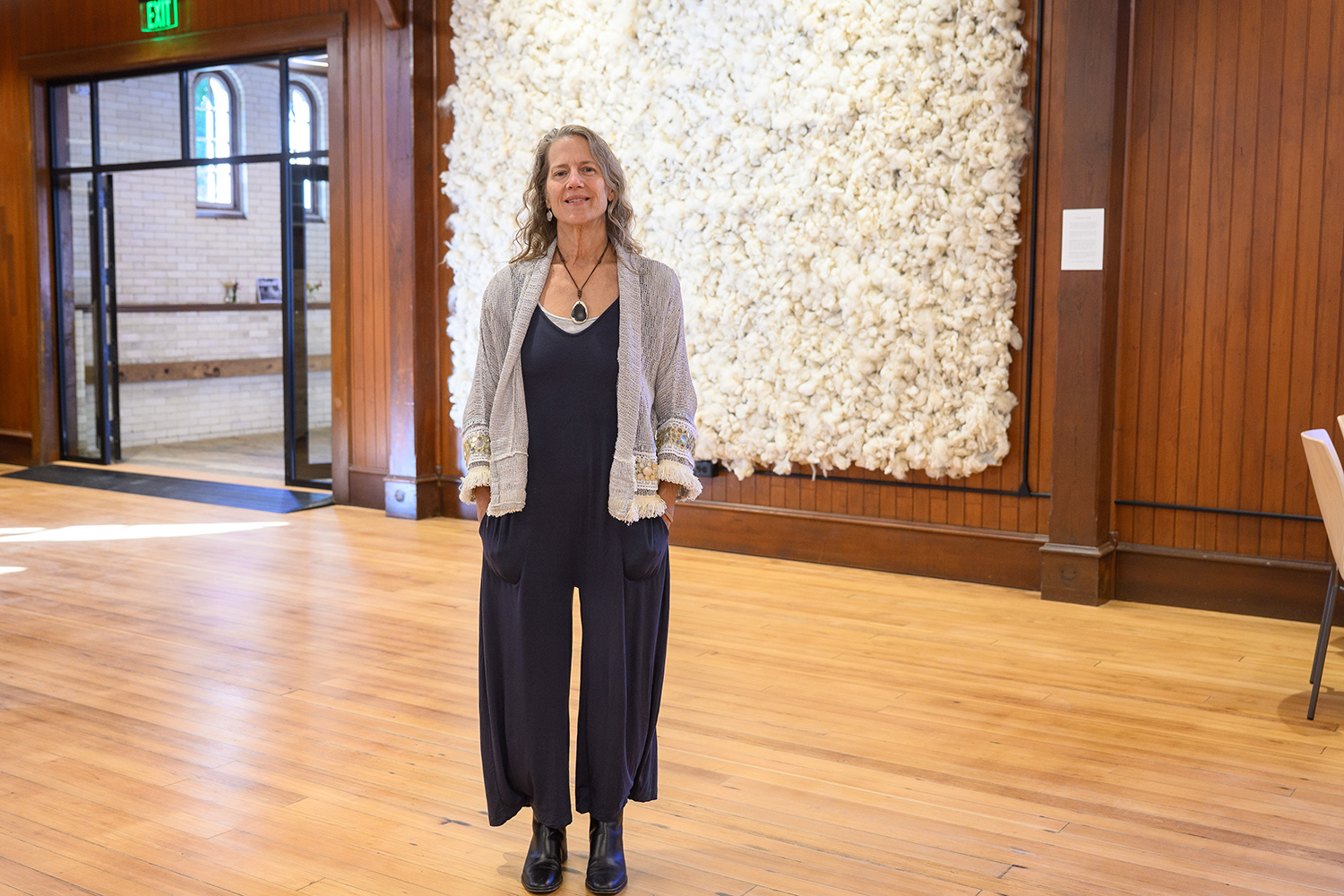
Why did you want to be part of the Coach Barn project?
Oh my gosh. My heart is here at Shelburne Farms. My first piece here, “Windscape,” was part of BCA’s “Of Land and Local,” and it used the wool and trees from Shelburne Farms. That was the first time I met Marshall. We went around the whole place, and he helped me take down Norway maples and figure out how to put up the sails. Ideas would blossom from our conversations while we walked the trails.
Windscape was a temporary installation, so to be asked to come back and make permanent work for an institution that's near and dear to my heart was the best feeling.
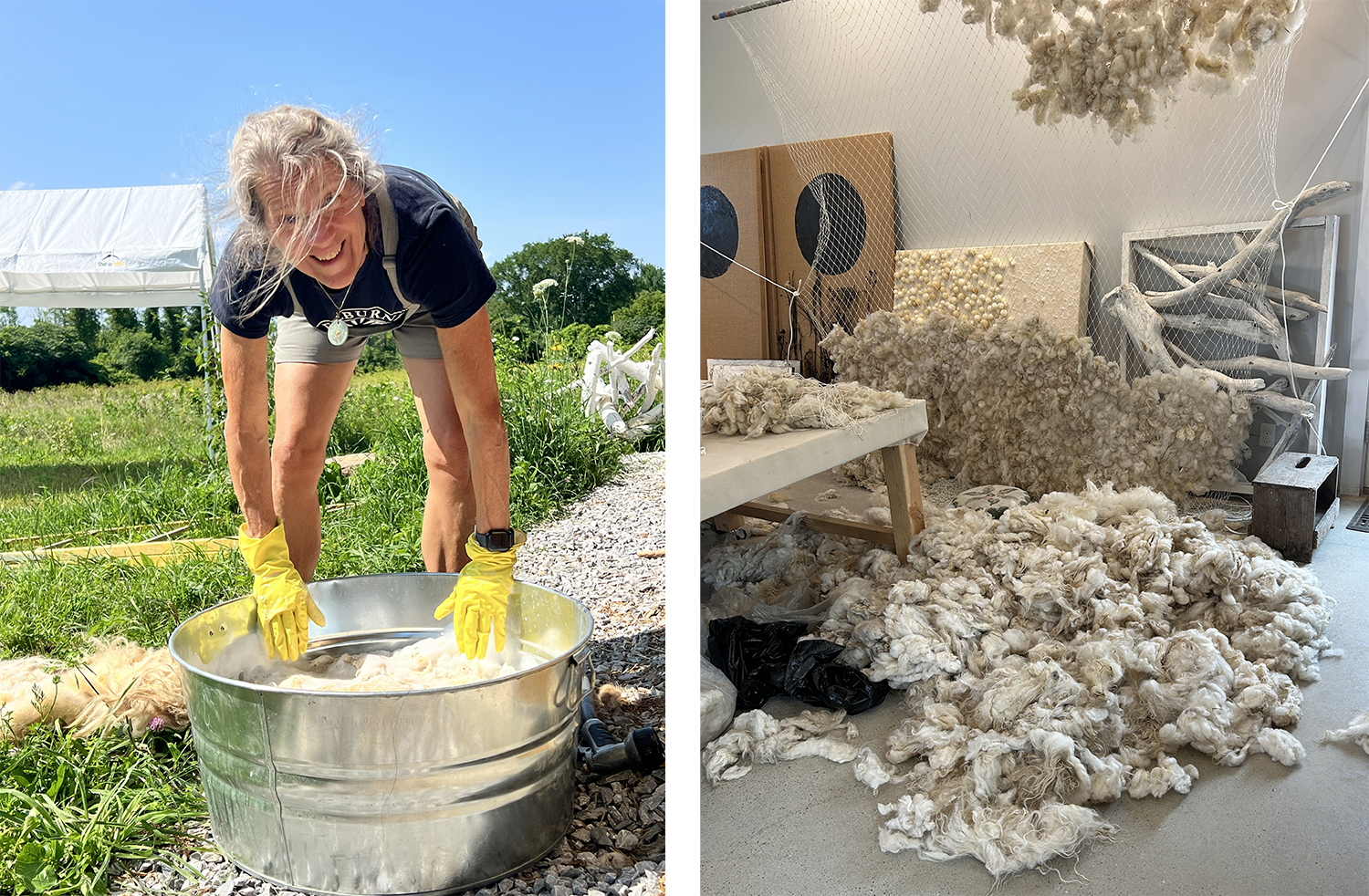
Why did you choose the materials you chose?
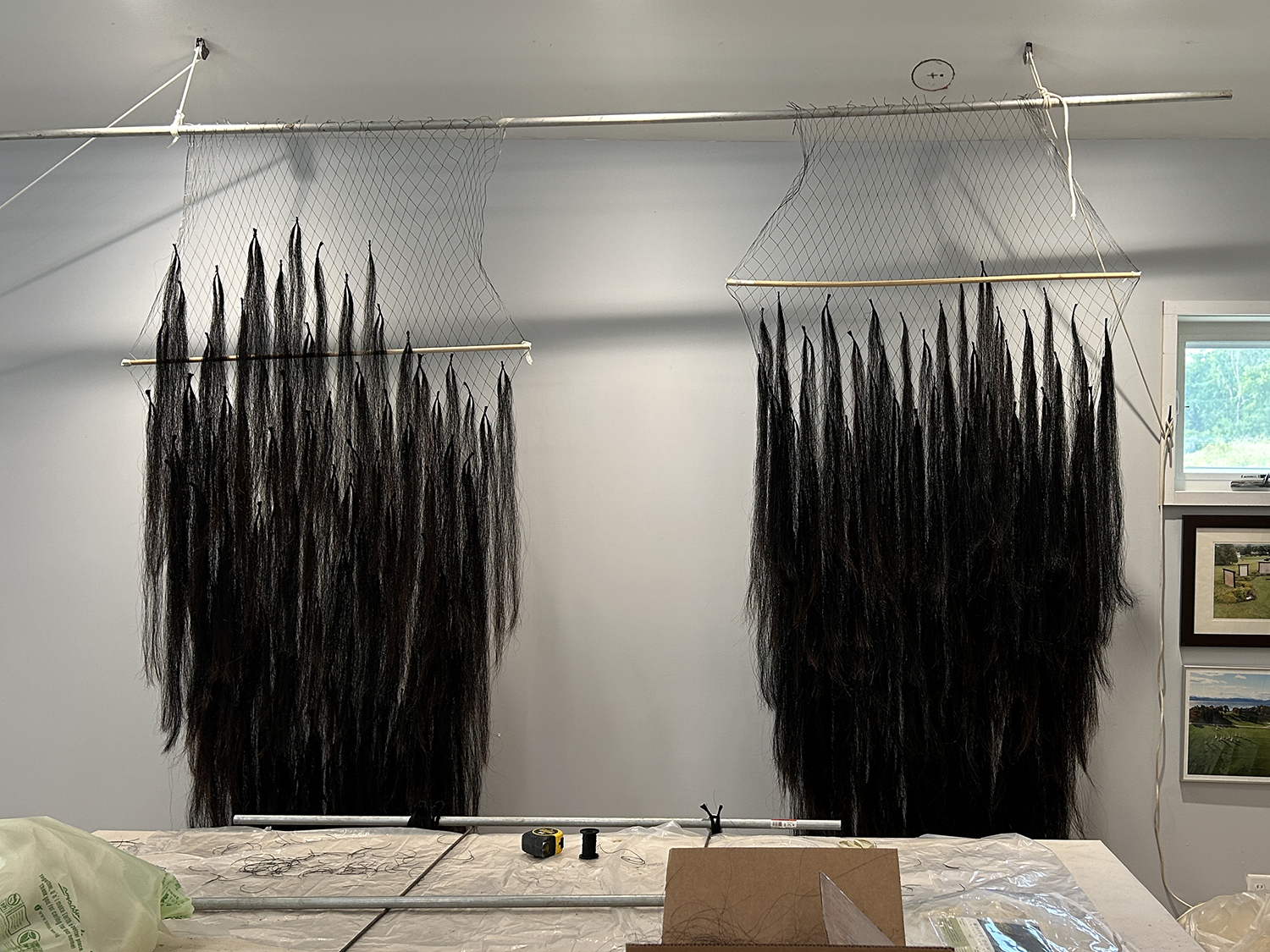
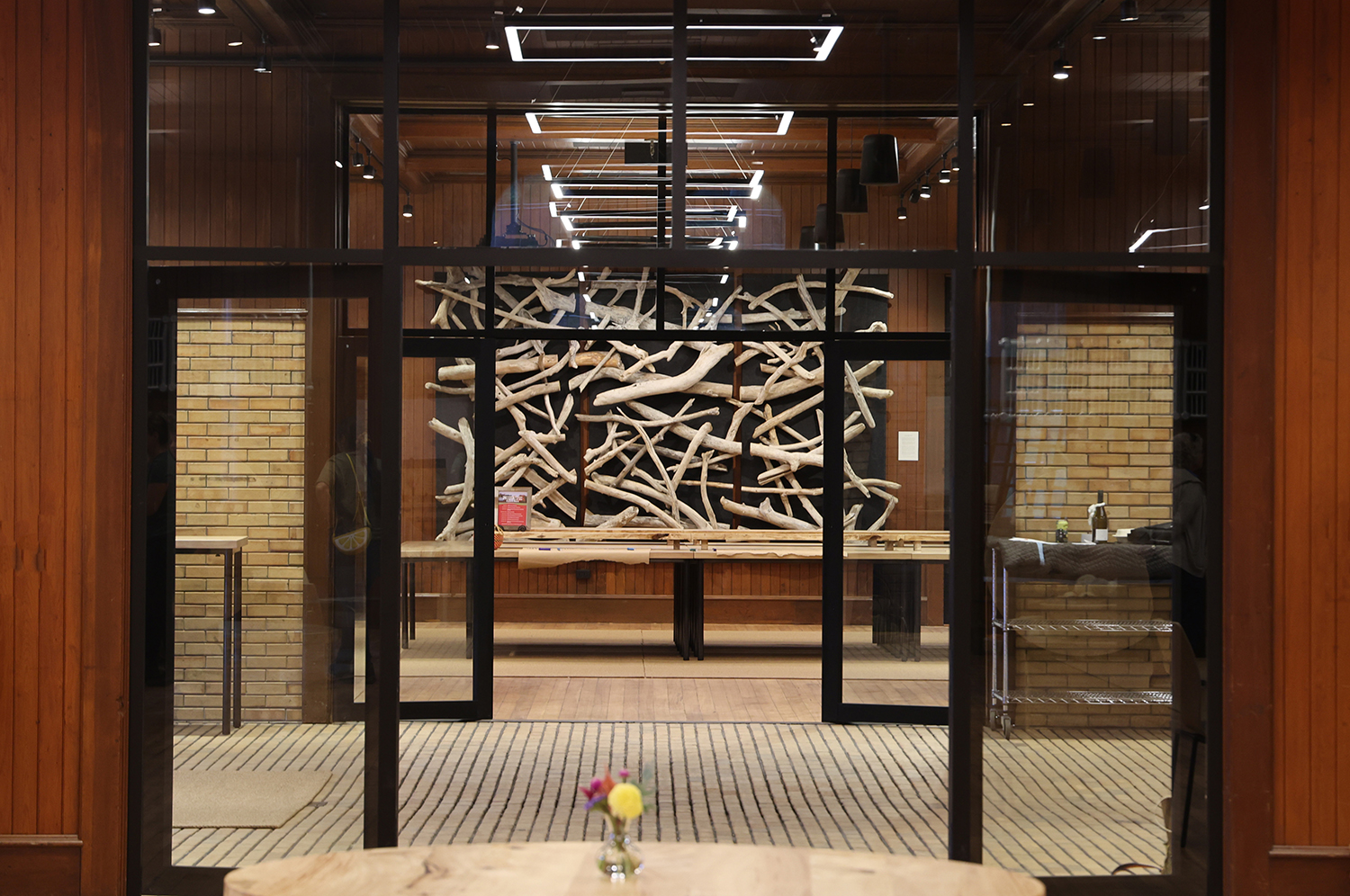
The wool pieces represent the fields, because you could say the sheep are made from the field, and that material was important for the agricultural story of Shelburne Farms. The driftwood I felt was important for the farm’s environmental story, and what's happening in Vermont with floods and with the lake rising. And the horse hair pieces bring in the history of the Coach Barn itself.
One of the things I'll say about the materials is they're so inherently beautiful. The wool is gorgeous on its own, the driftwood is already sculpted by the lake and bleached out by the sun. They're all just so beautiful.
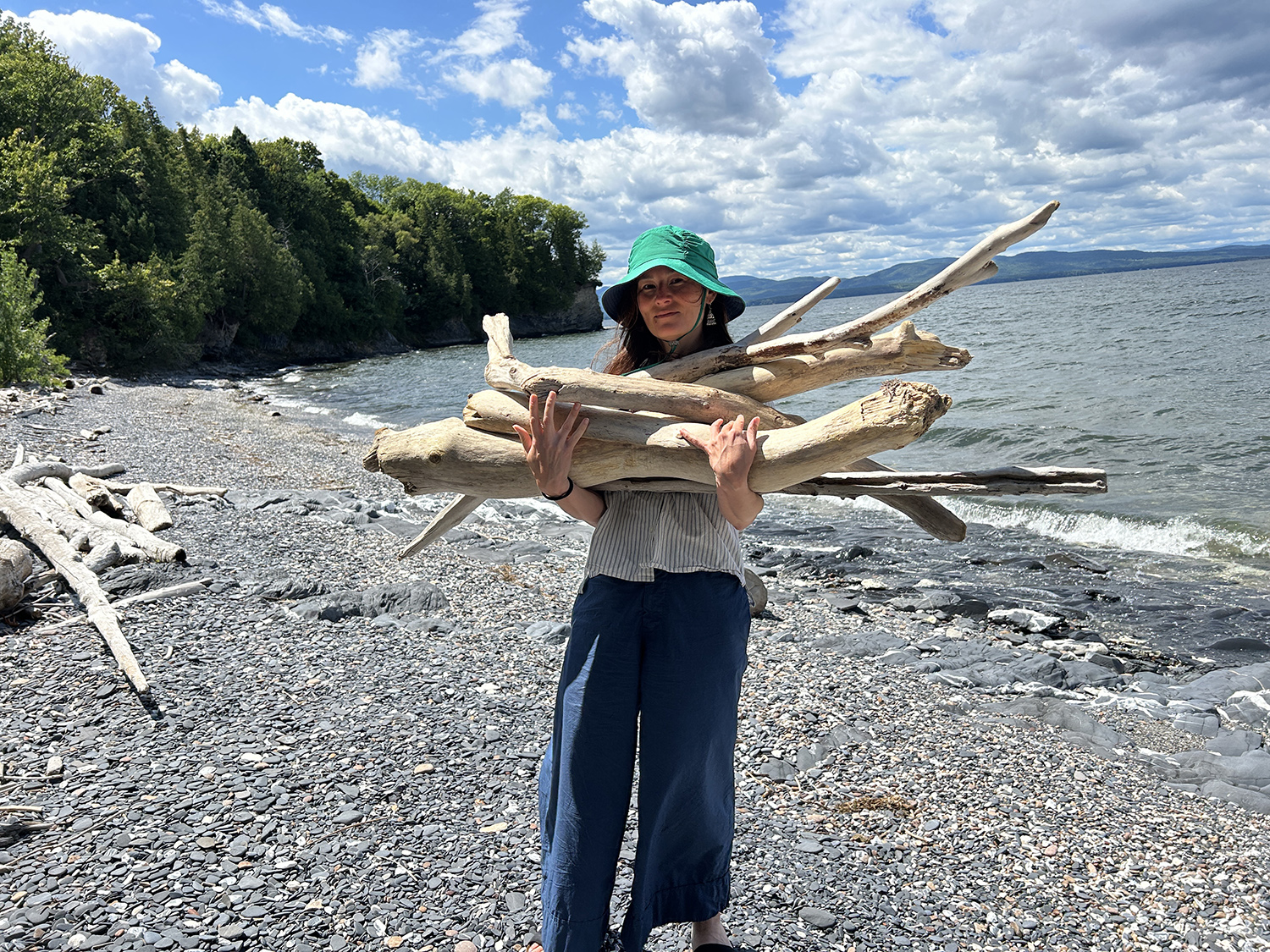
Where did the materials come from?
The driftwood was sourced from right here with the help of young campers, as well as some of my team members. It was fun. Then we kiln dried it with Beeken/Parsons. So that became a whole new relationship. The horsehair was sourced online from a farm. (They use extra horsehair for showing ponies.)
Can you talk a little bit about your process?
Most of the process is in the collection of materials. But for the wool, we created a wet-felted and a woven piece. Wet-felting is a traditional method used to make Mongolian yurts or rugs. It's dense, thick, and non-patterned, using the natural colors of the fleece. The woven piece is simply wool that I wove into netting, and again, no pattern. In my studio, I do have a system that lifts the netting up into the ceiling so that I can work sitting. I start at the bottom of the piece and keep dropping the netting lower as I move up the piece. Same with the horsehair. It’s very meditative.
What was the most rewarding part of creating this art?
Reconnecting with Shelburne Farms–with Megan and Alec, and working with Bren Alvarez for the first time. Bren and I are now collaborating on more projects. It also was the first time that my husband, Andrew Milliken, and myself worked together on a piece. That was a delight. It was under the auspices of our Creative Conservation Collaborative. And the volunteers at Shelburne Farms were wonderful. It truly was a team effort.
I also love the mental gymnastics that go into creating work for something very specific. We had sound panels of a certain size, and we needed to get the art through doors of a certain size. These considerations put parameters–guardrails–on the work that are super important for creative expression, and they make the work so much fun. They create new ways of looking at wood or wool or horse hair.
What was the most challenging?
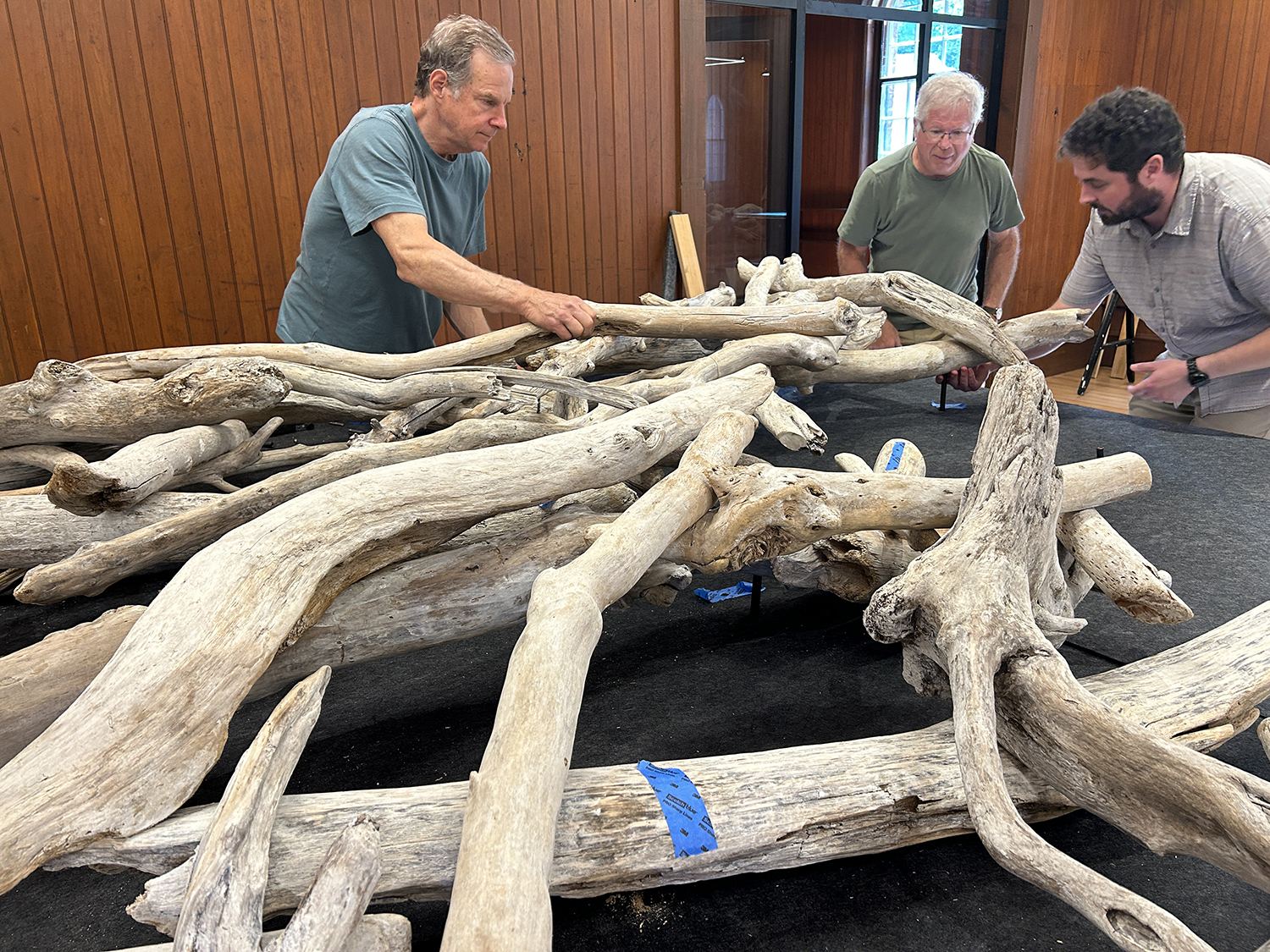
The driftwood was the biggest challenge–finding ways to express the shoreline. We decided on a matrix of driftwood for the design. Then we had to divide it up so that it could get into the building!
And time. We were faster than we've ever been in the studio because my golly, we had to get things done. That parameter also made the process exciting.
What do you hope people will take away from the art?
Well, if I can, I wouldn't even call it art. I would call it the materials of Shelburne Farms. I wanted to take my hand out of it. I’m making art, but there's no design in the horsehair, there's no design in the wool. There is design in the driftwood, but that matrix is the shoreline’s design. My goal was to present materials that hold history. If you can feel that history when you see the work, that would be the best.
How do you hope the art will shape someone's experience of the barn itself?
The experience of the barn is pretty formal, but these materials, while having a formal rectangular and square presentation, bring an organic nature to the formality that feels warm.
How did it feel to be part of the Coach Barn project?
I'm very proud to be a part of this. It's not only the history of Shelburne Farms, it's the history of Shelburne and Vermont. And to be a part of the Institute for Sustainable Schools? That's where my pride sits. Because that’s what my work is all about. It feels really good to make work for that cause.
What’s up next?
One big project that’s heading out the door is a large public art installation that will go into Main Street Burlington this summer, that we've been working on for three years. It will have a pollinator habitat underneath it with a floating, whitened tree. It's representative of driftwood, and the importance of dead and live trees in our waterways to slow down storm water. I'll just leave it at that.

